Minnesota Locks In Clark on $10M Deal as Ball Trade Reshapes Wing Rotation
By Erik Schwartz ·
The Timberwolves retain their developmental wing on a three-year pact while absorbing LaMelo Ball's playmaking—a pairing that could unlock Clark's bench scoring ceiling.
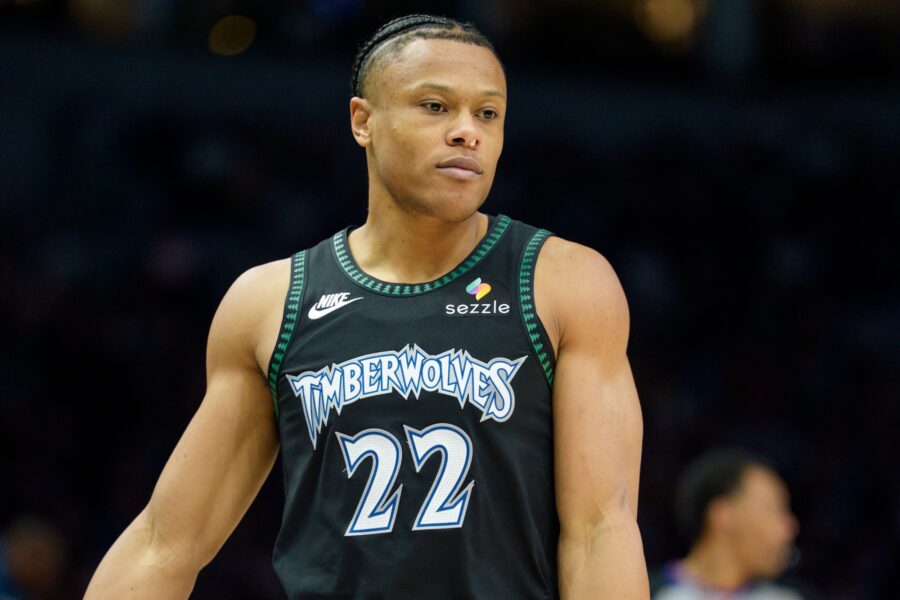
The Timberwolves are keeping Jaylen Clark around. Minnesota and the restricted free agent guard/forward agreed to a three-year, $10 million contract on Friday, per reporting from The Star Tribune and The Athletic. The deal comes as the Wolves execute a major roster overhaul, shipping Naz Reid and draft capital (including an unprotected 2033 first-rounder) to Charlotte for LaMelo Ball and Josh Green in a reconfigured three-team swap that originally involved Brooklyn.
Clark's trajectory reads like a reclamation narrative. Drafted 53rd overall in 2023 out of UCLA, he missed his entire first professional season recovering from an Achilles injury sustained in college. Minnesota kept him on a two-way deal through that lost 2023/24 year, then activated him into the rotation last season. In 2024/25, Clark appeared in 68 games off the bench, averaging 4.0 points and 1.8 rebounds across 13.1 minutes per game on a .434/.327/.657 shooting line. The 24-year-old wing is a plus defender—versatile and physical at 6'5"—but his offensive game has been raw, particularly his three-point stroke at 32.7%.
The structural incentive here is LaMelo's arrival. Ball is a high-volume playmaker who averaged 6.8 assists per game last season and operates best in up-tempo systems where cutters and role players get clean looks. Clark's athleticism and defensive versatility fit that framework. More possessions flowing through a ball-dominant floor general should flatten out Clark's shot-taking variance and create more efficient scoring opportunities in transition or off ball movement. Bench units that survive on role-player efficiency gain velocity when fed by elite playmakers.
From a prop perspective, Clark's expanded role carries minimal immediate impact—his per-game volume is still constrained by bench minutes and the Wolves' deeper wing rotation post-Ball trade. But the mechanism matters for 2026/27 and beyond. If Ball's presence drives Clark's usage rate from 14% toward 16-17% while keeping his True Shooting percentage stable or improving, his points-per-game line could creep from 4.0 toward 5.5-6.0 by midseason. Watch his role in early October games; if he's getting 16+ minutes in a faster pace environment, his scoring floor becomes prop-relevant. The contract security also signals Minnesota's confidence he'll remain in the development lane rather than fade. Right now, his market liquidity is nil—no books are offering season-long props on a 4-PPG reserve. But sustained improvement under Ball's system could change that by the trade deadline.