LaVine's Injury Year Clouds Kings' Window, But His Walk Year Changes the Calculus
By PropBetEdge Editorial Team ·
Zach LaVine played in 39 games last season due to injury; with free agency looming in 2027, his scoring volume and team usage patterns could swing sharply depending on Sacramento's health decisions.
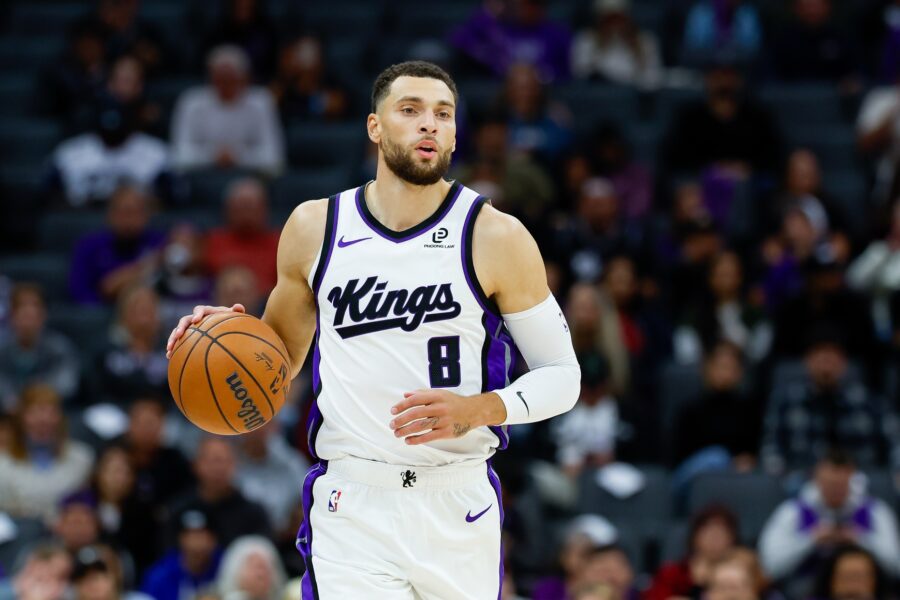
Zach LaVine appeared in just 39 regular season games for the Kings in 2025-26, sidelined by a hand injury that forced a truncated season at a critical juncture for his career. The timing compounds the damage: LaVine enters the 2026-27 season in a walk year—his contract expires after next season, making this his last chance to reset his market value before hitting unrestricted free agency. That urgency changes how he'll be deployed.
The Kings face a structural choice. They can either give LaVine steady run to showcase health and scoring touch, or they can manage his minutes conservatively and risk letting a $20-million-a-year asset wilt on the bench. Sacramento's front office has already invested in him through the injury; benching him sends a tank signal. More likely, LaVine gets early-season volume to prove he can stay on the floor—a necessary audition for both the Kings and the next team bidding on him in summer 2027. That's the incentive alignment: both sides need him healthy and productive.
LaVine's baseline scoring volume before last season's injury run was 19.2 points per 36 minutes, a respectable perimeter scorer's mark. If Sacramento treats him as a starter and gives him 30+ minutes—a reasonable floor for a scoring guard in walk-year positioning—his point total per game could land in the 18-21 range depending on usage. The variance is real: injuries tend to create volatility in the first 10-15 games back, and hand injuries specifically can dull shooting touch. But the market hasn't fully priced the incentive structure. Books will likely open his season props based on last year's 39-game sample, which understates his per-game ceiling if he's healthy and the Kings are motivated to keep him on the floor.
The deeper angle: monitor LaVine's game logs in October and November. If he's logging 28+ minutes and his shooting percentages stabilize above 40% from the field after an adjustment period, his season-long scoring prop will have drifted higher than early-season estimates. Conversely, if he's limited to under 24 minutes or if his hand isn't fully responsive in the first month, fade the over on season scoring and look for buyout chatter by December. The prop market will lag behind operational reality because walk-year usage patterns aren't built into preseason models the same way injury risk is. LaVine's edge exists in the gap between what his minutes should be (high, for business reasons) and what books priced him for (a conservative 25-minute average based on last year's limited availability).