Williams' Hamstring Recurrence Reshapes Thunder Depth Chart Mid-Series
By Erik Schwartz ·
Oklahoma City loses its second leading scorer to a left hamstring strain in Game 2 of the Western Conference Finals, forcing a rotation pivot with playoff momentum at stake.
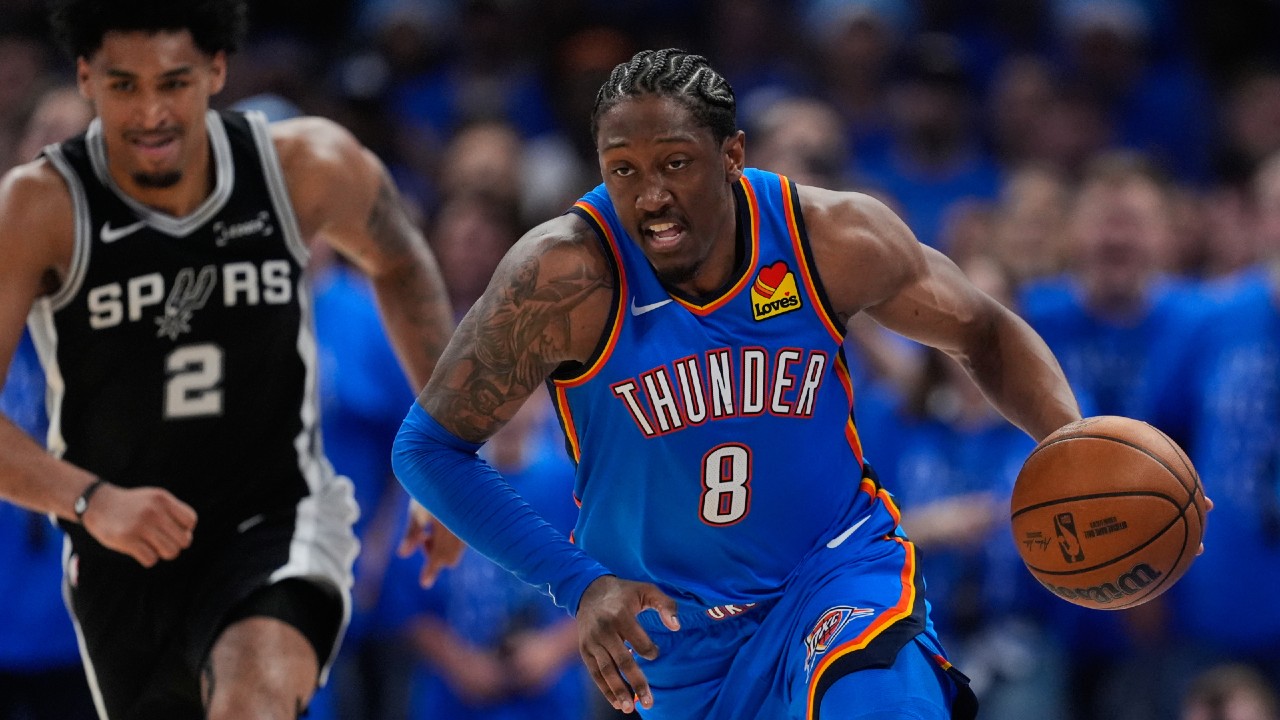
Jalen Williams exited Game 2 of the Thunder-Spurs Western Conference Finals series with a left hamstring strain, the same injury that sidelined him for six playoff games heading into this matchup. After playing seven first-quarter minutes Wednesday—he scored four points including an alley-oop dunk—Williams received halftime treatment and did not return. Cason Wallace entered the starting lineup for the second half as Oklahoma City maintained a 62-51 halftime lead.
This is the second hamstring incident in the same leg during a single postseason run, and the broader injury history is stark: Williams has missed 36 games this season tied to hamstring issues alone (30 during the regular season, now six more in the playoffs). That level of recurrence suggests either incomplete recovery from the initial strain or structural vulnerability in load management. The Thunder played him 37 minutes in Game 1 after a six-game absence, and he responded with 26 points in a double-overtime loss. That workload may have accelerated re-injury; hamstring strains that flare after early return often indicate the player was cleared before full tissue adaptation occurred.
For Oklahoma City's rotation, this moves Wallace into meaningful playoff minutes and forces the team to recalibrate spacing and ball-handling responsibilities. Wallace is a floor-spacer and perimiter defender (40.3% three-point shooter in the regular season), but he is not a creator at Williams' level. The Thunder offense thrives on three-level scoring and secondary playmaking; losing Williams' 15.8 PPG and his ability to handle in transition removes a second engine that runs pick-and-roll and transition action. Shai Gilgeous-Alexander will absorb more shot attempts and on-ball usage, which typically depresses his assist rate and increases turnover risk under heavier load.
From a prop standpoint, the Thunder's team total and Gilgeous-Alexander's scoring line are the immediate casualties. Before Game 2, Oklahoma City's offensive rating in the regular season was 119.2 points per 100 possessions with Williams in the lineup and 115.7 without him—a 3.5-point differential that compounds over 48 minutes. If Game 3 projects a team total in the 112-115 range (standard Western Conference Finals pace), that number now sits on artificial floor support because the market has not fully digested the depth-chart shift. Gilgeous-Alexander will see more defensive attention without Williams' spacing and secondary creation; his assist line (currently 6.5-7.5 in series markets) is vulnerable to downward repricing as opponents collapse on him more aggressively. Conversely, role players like Isaiah Joe and Luguentz Dort inherit more catch-and-shoot volume, but their consistency is lower than Williams', creating variance that typically depresses team scoring efficiency relative to opening lines.
Williams' playoff availability remains a central question. A player missing this volume to one body part across a single season rarely returns at full force mid-run; recurrence typically signals months of rehab are needed post-season. If he misses Game 3 (likely) and potentially Game 4, the Thunder face a roster-construction crisis at exactly the moment when series outcome is decided. Bet accordingly: lean unders on Thunder team totals in the 112-115 band for the next two games, and fade Gilgeous-Alexander assist overs above 7.5 until the rotation stabilizes.