Williams' Return Reshapes Thunder's Finals Ceiling—But Health History Demands Caution
By Erik Schwartz ·
Oklahoma City gets its All-NBA wing back for Game 1 against San Antonio, while De'Aaron Fox's ankle status creates a significant San Antonio roster vulnerability.
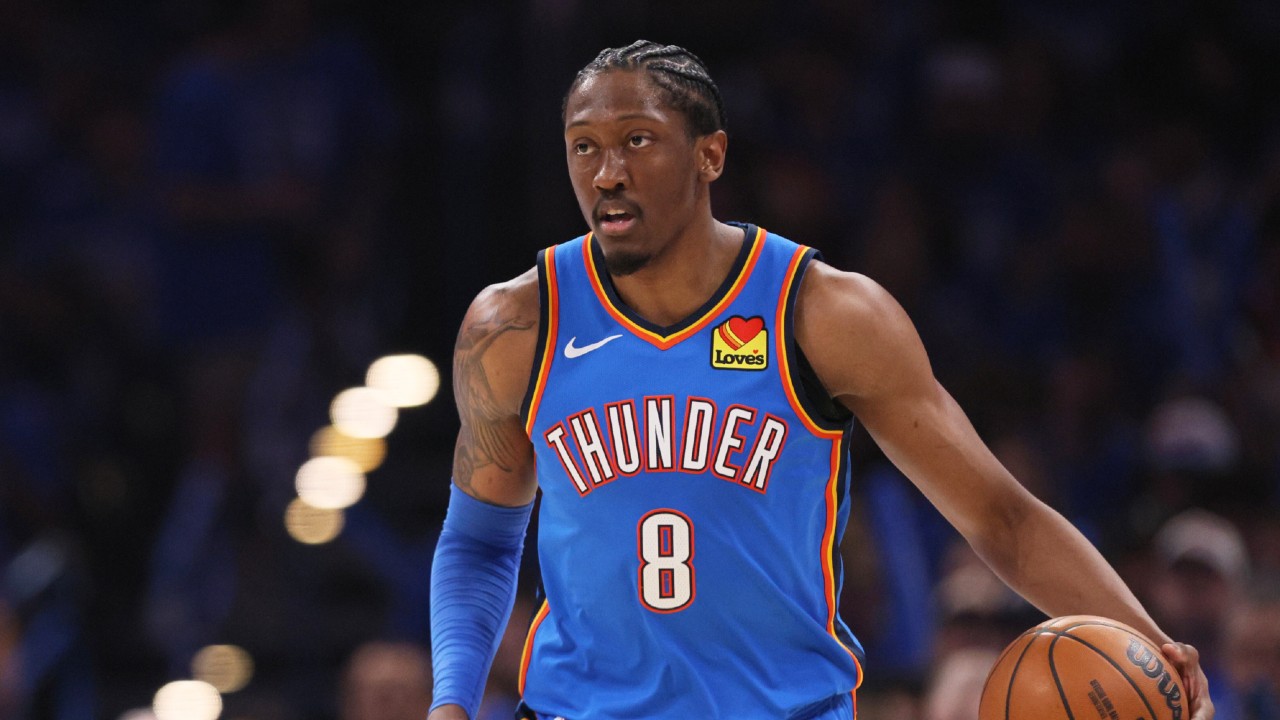
Jalen Williams is active for Game 1 of the Western Conference Finals, ending a three-week absence from a left hamstring injury sustained in April's first-round series against Phoenix. The Thunder's timeline got accelerated—Williams missed just over two weeks of a series that stretched deeper into May than initially projected. San Antonio, meanwhile, faces a different problem: De'Aaron Fox is questionable with right ankle soreness, a status that matters enormously given the Spurs' depth at guard.
Williams' availability is the headline, but the context matters more than the binary health designation. He played only 33 games in the regular season, recovering first from off-season wrist surgery, then from a right hamstring injury that cost him a month. His overall 2025-26 numbers—17.1 ppg, 5.5 apg, 29.9% from three—represent a notable step backward from his All-NBA season (21.6 ppg, 5.1 apg, league-average three-point efficiency). That decline is real, and it maps directly to availability: missed games compound missed rhythm. When a player hasn't played since late April and is suddenly thrown into a conference finals game, the first 48 hours are almost always ramp-up, not peak performance.
Oklahoma City's offensive architecture depends on guard spacing and ball movement. Williams' presence opens the floor—he was second-team All-Defence last season—but his conditioning and shot-making calibration after three weeks out will be material factors. Expect his volume to be managed. Thunder coach Mark Daigneault won't deploy him at 35+ minutes in Game 1; a 20-24 minute role is more realistic. That matters for prop players holding Williams' season-long assist rate (5.5) as a baseline. In a limited, ramped role, expect 4.5-5.0 assists, not 6+. His point total should price around 14-16, not his seasonal 17.1. The market has likely factored in his return, but may not have fully weighted the conditioning lag or the likely restricted usage pattern.
On the San Antonio side, Fox being questionable is a harder read. If he plays, his ankle soreness could suppress his drive-and-kick efficiency; if he sits, rookie Dylan Harper enters the starting lineup for one of the league's sharpest all-around guards. Harper's offensive gravity and decision-making are not in Fox's tier. This creates an asymmetric edge for Thunder perimeter weapons. If Fox is out, Williams' assists could actually spike higher than expected because San Antonio's starting backcourt becomes less defensively rigid. If Fox plays but is limited, the Spurs' ability to pressure the three-point line weakens, again benefiting Oklahoma City's spacing and ball movement. Neither outcome favors San Antonio's offensive efficiency.
The prop angle is twofold: Williams' volume will be artificially suppressed in Game 1 due to conditioning and usage management—bet his assists under 5.5 if that's the market line, or consider his points under 16 as a fade of the All-NBA seasonal baseline. Simultaneously, any line suggesting Fox plays at full health is worth fading on Spurs team efficiency props. If Fox doesn't play, take unders on Spurs team points (their seasonal average likely sits 105-108; without Fox, expect 100-103). Both edges carry some variance risk because injury status can shift between report and tip, but the conditioning lag on Williams is durable across the series, and the Fox uncertainty creates genuine spread in the market that books have priced at face value.