Spurs-Thunder Game 3 Sets Low Ceiling That Won't Hold; Scoring Volume Mismatch Points Over
By Ty Whitney ·
The conference finals total sits at 218.5—the Spurs' third-lowest all season—but recent scoring patterns and playoff intensity suggest the number is a trap.
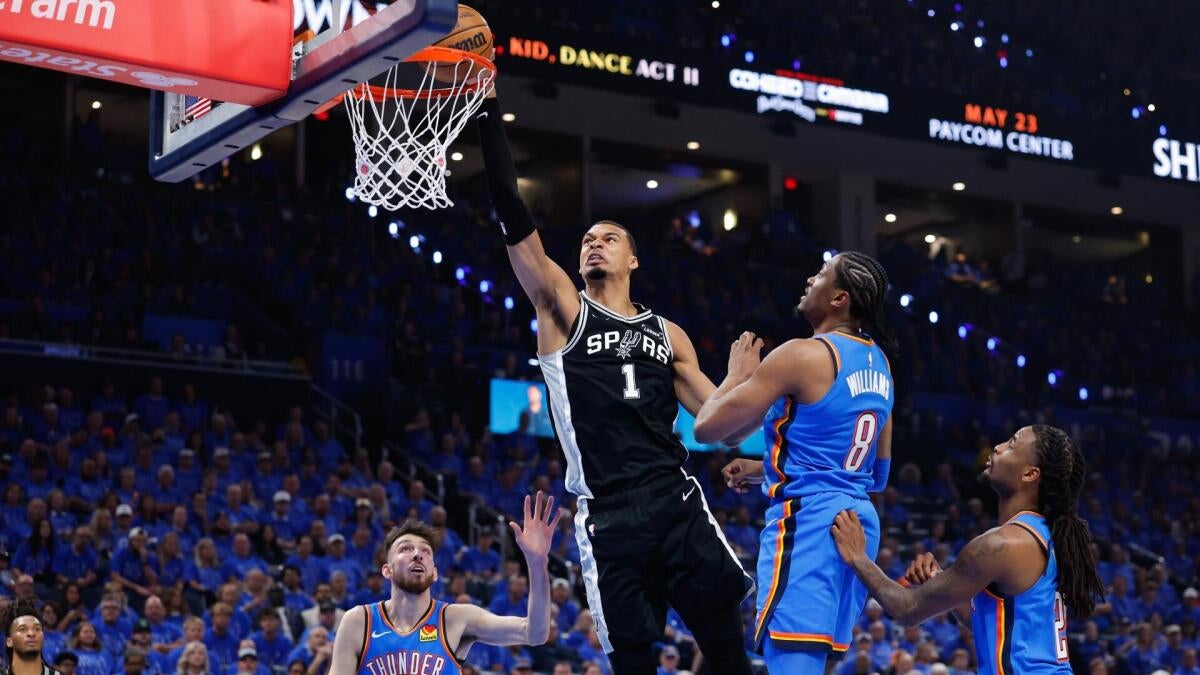
Oklahoma City forced Game 3 with a home victory in Game 2, leveling the Western Conference finals at one apiece. San Antonio returns to Frost Bank Center as a 1.5-point favorite with the series advantage, but the listed total of 218.5 obscures a critical mismatch: the Spurs and Thunder have been scoring at higher rates than this number implies, and playoff intensity in a must-win Game 3 typically elevates pace and shot volume rather than suppresses it.
The context is straightforward. Twelve of the Thunder's last 14 games have gone Over. The Spurs have now cleared the total in seven straight outings. Game 2 itself—played at this identical 218.5 line—finished at 235 points, a 16-point surplus over the number. That's not noise; that's a structural tell that the books priced conservatively into Game 3, likely anchoring to the Spurs' season-long scoring profile rather than adjusting for playoff tempo and the elevated stakes of a Game 3 in a best-of-seven tied at one.
Victor Wembanyama's offensive usage and the Thunder's reliance on Shai Gilgeous-Alexander create a scoring environment that naturally gravitates higher. Wembanyama's ability to generate efficient looks at the perimeter—combined with San Antonio's spacing around Stephon Castle and the role players—means the Spurs aren't a low-volume, defensive-grind team. The Thunder, meanwhile, have leaned into pick-and-roll heavy offense with Gilgeous-Alexander; in playoff games where he's forced to carry load against quality defense, his assist rate dips but his shot volume climbs, and the team compensates with bench scoring. Neither trend favors unders. The 218.5 total assumes a slower, more controlled affair than the last 14 games warrant.
From a prop perspective, Gilgeous-Alexander's scoring line becomes the fulcrum. His 30.2-point projection by the SportsLine model arrives because of defensive pressure and volume necessity—not an outlier spike, but a natural response to San Antonio's wing defense. When elite scorers face playoff pressure and elevated usage, their point totals correlate directly with team totals; Gilgeous-Alexander going over his individual points prop (whatever the sportsbooks set it at) increases the likelihood that the team total follows. The Spurs' projection of 219 combined points—nearly 0.5 points above the line—itself underscores that the model sees upside risk to the total. Over 53% of simulations clear 218.5 in the SportsLine framework, which translates to implied true odds closer to -112 or better for the Over; the current price at standard sportsbooks likely sits around -110 to -108, offering positive expected value for bettors who trust playoff pace dynamics and recent over performance.
The key variable is whether San Antonio's defense can slow Gilgeous-Alexander without fouling—a tall ask in a Game 3 elimination scenario. If the Thunder star reaches 28+ points, the Spurs must match or exceed that output, and their four-player 13-plus scoring distribution (Wembanyama, Castle, and two role players) is aggressive but plausible in a higher-volume environment. The total's conservatism relative to recent actuals and playoff context creates a durable edge.