Thunder's Summer Ceiling: Why Oklahoma City Won't Chase Giannis, and What That Means for Their Core
By Erik Schwartz ·
OKC's reluctance to blow up a championship culture for a superstar trade reveals the real bet: internal development and incremental upgrades will drive next season's ceiling.
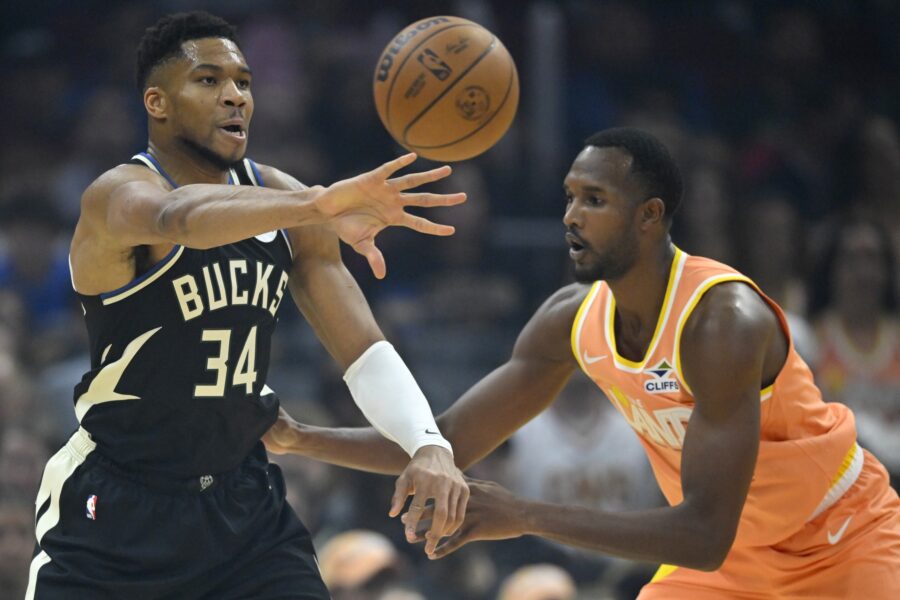
Oklahoma City's front office faces an unusual problem after failing to repeat as champions—they have the assets to swing almost any deal, yet league consensus suggests Sam Presti won't use them on a splash move. Marc Stein's reporting that rival executives don't "strongly believe" the Thunder will chase Giannis Antetokounmpo is telling not because it rules out Giannis specifically, but because it confirms Presti's philosophical commitment to the organization he's built. The Thunder came close to the Western Conference Finals despite losing Jalen Williams and Ajay Mitchell for stretches. That margin—close but not close enough—was supposed to trigger either a panic trade or a measured internal retool. Instead, the league reads Presti's move set as measured.
The details confirm it. Hartenstein's $28.5 million team option will likely be declined, but early signals point to him re-signing on a longer deal, suggesting Presti values continuity over cap maneuvering. More telling: the Thunder explored Evan Mobley years ago (targeting him at the 2021 draft), and there's renewed chatter about his availability. But Cleveland's Koby Altman explicitly labeled Mobley—last year's Defensive Player of the Year—as untouchable, and Presti apparently isn't pushing. This is restraint at a moment when leverage could work. Instead, OKC is pointed toward the draft's middle and late-lottery picks (Nos. 12, 17), with trade-up targets like Aday Mara rather than top-four names. It's team-building by addition, not subtraction.
For betting purposes, this philosophical posture has immediate implications for player prop construction. The Thunder's refusal to chase a max-level trade partner means the core rotation—SGA, Chet Holmgren, and Hartenstein—remains the primary ball-movers and scorers. Continuity in roster architecture typically stabilizes individual volume metrics across the season. Hartenstein's assist rate, rebound distribution, and screen-setting frequency should remain consistent with 2025/26 levels rather than disrupt through a mid-roster replacement. Similarly, SGA's usage and playmaking touch don't face dilution from a veteran secondary ball-handler arrival. The calculus changes if a star enters the fold; without one, the projections anchor to established patterns.
The draft angle compounds this. OKC's willingness to stay patient on later lottery picks rather than trade aggressively upward signals that 2026/27 roster makeup will be largely constructed from within-system development and role definition. A lottery pick at No. 12 or 17 entering a playoff-contending team doesn't dramatically shift starting lineup compositions or role hierarchies—he's likely a bench rotational piece. That means established starters' minutes, touches, and production share should experience minimal volatility heading into next season. When a franchise chooses incremental growth over transformative trades, player lines tighten because the statistical foundation remains knowable.
Bettors should discount pre-season movement on OKC starters' volume props once summer league and early-season trends establish themselves. The market will likely price in uncertainty about roster changes given the offseason noise, but Presti's track record and the lack of blockbuster deal signals suggest a more stable environment than the headlines imply. Hartenstein's rebounds and assists, SGA's assists and scoring, and Holmgren's defensive production will track closer to their established norms than to outlier scenarios created by hypothetical star acquisitions.