Dusty May's Michigan Pipeline Could Reshape Dallas Frontcourt — What It Means for Mavericks Center Math
By Erik Schwartz ·
The hiring of a college coach doesn't usually move NBA betting markets, but May's arrival signals Dallas is willing to disrupt its roster to fit his personnel preferences, and that friction could create inefficiency in draft-night props and trade odds.
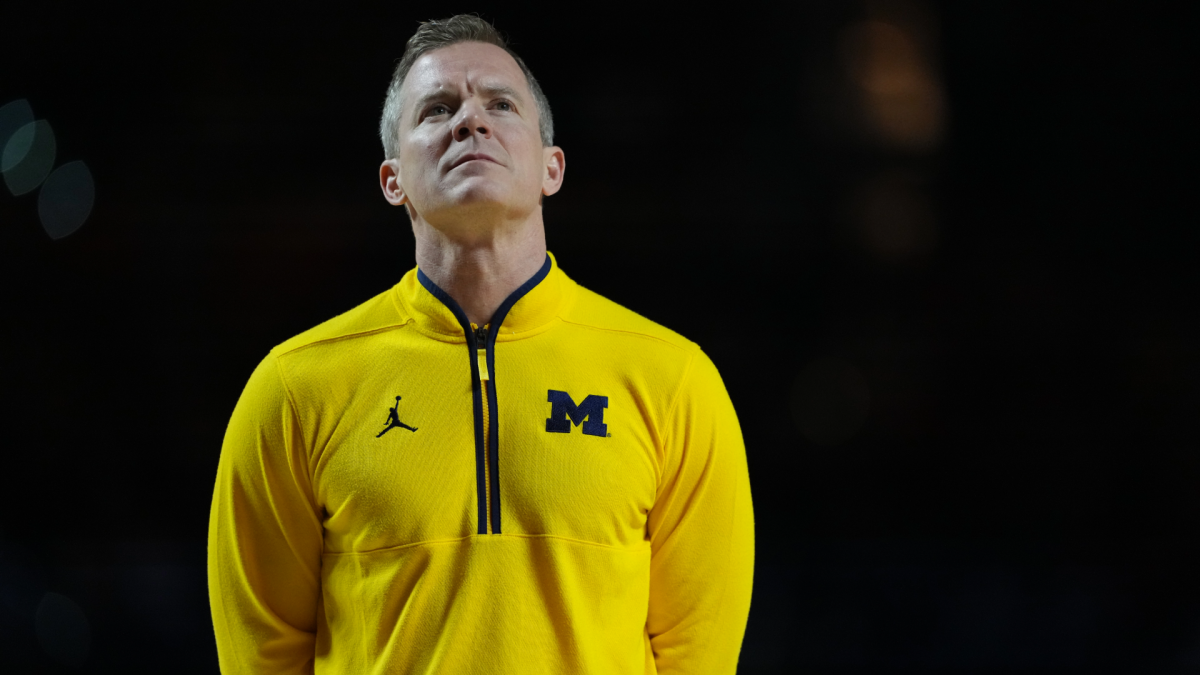
Masai Ujiri's decision to hire Michigan's Dusty May as the Mavericks head coach is a structural gamble, not a talent gamble. May, who won a national championship at Michigan just weeks ago, is the first college head coach to jump to the NBA since John Beilein joined Cleveland in 2019—a cautionary tale Ujiri presumably studied. But Ujiri didn't hire May to run pick-and-roll sets; he hired him because May coached Cooper Flagg at Michigan, and Flagg is now Dallas's franchise cornerstone. That continuity carries leverage. With the No. 9 pick Tuesday and three of May's former Wolverines—Aday Mara, Yaxel Lendeborg, and Morez Johnson—projected to fall in that range, the market will reflexively assume May pulls one of them into the draft room. The honest read: Ujiri still controls the pick, and Dallas has been linked most directly to Arizona guard Brayden Burries, a name May has praised publicly. May's hire doesn't override the basketball department's months of scouting work.
What matters more is the cascading effect if Dallas does add a young center or forward in May's sphere. The Mavericks' depth chart around Flagg was built for an older timeline—one where Luka Dončić was the anchor. Dereck Lively II hasn't replicated his 2024 form; he's played just 43 games over the past two seasons combined. Daniel Gafford is solid but aging into his late twenties. If Mara (a center) lands in Dallas, the logjam forces a conversation about trading either Lively or Gafford. If Johnson (a forward-center tweener) joins, P.J. Washington becomes the obvious trade candidate. The Mavericks don't control a first-round pick again until 2031, so a deal down with Oklahoma City—which holds picks 12 and 17—makes structural sense if a specific target falls just outside the top nine.
For prop bettors, the angle isn't whether Dallas drafts a Wolverine (noise; too dependent on board flow). The angle is whether Ujiri moves Gafford or Lively at the deadline or during next offseason. A Michigan prospect drastically increases that probability. Why? Because May's offense will likely demand multiple rim-runners and switchable big men, and the Mavericks' current roster has dead cap in the form of aging or injured centers. Dončić's move to the Lakers means Dallas no longer has to preserve star-teammate chemistry at the expense of depth; Flagg becomes the sole franchise player, and May will build around younger, more athletic supporting cast pieces. That creates subtle market inefficiencies: Gafford's player-prop lines (points, rebounds) should compress slightly as trade speculation rises. Lively's trade odds, already elevated because of his injury history, will compress further.
The real tell will come if Dallas trades down from nine. That move signals Ujiri is confident about the target at 12, and three Michigan players still available would suggest one of them is the plan. Move down, grab a Wolverine, then move salary to clear room for Flagg's co-star development. It's a coherent long-term architecture—expensive, unconventional, and built on Ujiri's faith in May's ability to manage the gap between college and NBA systems. For betting purposes, wait for Tuesday's board movement. If Burries goes top eight (most likely), and the Mavericks stay at nine, the draft-night chaos will be contained. If Dallas trades down, watch the follow-up trades closely. That's where the edge lives.