Mark Williams' Suns Future Clouded by Injury History and Guard Priorities
By PropBetEdge Editorial Team ·
Phoenix's qualifying offer to its injury-prone center signals a team hedging its bets while real cap flexibility goes toward guards.
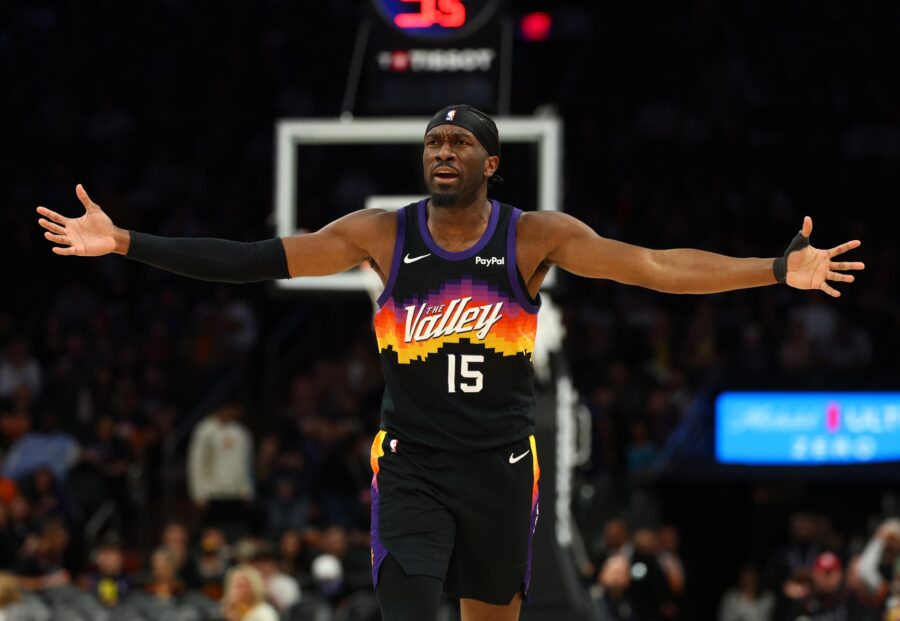
The Suns tendered qualifying offers to center Mark Williams and rookie shooting guard Koby Brea on Thursday, converting them into restricted free agents ahead of the June 30 free-agency window. Williams' QO comes in at $9.6 million; Brea gets another two-way contract tender. The move is routine in structure but revealing in priority: Phoenix is protecting its options on both players while signaling that guard depth—Collin Gillespie and Jordan Goodwin—represents the organization's real offseason focus.
Williams' career arc tells the story. Acquired from Charlotte a year ago, he delivered value when available: 60 games played (a career high), 55 starts, 11.7 points and 8.0 rebounds on 64.4% from the field and 77.1% from free throw in 23.6 minutes per game. Those efficiency numbers matter. But the qualifier is stark—he played only four games after March 3, sidelined by a left-foot stress reaction that compounded a longer injury history. In three seasons with the Hornets, he appeared in just 106 regular-season games total. The Suns' willingness to commit real money ($9.6 million) to a one-year QO suggests they haven't given up on him; internal reports indicate they want to re-sign him long-term. But it's a conditional commitment, not a full embrace. The organization has young frontcourt depth in Khaman Maluach and Oso Ighodaro waiting in the pipeline, which reduces urgency.
Brea, the 23-year-old 2025 second-rounder (No. 41 overall), barely appeared for Phoenix in the regular season (12 games) but logged significant run in the G League—16.4 points, 5.1 rebounds, and 2.6 assists per game on .398/.349/.842 shooting across 34 outings. His two-way tender is standard infrastructure for a developmental prospect. The real financial flexibility the Suns are deploying goes to their guards, the positions where the team believes it can compete for a title.
From a betting standpoint, Williams' availability risk carries immediate implications for Suns prop construction. When he played this season, he reliably hit 8+ rebounds in his starts—a function of playing starter minutes against non-specialist defenders and high usage. But the injury uncertainty introduces variance that the market will price in conservatively. If Williams signs the QO and returns to full health next season (a bet-against-itself outcome), his rebounding totals could offer value at standard-market levels, since books will anchor pricing to his injury-compromised 2025-26 tape rather than his 60-game season sample. Conversely, if he tests the market in free agency after June 30 and signs elsewhere—a plausible outcome given the Suns' guard priorities—his scoring and rebounding volume would drop immediately. Brea remains too speculative for prop play at this stage; his path to consistent rotation minutes depends on free-agency moves above him on the depth chart.
The QO mechanism also affects how the Suns approach the June 30 market. By retaining rights of first refusal on both players, the team prevents other teams from signing either to offer sheets without Suns matching rights. This limits external market interest and keeps negotiations internal—favorable to Phoenix if it wants to move assets elsewhere. Williams could still command interest from teams seeking floor-spacing bigs, but the stress-reaction injury will depress his market price. Expect minimal outside offer-sheet activity. The Suns' real negotiating leverage lies with the guards they're prioritizing, a choice that reshapes the center rotation's composition for next season.