Kerr's Return Signals Warriors' Commitment to Core—And Curry's Implied Value
By PropBetEdge Editorial Team ·
Steve Kerr nearly walked away after April's Play-In collapse, but his wife's words and a week of soul-searching reversed course: the Warriors are locking in their coach and, by extension, betting their next two years on Curry and Draymond.
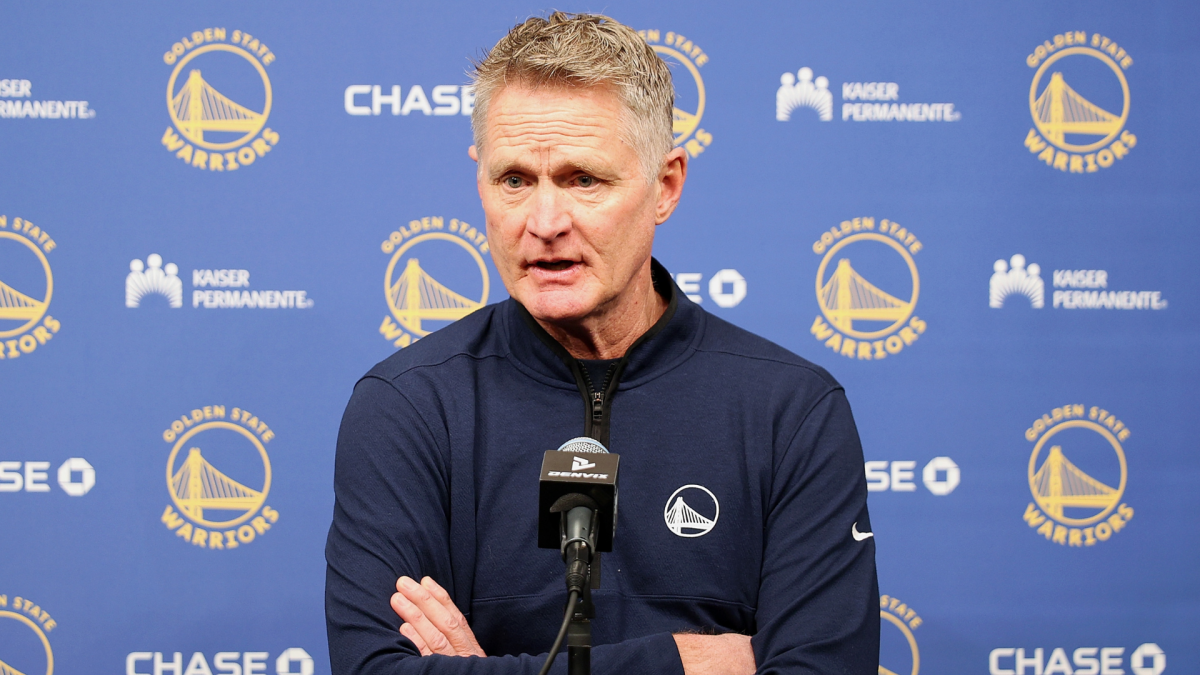
Steve Kerr came within days of retirement. The Golden State Warriors head coach told ESPN he was 95% certain he would walk away after a Play-In Tournament loss to Phoenix in April, his resolve wavering even as Stephen Curry engineered a vintage performance against the Clippers the round before. A month of silence followed—front-office talks, personal reflection, and a single conversation with his wife that reframed everything. On Friday, Kerr signed a two-year extension, locking himself as the league's highest-paid coach at $17.5 million annually, and ended speculation about his future with the franchise.
The reversal matters because it wasn't manufactured by player pressure. Kerr was explicit: neither Curry nor Draymond Green lobbied him to stay; he actually praised the organization for preventing exactly that kind of dynamic. But their conversations did move him. Kerr said he knew Curry wanted him to coach and that he wanted to coach Curry—a mutual affirmation that cut through the noise of a disappointing season and two playoff misses in three years. What looked like organizational decay from the outside was, internally, a relationship still worth fighting for. Kerr's decision to extend rather than exit signals the Warriors' leadership believes the core is salvageable and that continuity, not a reset, is the bet.
That bet hinges on margin. The Warriors haven't made the playoffs in two of the last three seasons—a stark reversal for a dynasty. Missing twice in three years is the kind of threshold that usually triggers front-office upheaval. Instead, the organization kept its coach, kept its stars, and is asking them to prove they can get back. The implication is blunt: Curry and Green haven't lost their value; the supporting cast, the scheme, the health situation—those are the variables. Kerr stays because Lacob and Dunleavy believe the infrastructure around those two hasn't been optimized yet, not because the core has expired.
For bettors, this structural stability reshapes how to value Warriors props moving forward. Kerr's commitment removes one layer of organizational uncertainty—no interim coach, no philosophical reset, no coaching carousel eating into preparation time. That matters most for Curry's assist and three-point volume. Under Kerr, Curry has operated in a pick-and-roll heavy system that spikes his playmaking against switching defenses; Kerr's continuity means that scheme persists. In 2025–26, expect Curry's assist line to reflect that stability: if the Warriors add spacing and reduce bench drag, his 7.5–8.5 assists per game becomes achievable again. Conversely, if the Warriors remain thin at the wings, Curry's role flattens to isolation and spot-up, depressing his assist total. The edge isn't in the direction; it's in the durability of the system Kerr is staying to run.