Reaves Contract Calculus: Why the Lakers' Offseason Hinges on a Two-Year Window
By PropBetEdge Editorial Team ·
Austin Reaves is betting on himself with a short-term deal structure, but the math around supermax eligibility reshapes the Lakers' timeline and roster construction for 2026-27.
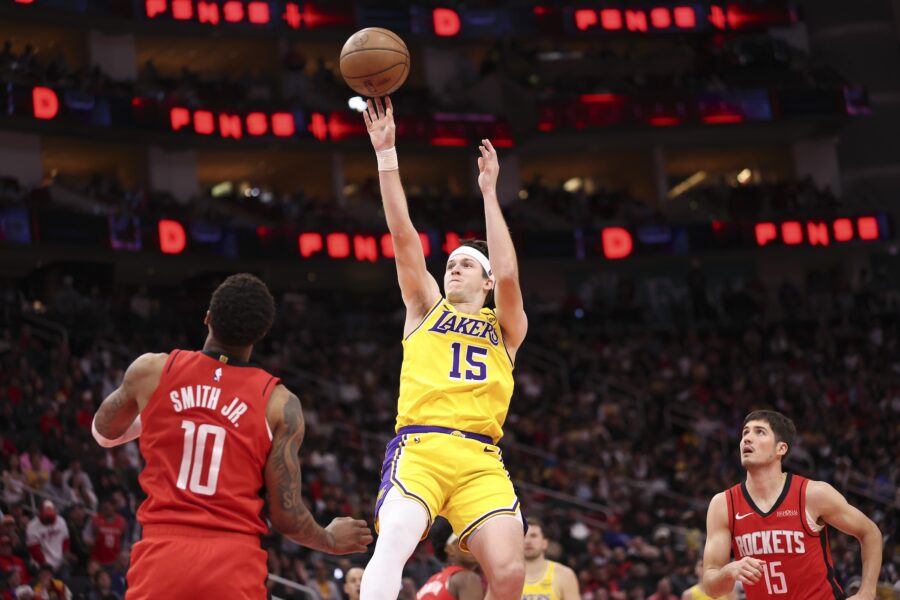
Austin Reaves is expected to remain a Laker, but the architecture of his next contract—not the destination—will define Los Angeles' next two seasons. Per Marc Stein's reporting, Reaves is gravitating toward shorter-term arrangements with player options, a calculus that opens a path to a supermax contract if he meets eligibility thresholds. A three-year deal with a player option in year three guarantees him north of $130 million while preserving the right to test free agency again, potentially at a higher salary tier.
This contract structure is not incidental to Lakers strategy—it's the foundation of it. By accepting a shorter runway than a traditional five-year max, Reaves is signaling confidence in his trajectory and creating organizational flexibility for the franchise. If the Lakers commit Reaves to a two-year core with LeBron James (who is also in free agency discussions), the team operates under the assumption that this roster either contends immediately or recalibrates sharply at the 2027-28 deadline. The market has already priced in Reaves' retention; the line-moving variable is whether his deal includes escalators tied to All-NBA voting or playoff performance thresholds—mechanisms that would tighten Los Angeles' tax bill in Year 2.
From a roster-construction lens, a two-year Reaves commitment with a supermax window forces the Lakers to front-load their championship window. General managers around the league understand that the window closes the moment Reaves hits unrestricted status again. This produces a cascade of trade and free-agency decisions: the Lakers cannot afford to punt on upgrades at wing or rim protection this summer, because a lottery finish in 2027-28 (with Reaves potentially departing) becomes organizationally catastrophic. That pressure point—the urgency to improve now because the guard's timetable is compressed—is real.
For betting purposes, this contract structure cascades into Laker rotational stability and minutes distribution. Reaves' near-certain retention removes doubt around backcourt depth heading into the season, which stabilizes his own prop ranges (assists, three-pointers made) and creates predictability in how the offense runs pick-and-roll sequences. A player on a one-plus-one deal with supermax aspirations also tends to see elevated fourth-quarter usage in close games—coaches and front offices manage those minute loads carefully to preserve health and protect future earning power. Expect Reaves' scoring and assist lines to reflect increased leverage in clutch situations, particularly in the final 15 games before the All-NBA voting deadline (early April 2027).
The Lakers' offseason also becomes easier to forecast. With Reaves locked in short-term, front-office resources shift entirely toward perimeter defense, bench creation, and rim protection—not backcourt redundancy. This matters for LeBron James' workload and shot distribution; a team that aggressively chases a three-and-D wing or a defensive big in the next six weeks (before training camp in October 2026) is signaling they believe this roster can compete for a title in 2026-27. If you see the Lakers trade for a center or sign a veteran wing on a multi-year deal, that's confirmation the organization is treating the Reaves window as genuine contention time, not a transition year.