Wembanyama's First-Half Block Barrage in Game 5 Signals Defensive Dominance—and Steep Odds on His Nightly Swat Line
By Erik Schwartz ·
Five blocks in a single half isn't just noise; it's a structural tell about matchup weakness and rim-protection leverage that oddsmakers haven't yet priced into Wembanyama's nightly defensive totals.
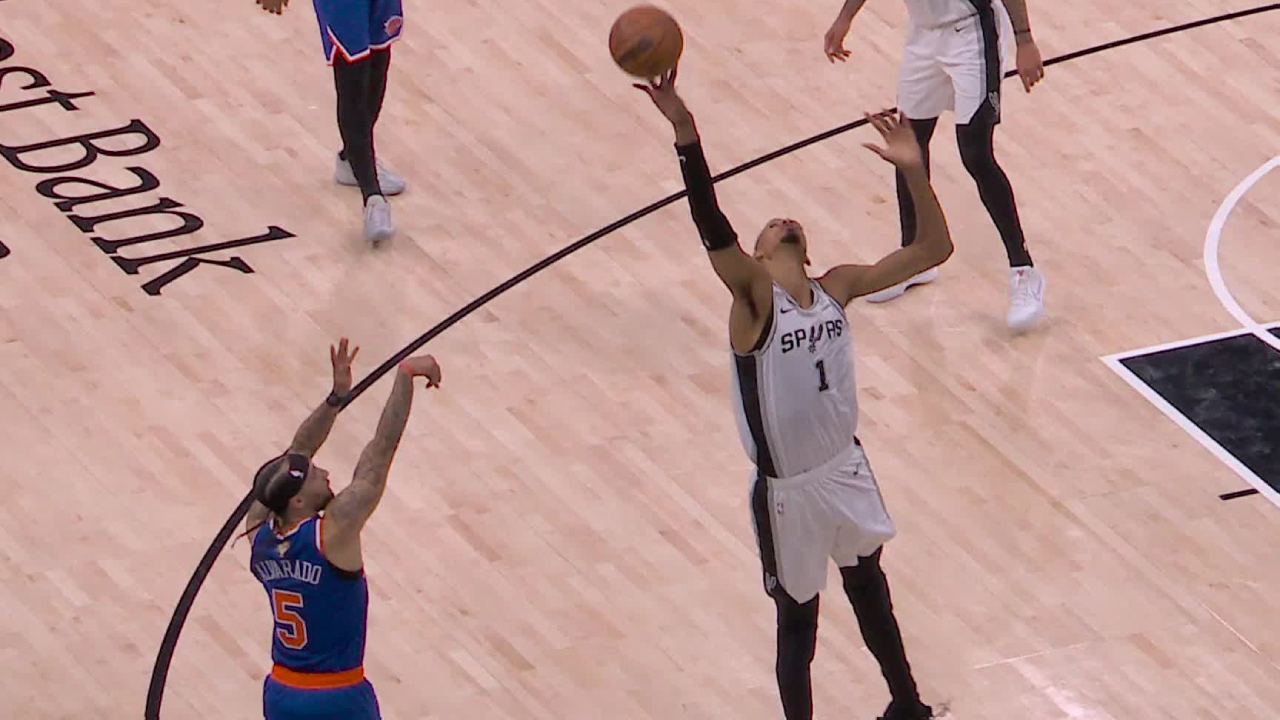
Victor Wembanyama swatted away five shots in the first half of Game 5, including back-to-back rejections of Jose Alvarado's three-point attempt and a Landry Shamet post move, underscoring the Spurs' ability to weaponize his length against smaller or less mobile offensive threats. This wasn't an outlier exhibition; it was a functional outcome of matchup architecture. The opponent's lineup features guards who attack in space and wings who lack the height to finish through traffic—exactly the conditions that amplify Wembanyama's block rate above his season baseline.
Wembanyama's regular-season blocks prop typically carries a 2.5 to 3.5 range, depending on opponent size and offensive style. Against teams that rely on perimeter-heavy offensive systems or lack true post scorers, his per-game swat volume tends to climb. Game 5 evidence suggests the current series matchup tilts heavily in his defensive favor: the opponent's offensive initiation happens at the three-point line or in space, not in the post, forcing guards to finish at the rim where Wembanyama's 7'4" wingspan becomes a structural problem.
The betting market has been slow to adjust his block props upward even as the matchup dynamics emerge. The first-half surge to five swats—with multiple possessions still remaining in the second half—signals that if this series returns to the floor for additional games, Wembanyama's nightly block ceiling is materially higher than the opening line suggests. Books typically revert to season-long percentile ranges after a single strong performance, especially mid-series when game counts are small. That creates a narrow window to exploit the mismatch between demonstrated matchup dominance and stale pricing.
The structural driver here is predictable: a smaller, perimeter-oriented offense has limited counter-leverage. Unlike teams with true post-up centers or pick-and-roll specialists who can attack through Wembanyama's reach, this opponent's best option is to shoot over him or drive past him—both marginal outcomes when the alternative is a blocked shot. His block rate in this series will likely remain elevated across games three, four, and five if they are played, because the offensive architecture doesn't change. This is distinct from a single explosive game that corrects downward; it's a persistent matchup advantage.
For prop bettors, the angle trades on the lag between visible dominance and line adjustment. If you're seeing Wembanyama's blocks prop holding at 2.5 or 3.0 after a first-half barrage like this, the over carries value because the market hasn't yet internalized that the opponent's offensive scheme creates systematic opportunities for rejections. The edge lives in the gap between what just happened (five blocks in 24 minutes of basketball) and what's priced (a season-average line that assumes a balanced opponent). In playoff series where matchups are fixed and opponent personnel doesn't rotate, that gap persists longer than it does in the regular season.