Robinson's Pinky and the Knicks' Rebounding Edge: What the Finals Hinge On
By Ty Whitney ·
Mitchell Robinson's broken finger threatens the Knicks' second-chance offense, the statistical engine that powered their Eastern Conference run.
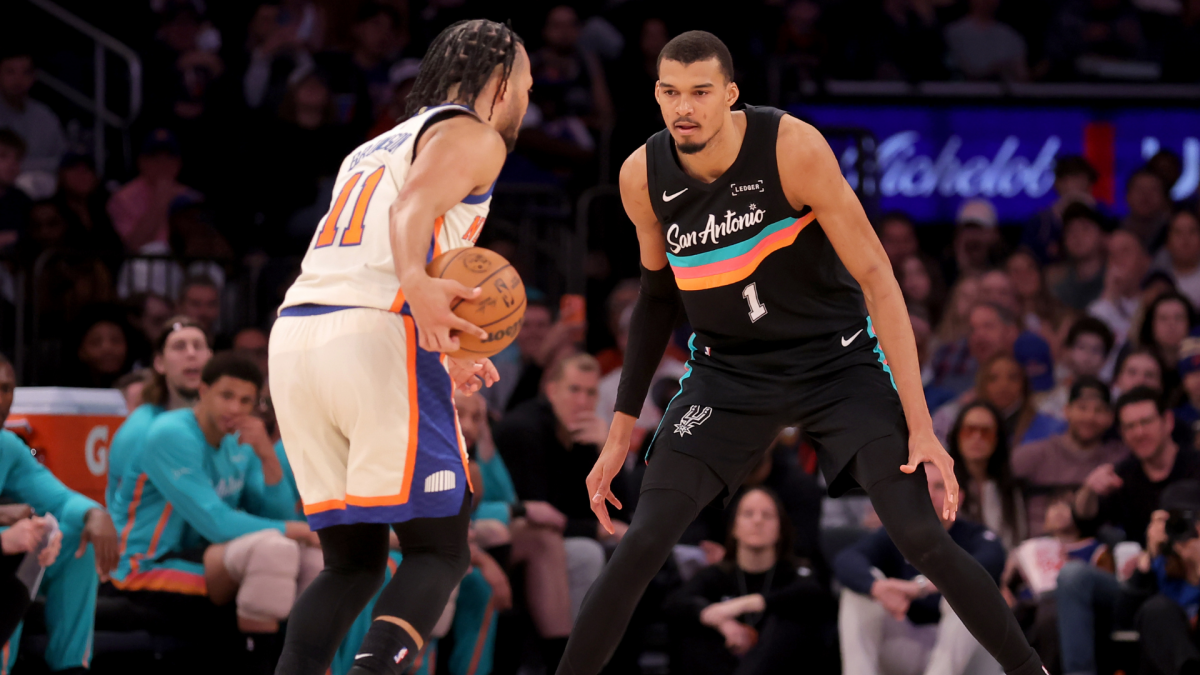
The San Antonio Spurs have returned to the Finals for the first time since 2014, eliminating the defending champion Thunder in Game 7, and will face a New York Knicks team that steamrolled through the East. Victor Wembanyama, at 22, has become the youngest player ever to land All-NBA First Team honors and a Finals berth in the same season. The narrative writes itself—a generational talent chasing his first ring against Jalen Brunson and a Knicks roster hungry to end a 53-year title drought. But buried in the setup is a problem that may reshape the entire series: Mitchell Robinson underwent surgery on a broken pinky sustained before Game 6 of the Western Conference Finals, and his availability for Game 1 remains uncertain.
Robinson doesn't register on highlight reels. He averaged 5.5 points and 5.3 rebounds through the Knicks' playoff run. But his impact on the glass tells a different story. With Robinson on the court, the Knicks' offensive rebounding rate sits at 39.4% in the postseason; when he exits, that figure plummets to 28.6%. That 10-plus-point swing translates to 17.7 second-chance points per game—the league's highest in the postseason. Against a Spurs defense anchored by Wembanyama's length and rim protection, manufacturing extra possessions becomes a structural advantage the Knicks cannot afford to lose. Robinson is also the Knicks' only reliable backup center. Ariel Hukporti, the second-year reserve, has logged just 70 playoff minutes almost entirely in blowouts. If Robinson cannot play or plays at diminished capacity due to hand mobility and pain, the Knicks lose their most valuable rebounding instrument at precisely the wrong moment.
The injury timeline favors New York's hopes, at least marginally. Game 1 lands on Wednesday with 17 days between potential clinching games if the series runs full length—considerably more rest than a typical Finals allows. Knicks coach Mike Brown has indicated Robinson is being evaluated day-to-day, and the front office hasn't ruled him out. But a broken pinky on the shooting hand introduces mechanical concerns that statistics alone won't capture. Can he generate the same explosive vertical extension on the glass with compromised finger stability? Will pain or protective taping limit his aggression on the boards? Even if he dresses, the Knicks may not get the version of Robinson they rode to the Finals.
For bettors, Robinson's status creates a sharp dividing line in how to price Knicks offense and pace. If Robinson plays close to form, the Knicks' team total and pace-of-play props should maintain their regular-season profiles—the offensive rebounding rate stays elevated, possessions compress, and the Knicks' halfcourt offense runs through Brunson's playmaking at near-peak efficiency. But if Robinson is absent or compromised, the Knicks lose five to seven percentage points on the offensive glass per game, which translates to roughly 1.5 to 2.0 fewer second-chance points. That's a 2–3 point swing on their team total depending on line construction. The market will likely price Robinson's participation into Game 1 lines at opening, but uncertainty around pain tolerance and mobility could leave early numbers soft if the team hasn't confirmed his status. Lean Knicks unders on team total through the first two games if Robinson's injury status remains ambiguous or if he's ruled out; the offensive rebounding engine stalls, and possessions will skew longer, which dampens both scoring volume and pace.
Wembanyama's generational two-way profile makes him the Finals favorite at the individual level, but Robinson's health may determine whether the Knicks can stay within striking distance of possessions. The Spurs' defense is built to compress space and force long twos; the Knicks' answer has always been to turn misses into second chances. Without Robinson's board work, that answer evaporates.