Spurs Face 0-2 Deficit With Execution, Not Talent, Holding Them Back
By Erik Schwartz ·
Victor Wembanyama's closing-seconds miss in Game 2 masks a deeper problem: San Antonio's ball security and rim finishing are cratering when the margins matter most.
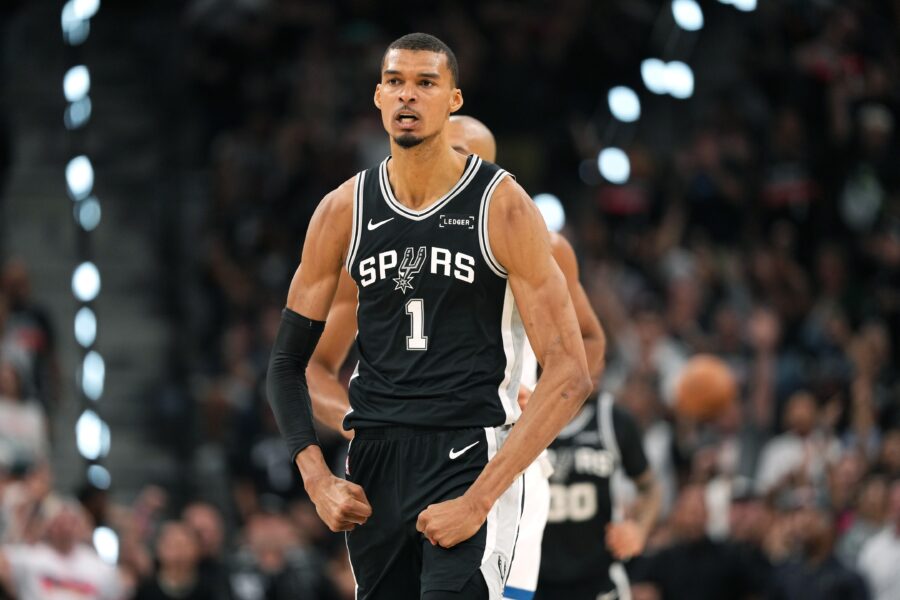
Victor Wembanyama's 20-foot attempt with the game on the line Friday night rimmed out—a shot his teammates believed was good the moment it left his hands. The miss stings, but it's a symptom, not the disease. With the Spurs now trailing 2-0 heading to New York, the box score tells a story that individual performances obscure. Wembanyama's stat line looked functional. His execution around the basket and decision-making under pressure told a different story entirely.
The offensive inefficiency traces to two structural breakdowns. First, Wembanyama wasn't demanding the ball in critical moments, a passive tendency that defies his trajectory as a franchise anchor. Second, his finishing touch at the rim—typically a plus-skill for a seven-footer—abandoned him when possessions mattered. Empty possessions in a playoff series are capital punishment. San Antonio's shooting-heavy architecture depends on high-volume, high-efficiency looks. When Wembanyama's rim attacks stall, the entire offensive ecosystem tightens.
The ball-handling crisis compounds the damage. Stephon Castle recorded multiple fourth-quarter turnovers in Game 2, timing that transformed possessions into momentum swings. Beyond Castle's errors sits a Wembanyama turnover born from passivity—a decision-making lapse rather than a forced mistake. Playoff basketball at this margin (down 2-0) punishes unforced errors with mathematical precision. Every possession San Antonio surrenders without a basket or assist is a possession the Golden State Warriors weaponized into a point.
For bettors, the prop angle centers on Wembanyama's usage and efficiency volatility in elimination-style games. His assist-turnover ratio in Game 2 reflects a player who either lacked aggression or faced defensive intensity that disrupted his rhythm. If San Antonio returns with a more ball-movement scheme that forces Wembanyama into playmaking rather than isolation scoring, his assist line rises and turnover risk escalates—a higher-variance outcome. Conversely, if the Spurs lean into simplifying his role (more spot-up threes, fewer pick-and-roll initiations), his point total tightens around a narrower range but his efficiency gains. Game 3 will signal which path emerges; the market may not adjust his assist and turnover props until the game starts, creating early-number value for whichever direction the coaching staff commits.
Castle's late-game decision-making also carries prop weight. If the Spurs tighten bench rotations in Game 3 and reduce Castle's fourth-quarter minutes, his assist opportunities shrink. If they keep him in to build rhythm and trust, his turnover risk stays elevated. The margin is 0-2. Coaching adjustments will be radical. Props that assume Game 2 usage patterns (assists, turnovers, minutes) will misfire.