Fox's Game 1 Shooting Collapse Masks Spurs' True Finals Edge
By Erik Schwartz ·
De'Aaron Fox's 3-of-13 performance in Game 1 obscures San Antonio's deep roster construction and championship pedigree—and creates a dangerous betting mispricing on his Game 2 volume and efficiency.
The Spurs dropped Game 1 of the NBA Finals on Wednesday, but the deeper narrative—one that matters far more for Game 2 prop construction—is that San Antonio's core remained composed through a performance that should have rattled a younger team. Per ESPN's reporting, Wembanyama explicitly dismissed concern about the team's resilience, citing the group's proven ability to navigate adversity. That messaging matters because it signals organizational confidence rather than panic-mode adjustments heading into tonight's matchup.
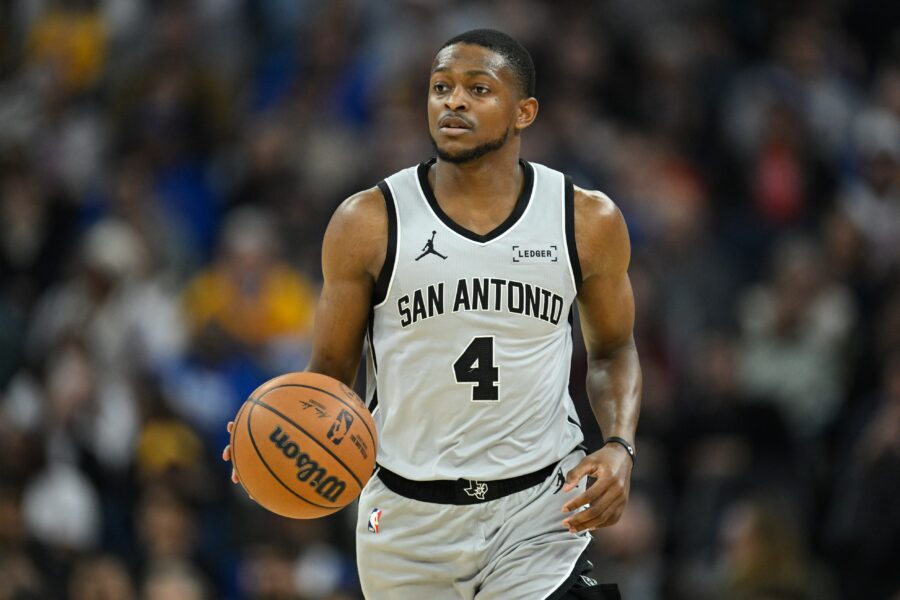
Fox's 7-point, 3-of-13 shooting line in 38 minutes represents the most obvious pressure point for bettors. The veteran acknowledged the dip straightforwardly: "I've got to make shots." But here's the mechanics that oddsmakers may have overcorrected on: Fox arrived in San Antonio specifically accepting a reduced shot volume role within a Wembanyama-first offensive architecture. This wasn't a surprise underperformance—it was a structural constraint Fox accepted in the offseason. Game 1 wasn't evidence that Fox is slumping into the Finals; it was evidence that his role definition held exactly as designed. Keldon Johnson's 3 points in 8 minutes compounds the single-game outlier narrative: a role player underproduced in a high-leverage moment, then signaled in his postgame remarks that he's compartmentalizing the letdown rather than panicking. "You process it that night and then you let it go," Johnson said. That's not rust—that's discipline.
Wembanyama's availability itself deserves forensic attention. He missed the final 36 games of last season due to deep vein thrombosis, returning for the playoffs into a championship run. The fact that San Antonio made the Finals with him managing a soft return is remarkable; the fact that he's now fully integrated and performing at elite volume (implied by his lack of concern on the mic) creates a durable structural edge. The Spurs weren't championship-ready when the season opened, per Wright's own candid assessment. Yet here they are, and the roster's youth—Castle, Wembanyama, Johnson, Vassell—all improving in-season compounds that advantage as the series deepens. Single-game shooting variance (Fox's 23% FG, Johnson's limited bench minutes) will revert. Organizational depth won't.
For prop bettors, the edge lies not in chasing Fox to explode from 7 points but in understanding the mechanism underneath the variance. Fox's volume will likely normalize toward his established Finals-series average once adjustment attempts in San Antonio's offensive scheme shake out. The market may have already spiked his points line seeking regression, but the true edge is on his assist rate and efficiency within pick-and-roll sequences—areas where the Spurs' spacing and Wembanyama's gravity should create cleaner passing lanes than Game 1 featured. Johnson's minutes are more volatile; a return to 20+ minutes paired with even league-average efficiency (he hit 3-pointers at 33% in the regular season) swings his points prop from 6-8 range toward double digits. Both players are more likely to find their touch in a Game 2 where the Spurs' game plan can account for Game 1's early-series jitters than they are to remain frozen.
The spread and totals already price in some Spurs regression simply because they lost; that's the mechanical overcorrection. San Antonio's actual weakness—bench depth against a more veteran Finals opponent—remains real. But Fox's shooting form and Johnson's role definition are execution variance, not structural weakness. Expect both to stabilize. The team's resilience is baked into the narrative now; the oddsmakers' single-game overreaction to Game 1 shooting percentages is not.