Harper's Adductor Injury Clouds Spurs Game 3; Backcourt Depth Under Siege
By Erik Schwartz ·
Dylan Harper is a game-time decision for Friday's Western Conference Finals matchup, forcing San Antonio to navigate a critical playoff moment without clarity on one of its rotation anchors.
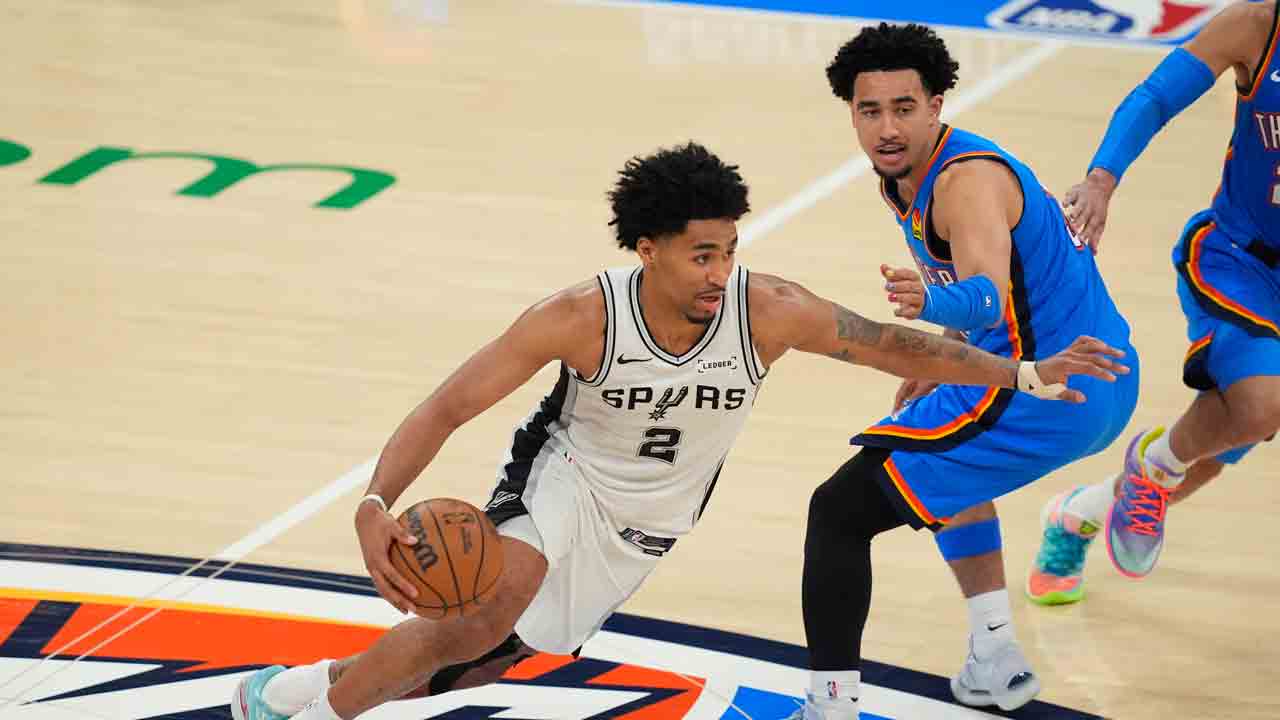
Dylan Harper's status for Game 3 of the Western Conference Finals remains unresolved heading into Friday night's tipoff. An MRI revealed an adductor strain rather than a hamstring injury after the 20-year-old guard took two hard falls a minute apart in the third quarter of Game 2, per ESPN. The Spurs will wait until pre-game warmups to make a final call, leaving both San Antonio and bettors working without full information on one of the series' most dynamic young players.
The timing is brutal. Harper has been San Antonio's second engine in these playoffs, averaging 14.4 points, 5.3 rebounds, and 1.5 steals across the first two games. His Game 1 performance—24 points, 11 rebounds, six assists, and a franchise playoff record seven steals—set the tone for the Spurs' split in Oklahoma City. This is not a marginal contributor; he's a rookie on an all-rookie first team who's performing at a level well above his draft positioning and regular-season 11.8-point average. San Antonio's backcourt is already without All-Star De'Aaron Fox (right ankle sprain), meaning if Harper can't play, the Spurs will be forced to lean heavily on role players and veterans who haven't been asked to carry this load in a playoff series.
Adductor strains carry genuine uncertainty around availability and performance. A player can technically suit up but operate at 70-80% mobility, which in the playoffs often shows up as reduced burst, hesitancy on lateral cuts, and decreased explosive finishing. Even if Harper gets clearance Friday, his effectiveness could be compromised. The Thunder defense has already shown comfort pressing San Antonio's guards; a gimpy Harper becomes a more exploitable target on both ends. Oklahoma City closed Game 2 with excellent switching discipline and forced turnovers at a 19.2% rate—well above the regular season average. If Harper is out or playing injured, that number will only improve.
For prop bettors, this is a critical monitoring moment. If Harper plays at full health, his steals total and assist line should track near his Game 1 ceiling; if he's unavailable or limited, both will collapse. The market has likely not fully repriced the depth chart yet, because the game-time decision structure means early action on his individual props (if available) may be based on optimistic assumptions. His steals props in particular are sensitive to health—the seven-steal Game 1 was an outlier, but his 1.5 steals-per-game playoff average still suggests elevated activity against a Thunder team that plays loose with the basketball. That edge evaporates if he's off the court or moving gingerly. The sharper play is to wait for pre-game clarity rather than chase Harper prop odds with residual uncertainty baked in. Similarly, Spurs team total and backcourt-adjacent assist props become riskier until the decision is finalized.