Fox's High Ankle Sprain Stretches Into Game 2: The Spurs' Backcourt Void Tilts Western Finals Odds
By Ty Whitney ·
De'Aaron Fox misses a second straight contest against Oklahoma City, and San Antonio's proven resilience without him masks a dangerous scoring gap in the most critical series of the season.
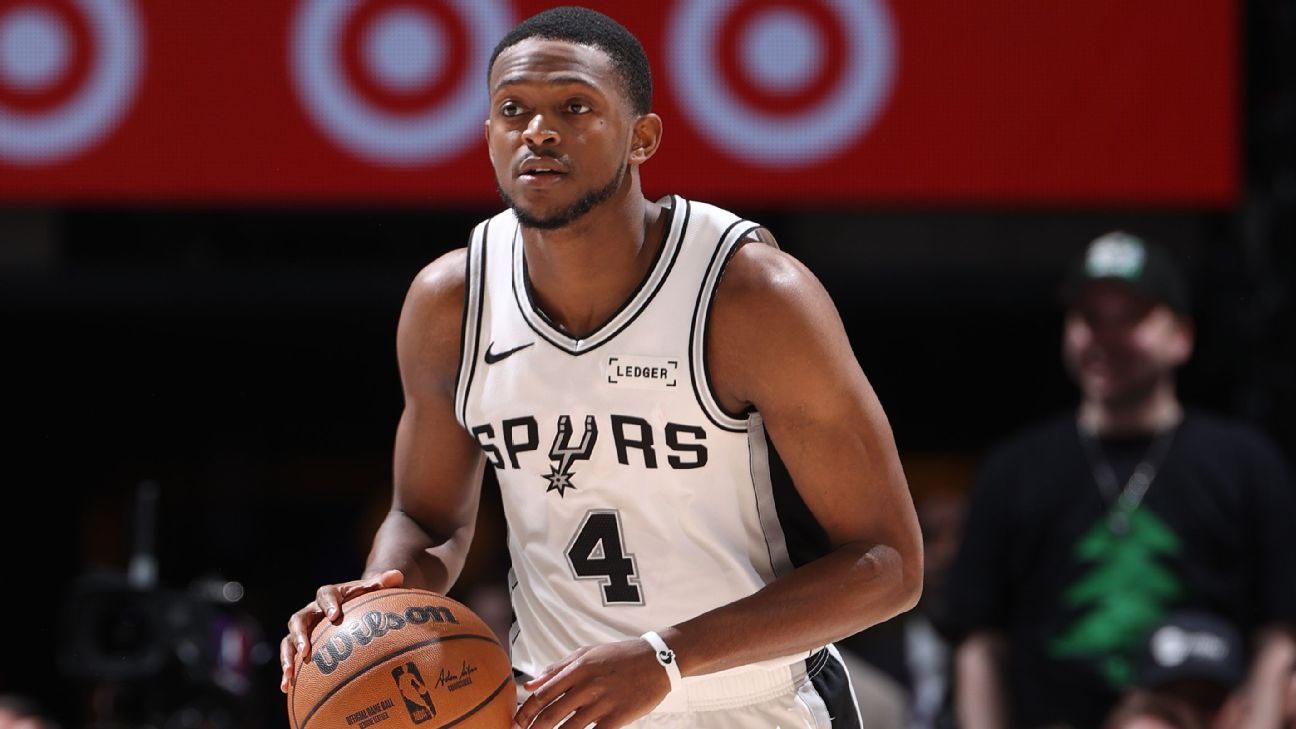
De'Aaron Fox will not play in Game 2 of the Western Conference Finals on Wednesday against the Oklahoma City Thunder due to a right high ankle sprain he suffered in Game 4 of the Timberwolves series. Coach Mitch Johnson offered little hope for a rapid return, telling reporters Monday that the injury "is not going away for as long as we're playing, I don't believe"—the kind of candid assessment that signals Fox will operate at reduced capacity for the remainder of the postseason, if available at all.
Fox's absence creates a structural problem that raw win-loss records obscure. The Spurs went 8-3 without him during the regular season, a surface-level comfort that dissolves under playoff scrutiny. The Thunder's defense—particularly their ability to trap ball-handlers in pick-and-roll situations and force guards into difficult reads—thrives when a team must patch holes with secondary playmakers. Johnson's backcourt depth is functional but not dynamic. Without Fox's 5.8 assists per game in the playoffs (and his 18.8 PPG), San Antonio's offensive flow depends more heavily on off-ball movement and isolation scoring. The Thunder, ranked third in defensive rating during the postseason, specialize in collapsing on exactly that type of attack.
The deeper concern is game-state dependency. Fox played through pain in Games 5 and 6 against Minnesota, a survival tactic in a must-win situation, but the Thunder series—potentially a seven-game gauntlet—demands different math. Rest now costs a playoff game but preserves a star's long-term availability. Conservative team medicine often wins that calculation in May. His prolonged absence also raises the injury's grade: high ankle sprains linger. Players who miss consecutive games rarely bounce back to form within 48 hours. The Spurs' 8-3 record without him is built on blowouts, bench depth contributions, and regular-season mismatches. Playoff defenses don't grant those margins.
From a prop perspective, this impacts both team-level and individual playmaker lines. San Antonio's team total entered Game 2 in the 110–113 range, a number that assumed marginal Fox availability or return-to-action momentum. With him sidelined and no timetable for re-entry, sportsbooks will likely adjust that total downward by 1.5–2.5 points, reflecting the genuine offensive loss. More moveable is the assists market. Johnson is likely to increase minutes for backup guards Tre Jones or another secondary creator; expect their individual assist lines to widen as books price in expanded opportunity. However, the causal mechanism works against volume accumulation—fewer shot attempts by a depleted roster compress the total assist pool. Lean unders on Spurs team assist totals (typically in the 24–27 range) for as long as Fox remains out. The market will price the absence into team total fairly quickly, but the assists threshold—a less-watched secondary market—often lags that adjustment by a full game cycle.