Sarr's Foot Surgery Won't Derail Wizards' Third-Year Timeline
By Ty Whitney ·
Alex Sarr's fractured foot is no career alarm—the Wizards cleared him for opening night, and his draft capital ensures Washington stays aggressive on his development.
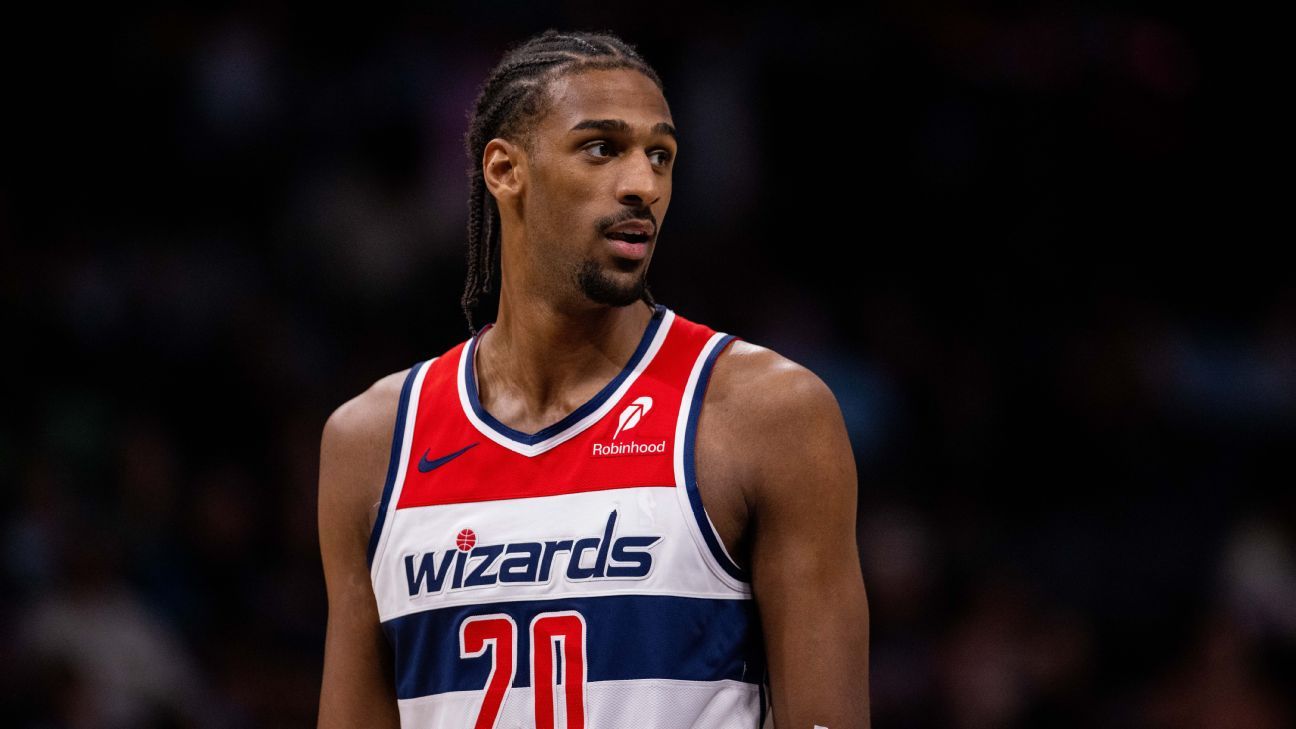
Washington Wizards center Alex Sarr underwent surgery Monday to repair a fractured right foot sustained during an offseason workout late last week. The team announced he is expected to be healthy by the start of the 2026-27 season, which tips off in approximately 4.5 months. The injury itself is a contact-play mishap, not a structural concern that would threaten his long-term ceiling or force a significant ramp-up delay.
Sarr, the No. 2 overall pick in 2024, is entering his third season in a rebuild that has demanded patience from the entire franchise. Last season he averaged 16.3 points, 7.4 rebounds, and 2.0 blocks across 48 games—a promising floor given the injury load that has plagued his first two years. The Wizards have lost 64 or more games in each of the past three seasons, but they've signaled a commitment to acceleration by acquiring Trae Young and Anthony Davis to surround Sarr's core of young players. That trade capital and draft positioning (they hold this month's No. 1 pick) telegraph the organization's belief that Sarr is a cornerstone piece, not a speculative prospect.
The timing of the surgery—clearing him for training camp and opening night—removes the ambiguity that would tank his season-long prop values. Foot fractures in NBA players often carry recovery uncertainty because of gait issues and lateral-movement restrictions that linger past medical clearance. Here, the team's explicit timeline confidence and the clean nature of the injury (contact, not overuse) suggest a straightforward healing arc. There is no indication of complications, no soft-tissue damage, no months-long reconditioning loop.
For bettors, this shapes two clear angles: Sarr's season-long point and rebound totals can be played with less discount for availability risk than typical third-year prospects face. His 16.3 PPG from last season was earned in limited games and a chaotic offensive environment; paired with Young and Davis easing defensive pressure, a climb toward 18-20 PPG is plausible over a full 82-game slate if he stays healthy postoperatively. Rebound range (7.4 last year) faces the same upside: more court time, clearer role definition, and no lingering injury worry means the market may be underweighting his full-season floor. The Wizards' recent trades confirm they are betting on Sarr as a pillar, not a sidepiece, and that organizational commitment is reflected in minutes and opportunity.
The real risk is not the foot surgery itself—it's whether the Wizards' supporting cast (Young's fit, Davis's injury history) actually elevates Sarr or creates chaos. But the medical clearance removes the injury-return volatility that normally clouds third-year center props in mid-June.