Shamet's Four-Year Knicks Deal Locks In Spacing for Defending Champs
By Ty Whitney ·
New York secures its most reliable three-point shooter on a long-term deal just as free agency opens, removing roster volatility and clarifying the team's spacing math for next season.
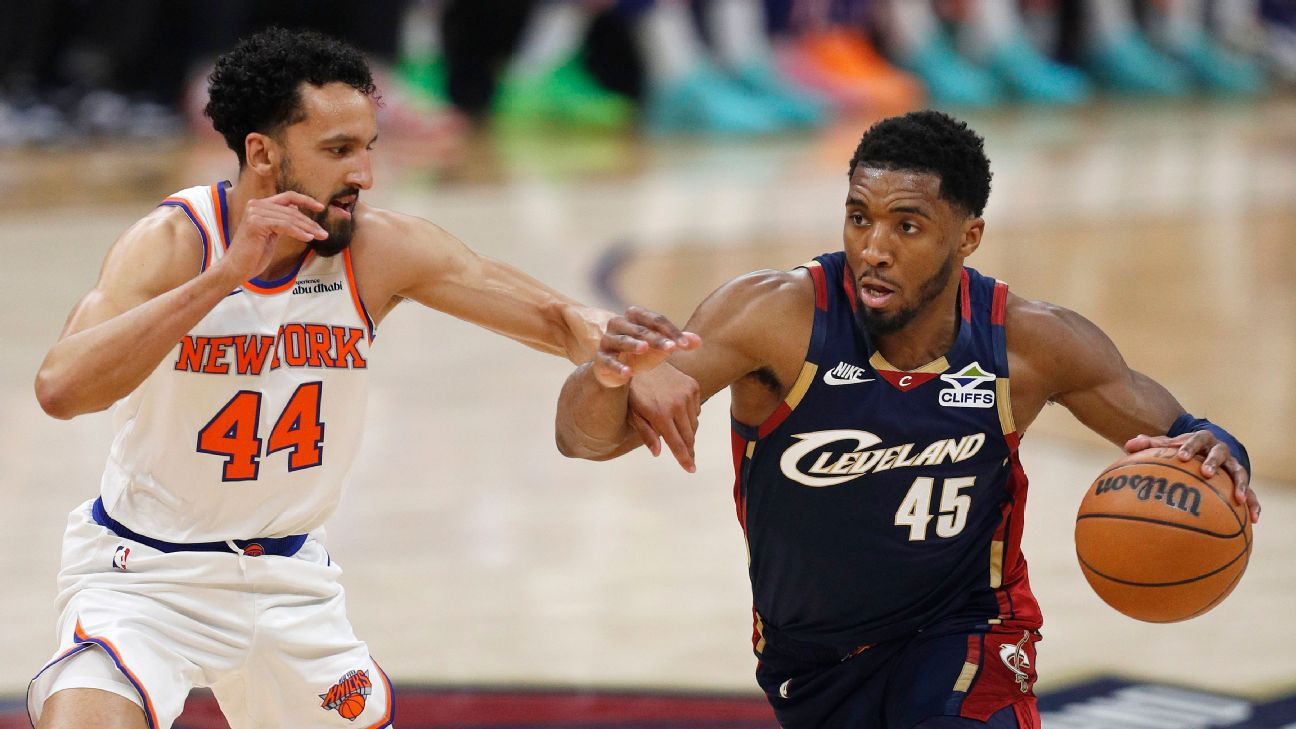
Landry Shamet has agreed to a four-year, $24 million contract with the New York Knicks, according to ESPN, cementing his role as a permanent part of the defending NBA champions' core. The deal came together Monday as Shamet faced an open market on July 1, with multiple teams positioning to court the 29-year-old guard. Instead, the Knicks moved first—his agent George Langberg negotiated a long-term commitment that keeps New York below the second apron threshold, a financial constraint owner James Dolan identified as essential to roster construction.
Shamet's two-year tenure in New York has been lean on usage but outsized in efficiency. Over 101 regular-season games (12 starts), he averaged 7.1 points on 19.1 minutes per game. During the Knicks' championship run, however, his impact crystallized: 6.0 points per game on 47.5% three-point shooting in limited playoff minutes. That floor spacer role—where volume doesn't matter as much as reliability—is worth locking down before July 1 bidding drives salaries upward. The Knicks now have 11 players under contract with roster flexibility preserved.
From a roster construction standpoint, Shamet's retention signals confidence in New York's backcourt architecture. The Knicks built a championship offense around ball movement and spacing; Shamet's 47.5% playoff three-point percentage in the finals run isn't noise. That's a 200+ game career sample from deep (49.2% over five seasons), making him one of the league's most consistent off-ball shooters. Keeping that weapon eliminates the risk of losing spacing continuity to free-agency churn.
For prop bettors, Shamet's contract lock-in clarifies next season's Knicks lineups in two specific ways. First, his guaranteed tenure means he'll draw predictable rotational minutes—19-20 MPG in the regular season is his baseline, with escalation in tight playoff moments. That stability allows for reliable per-game prop construction: his 7.1 PPG baseline is anchored to games where the Knicks likely need spacing, not games where blowouts compress minutes. Second, his three-point volume remains a function of team spacing architecture rather than opportunity scarcity. When defenses collapse on primary ball handlers, Shamet's catch-and-shoot attempts rise; the Knicks' offensive system hasn't changed, so that mechanism persists. Taking Shamet's three-made prop (likely in the 1.5–2.5 range depending on sportsbook) becomes a proxy for trusting New York's spacing continuity rather than betting on Shamet's individual hot streak. Over a full season, that's a durable edge because it rests on system role, not on shooting variance.