Randle to Nets Unlocks Wolves Salary Flexibility—But Minnesota's Core Takes a Step Back
By PropBetEdge Editorial Team ·
Julius Randle heads to Brooklyn as Minnesota pivots away from a $100M commitment, creating cap room but signaling doubt about the current roster's ceiling.
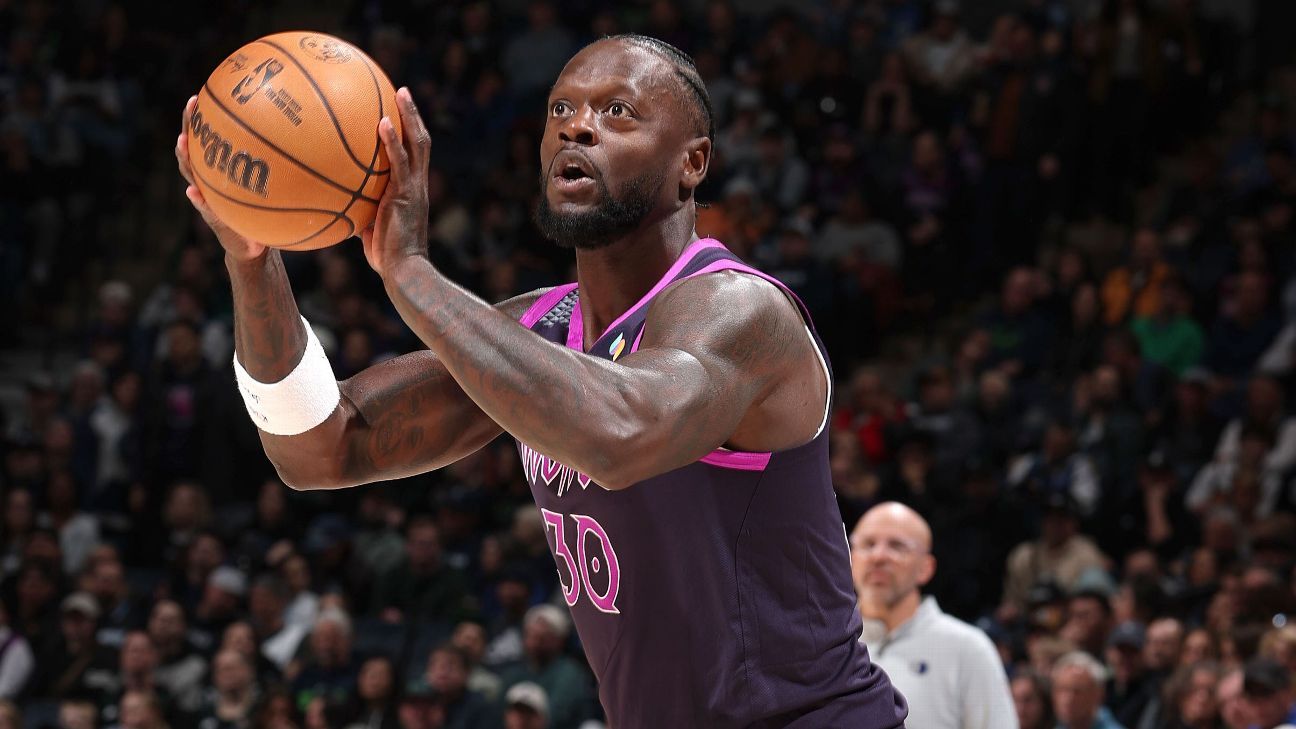
The Minnesota Timberwolves have traded Julius Randle and the No. 28 draft pick to the Brooklyn Nets, acquiring the No. 33 pick in return and shedding roughly $50 million in salary over the next two years. The deal ships Nic Claxton to the Chicago Bulls and reshapes the Nets' roster on the back of one of the offseason's first major moves. The trade lands Randle back in New York—the Nets, not his former home in Manhattan—less than eight months after the Knicks sent him to Minnesota as the centerpiece of the Karl-Anthony Towns deal.
Randle's departure from Minnesota is functionally a reset. He signed a three-year, $100 million extension last offseason to stay put, but the Wolves' brass evidently lost faith in his fit alongside Anthony Edwards and Karl-Anthony Towns. A three-time All-Star, Randle averaged 24.0 points and 9.4 rebounds in 2024-25, solid enough on the surface—yet his playmaking remained a weakness (2.8 assists per game), and his defensive versatility hasn't aged well in a small-ball league. The Timberwolves were chasing a title window; Randle didn't align with that timeline or archetype. Minnesota gains $50 million in flexibility over two years, money earmarked for retaining Ayo Dosunmu and accessing mid-level exceptions. That's cap room with purpose, not panic dumping.
For bettors tracking Timberwolves construction, this move confirms the direction of travel: Minnesota is building around Edwards, Towns, and Dosunmu's perimeter skill set. The Nets absorb Randle's salary and pick swap, a move signaling they're still in accumulation mode after another rough season. Brooklyn gets a mid-30s pick and subtracts Claxton, a young rim-runner whose value in the modern Nets offense had begun to diminish. The Bulls add Claxton as a lob target for their guards, a vertical spacing piece that fits their system more neatly than it fit Brooklyn's.
The prop implications cut two ways. First, Timberwolves team totals for next season should stabilize toward the mid-to-high 110s; losing Randle's 24 PPG removes significant shot volume, but the offense may actually improve if Edwards and Towns face fewer defensive stacks and Dosunmu's creation talent gets unleashed. Towns' assist rate and three-point attempts could spike, making assists lines worth monitoring at draft time. Second, Nets team totals face downward pressure—Randle's scoring fills a void in Brooklyn, but he doesn't solve their chronic spacing issues or defense. Look for the Nets' projected season total to land below 110; that volatility makes team unders attractive once Vegas publishes numbers, as the market will initially price in Randle's PPG without accounting for how little he'll move the win needle in isolation.