Pistons Shed LeVert for 3-Point Floor Spacing; Detroit Recalibrates Rotation as Top Seed
By Ty Whitney ·
Detroit trades away its bench scorer to Milwaukee for elite perimeter shooting and cap flexibility, signaling a shift toward shooting-heavy depth in pursuit of a championship.
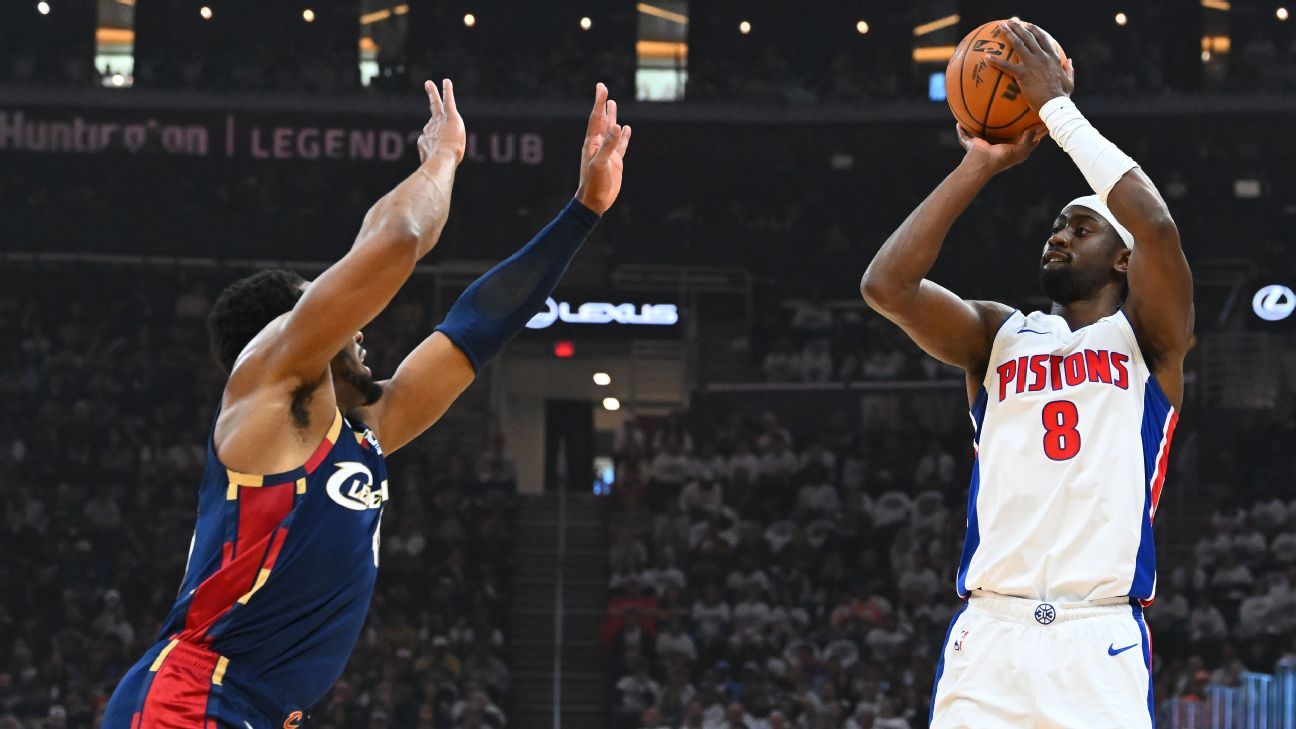
The Detroit Pistons have traded Caris LeVert and two second-round picks to the Milwaukee Bucks for Taurean Prince and Gary Harris, per ESPN. The deal ships out a 7.4-points-per-game reserve who appeared in 60 games for the No. 1-seeded Pistons last season, clearing cap space and creating a trade exception in the process. All three players involved carry expiring deals, making this a low-commitment swap designed to reshape the roster's floor spacing.
LeVert signed his two-year, $29 million contract with Detroit last offseason on the heels of the Pistons' improbable run to the top seed. He chipped in consistently but never graduated beyond sixth-man volume, averaging 7.4 points on 41.7% shooting from the field. His departure suggests the Pistons' front office believes their rotation can generate offense elsewhere—a tacit acknowledgment that depth scoring, not isolation creation, was the bottleneck. Prince, by contrast, has posted 43%-plus 3-point shooting in each of the last two seasons, making him a high-leverage spacing piece. Harris, a 12-year veteran who logged just under 14 minutes per game with Milwaukee, adds secondary perimeter defense without eating significant minutes.
The trade exception Detroit created unlocks future roster flexibility without forcing an immediate move. The Pistons are positioning themselves to add reinforcement at the deadline or beyond without salary complications—a luxury teams manage tightly in July. Prince's elite shooting floor immediately tightens opposing defenses in pick-and-roll action; his presence should expand driving lanes for any ballhandler catching him in transition or in static spacing sets.
For betting purposes, this deal carries direct implications for Detroit's three-point volume and efficiency. Prince's insertion into the rotation elevates the team's perimeter threat profile, which may cause sportsbooks to nudge team totals marginally higher in early preseason betting. However, the Pistons lose LeVert's 41.7% floor, meaning individual game shooting variance could be more volatile—playoff teams with elite spacing can flip between 50-point quarters and 35-point quarters depending on make-miss variance. Monitor Prince's minutes allocation in the preseason; if he settles into consistent 25+ MPG alongside the starting unit, team-total overs become more appealing as the regular season approaches. Conversely, if he remains a 15-minute specialist, the shooting upgrade becomes marginal and overs flatten relative to last season's No. 1-seed pace.
The cap flexibility is the sleeper angle. If the Pistons add a third scoring option before the deadline—particularly a shot creator who benefits from Prince's spacing—the team's offensive ceiling shifts up materially. Until then, treat this as a floor-spacing recalibration rather than a ceiling raiser. The trade exception itself won't appear on a box score, but it will dictate whether Detroit's championship window remains open at the trade deadline.