John Collins Joins Pistons as Starting Power Forward; What His Spacing Changes for Cade Cunningham
By PropBetEdge Editorial Team ·
Detroit adds a floor-spacer and lob threat to its frontcourt rotation, reshaping how its offense can attack through pick-and-roll.
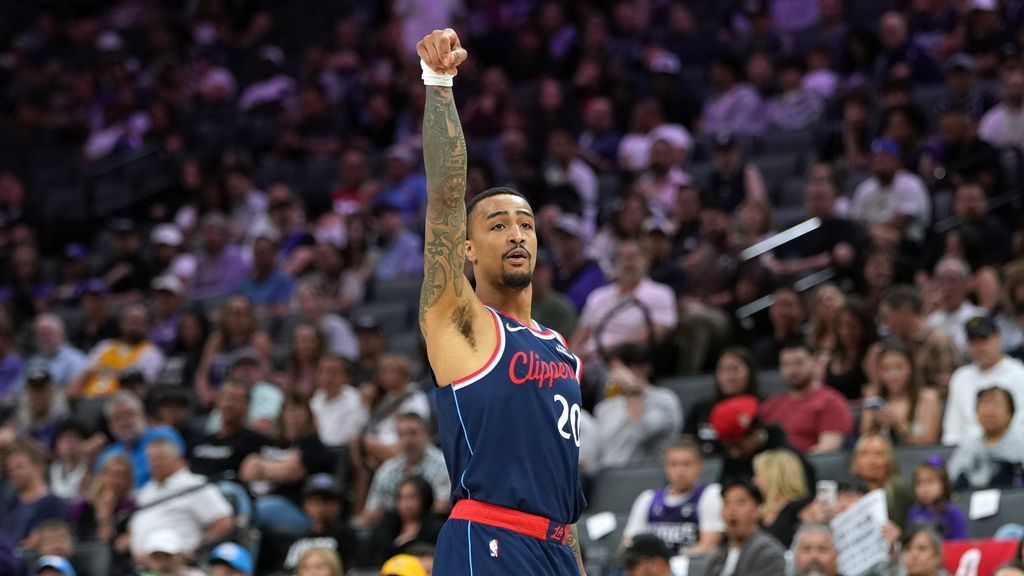
John Collins signed a three-year, $51 million deal with the Detroit Pistons on Wednesday, landing on a team that identified him as its top target to anchor the power forward rotation. The 28-year-old arrives fresh off a season with the LA Clippers where he averaged 13.6 points and 5.3 rebounds on 55% field-goal shooting and 40% from three—a spacing profile that immediately widens the floor for Cade Cunningham's playmaking.
Collins' value isn't measured in volume. It's structural. Over his career, he's operated as a floor-spacing big who can punish switching defenses with vertical gravity and outside range simultaneously. Last season with the Clippers, he dunked nearly 15% of his shot attempts—a mark that indicates rim-running and lob availability—while maintaining legitimate three-point shooting at league-average rates. That combination is rare. It means Cunningham can run pick-and-roll with Collins knowing that defenders cannot camp in the paint; they have to defend the perimeter, which generates driving lanes and secondary playmaking windows.
The fit with Cunningham is the operative edge here. Detroit's offense has historically struggled to generate consistent spacing around its young lead guard. Adding a player who can threaten both the rim and the three-point line from power forward forces opposing defenses into a choice: collapse on drives and give up open threes, or play straight-up and surrender layup opportunities. Cunningham's assist numbers have historically ranged from 6.2 to 7.8 per game depending on his shooting volume and roster spacing. When paired with a versatile finisher who can operate both directions—like Collins—that number should tick upward to the 8-to-8.5 range, particularly in games where the Pistons face switch-heavy defensive schemes.
From a prop angle, Cunningham's assist total carries real upside in games where Detroit faces switching defenses or younger, less disciplined frontcourts. Collins' presence removes the need for Detroit to run rigid drop-coverage or zone adjustments that compress playmaking lanes. If you see Cunningham assists priced at 7.5 against a defense that commonly switches pick-and-roll, the over becomes accessible; the mechanism is that Collins' spacing creates secondary playmaking opportunities that lower-spacing power forwards don't generate. This edge persists across the season because it's rooted in Collins' positional profile, not a single game outcome.
Collins also raises the team total ceiling for Detroit. The Pistons' offensive efficiency has been dragged down by power-forward spacing; adding a player shooting 40% from three and capable of 55% overall field-goal shooting should push team totals up marginally in the regular season. Monitor opening totals in the 112-114 range early in the year; if the market doesn't immediately price in Collins' efficiency, backing the Pistons over should be profitable in the first 10 games before the books fully adjust.