Splitter to Chicago: Player Development Bet Arrives in Bull Market
By Erik Schwartz ·
The Bulls hire Portland's architect of second-chance dominance and defensive discipline, signaling an organizational pivot away from Donovan's pace-and-space model.
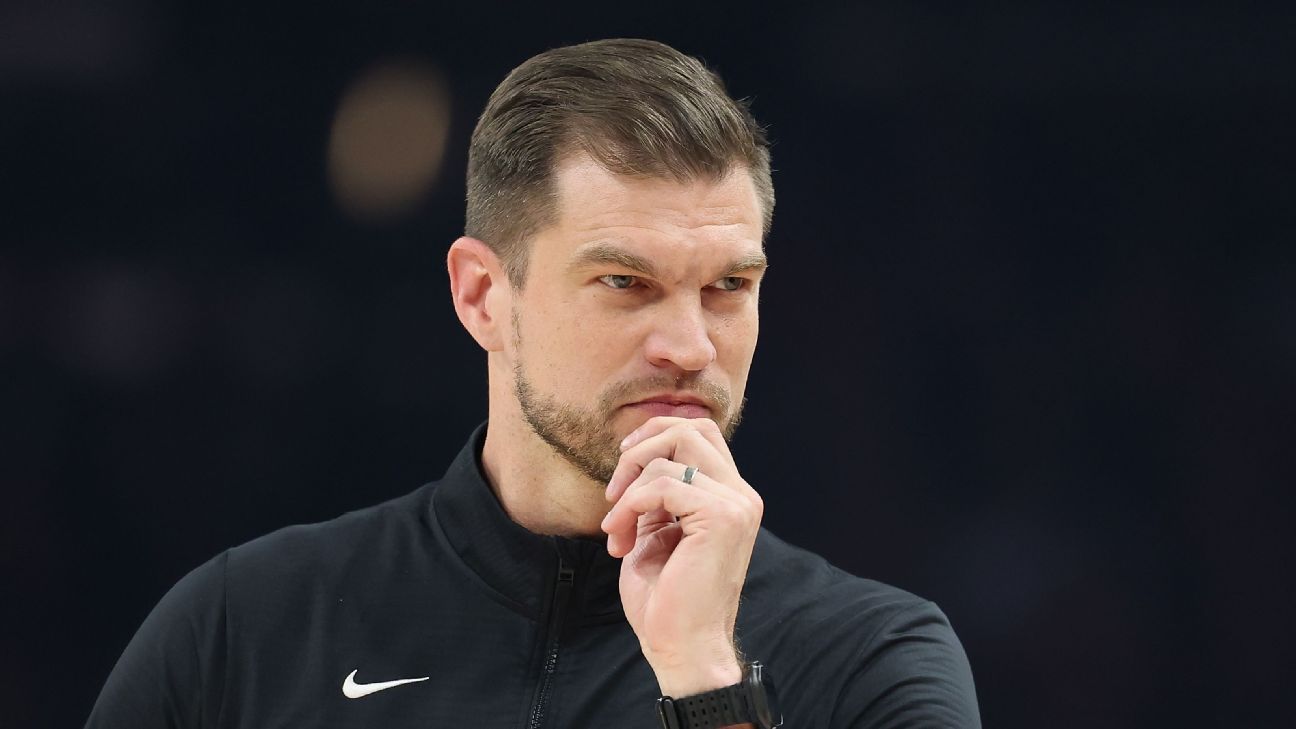
The Chicago Bulls are finalizing Tiago Splitter as their next head coach, replacing Billy Donovan after the franchise cycled through a search that included Timberwolves assistant Micah Nori, Hawks assistant Ryan Schmidt, and incumbent Bulls assistant Wes Unseld Jr. Splitter, 41, spent the 2025-26 season as Portland's interim head coach and guided the Trail Blazers to a 42-40 record and a No. 7 seed playoff berth despite the organizational chaos surrounding Chauncey Billups' federal charges—a mandate that would have sunk most first-time interim coaches. His credential alone distinguishes him from the Donovan regime: Portland led the entire NBA in second-chance points per game under Splitter, and the Blazers posted a top-10 defense over the final 51 regular-season games (30-21 record in that span). Splitter also earned the locker room's confidence, most visibly through Deni Avdija's emergence as an All-Star under his watch.
The hiring marks a structural philosophy shift for Chicago. Donovan's tenure emphasized pace, spacing, and high-volume three-point attempts—a system built around older wings and guards who don't defend well. Splitter's portfolio, by contrast, centers on defensive anchoring and margin play: second-chance dominance, transition efficiency, and positional versatility. His seven-year NBA playing career with San Antonio under Gregg Popovich, followed by scouting and development roles in Brooklyn (2018), Houston (2023-24), and Paris Basketball (2024-25), has equipped him with a front-office sensibility rare among first-time head coaches. The Bulls' brass—executive vice president of basketball operations Bryson Graham and his staff—identified player development, organizational clarity, and leadership as the selection drivers. Those aren't vague attributes; they point to a team that needs younger players to cement roles and defensive assignments to tighten a permeable perimeter.
For prop bettors, this hire reshapes Chicago's offense-to-defense balance and team-total volatility. Under Donovan, the Bulls averaged 115.2 points per game with a three-point rate of 38.6% and ranked 18th in defensive rating. Splitter's Portland offense scored fewer (109.4 PPG) but won through efficiency on second chances and controlled pace. If Splitter imposes similar principles in Chicago, the Bulls' team total should compress downward by 2-3 points from their current season projections, while their implied under rates will gain durability. The defensive improvement will be gradual—Splitter inherited a bottom-five defense and lifted it to top-10 over a half-season, suggesting 8-12 weeks of structural installation required. During the preseason and October, expect the under on Bulls team totals to carry a mathematical edge as opponents exploit early communication breakdowns while Chicago's young roster learns a new language.
The near-term volatility spike (first month) creates a single-event overlay: if the Bulls face a spacing-heavy, three-happy opponent in early November, unders become oversized layup attempts because Splitter's teams surrender far fewer corner threes than Donovan's did. This is not a season-long trend bet—it's a pre-adjustment window before books and the market digest the philosophical reorientation. By December, the lines will have corrected. For now, sample Splitter's first games at home, where young rosters typically stabilize fastest, and isolate unders when Chicago faces perimeter-heavy offenses. The edge expires once the Blazers' 2025-26 film becomes reference material and Splitter's system becomes tablestake knowledge.