The Six-Team Mega-Deal Reshapes Contention Windows: Khris Middleton to Washington, D'Angelo Russell to Memphis, and the Cap Algebra That Made It Work
By Erik Schwartz ·
A sprawling six-team trade officially assembles in real time, moving All-Star talent across the league while preserving mid-tier cap space through aggregated salary matching—reshaping offensive load distribution and playoff ceiling for four NBA rosters in one transaction.
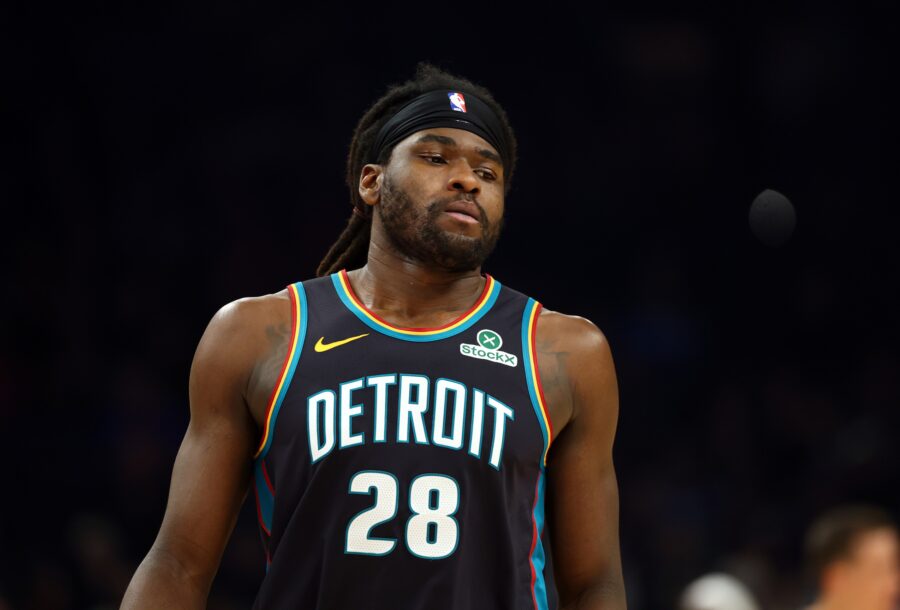
The six-team trade that began gestating on June 24—the second night of the draft—officially took shape tonight as the NBA's salary-cap mechanics allowed six clubs to roll multiple bilateral agreements into a single mega-deal. The centerpiece moved Khris Middleton to Washington on a sign-and-trade into a three-year, $17.6 million contract, while D'Angelo Russell departed the Wizards for Memphis, Isaiah Stewart went from Detroit to the Grizzlies, Santi Aldama arrived in Dallas, Caris LeVert moved to Milwaukee, and John Collins landed with the Pistons as a three-year, $51 million sign-and-trade from the Clippers. The mechanics reveal the real game: none of these moves work independently without the others.
The Mavericks get the structural prize. Had Dallas completed the Aldama deal directly with Memphis, the incoming $17 million salary would have consumed nearly their entire $20.8 million Anthony Davis traded-player exception, leaving minimal flexibility. By threading Middleton's $5.6 million outgoing salary into the aggregate, combined with AJ Johnson's $3.2 million, the Mavericks satisfy the salary-matching requirement for Aldama while preserving the full Davis TPE for future deployments. The Grizzlies meanwhile transform their depth by moving Stewart—a low-usage big—for an upgrade in D'Angelo Russell's offensive creation and Aldama's wing flexibility, alongside a pipeline of future picks (Warriors 2030 protected, Lakers 2029 second-rounder, and additional assets). Memphis sacrifices some near-term salary but gains optionality in the offseason.
Washington's acquisition of Middleton injects proven off-ball scoring and movement gravity into their perimeter rotation, though at a discount rate that reflects his $17.6 million annual cost. The Wizards jettison Russell's $29.7 million expiring deal to clear runway—a move that signals they're prioritizing spacing and three-point volume over playmaking redundancy. The Bucks acquire LeVert's secondary playmaking to alleviate pressure on Damian Lillard, while the Clippers unload Collins' salary and role-player depth (Prince, Harris) in exchange for future-pick ammunition. Detroit, the tax tether in this arrangement, absorbs Collins and gains salary-matching flexibility elsewhere.
From a betting perspective, the Mavericks' preservation of the Davis TPE is the operational tell. Teams don't engineer cap structures this intricate unless they're deploying that space before training camp—expect Dallas to hunt a third-star acquisition or a high-usage wing in free agency. That moves their ceiling from "second-round contender" to "puncher," which tightens their point-spread markets and raises team-total expectations once the roster is finalized. Russell's departure from Washington also flattens their assist-distribution profile; without his creation, the Wizards lean more heavily on isolation scoring from their wings, which historically carries higher variance. Middleton's arrival compresses assist volume across the roster—he generates his own looks rather than operating as a playmaking hub. Watch for Washington's combined assists-and-points props to widen as games unfold, reflecting the statistical volatility baked into a less-connected offensive graph. Memphis gains stability in Russell's creation but loses Stewart's pick-and-roll gravity, which reduces their interior offense's efficiency ceiling—a modest headwind on Ja Morant's scoring volume in certain matchups.