Sixers Face Luxury Tax Reckoning as McCain Trade Handcuffs Free-Agent Retention
By Erik Schwartz ·
Philadelphia's midseason guard trade limits roster flexibility and may force the team to overpay for role players or absorb substantial payroll penalties.
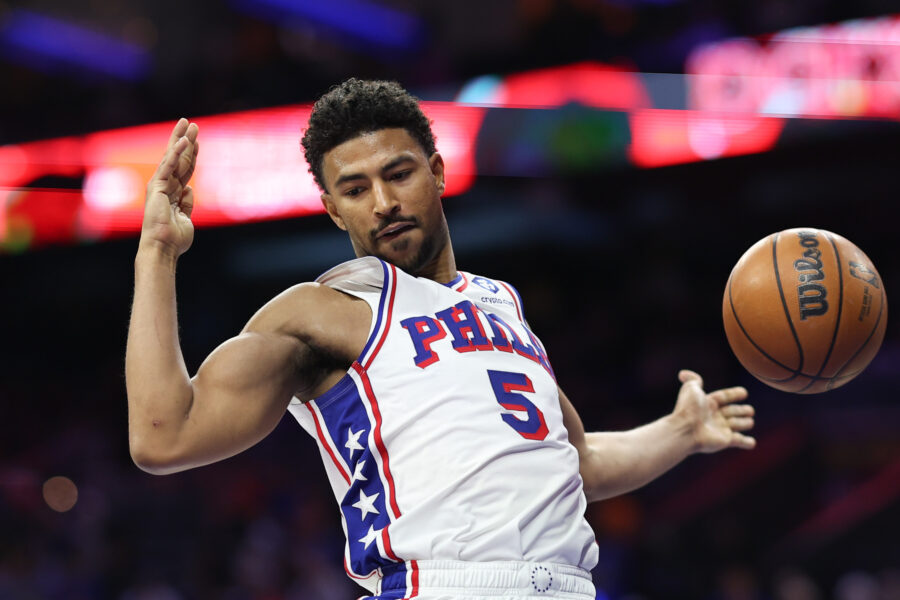
The Philadelphia 76ers shipped Jared McCain to Oklahoma City in February with the understanding they'd pivot to internal depth. Instead, they're now staring down an expensive summer where they may have to retain both Quentin Grimes and Kelly Oubre Jr.—or risk public relations damage if they let either walk. Per Tim Bontemps of ESPN, rival front offices believe the Sixers will cave to the pressure and re-sign both, with Grimes expected to command around the non-taxpayer mid-level exception at $15 million annually.
The math is brutal. The Sixers have historically resisted the luxury tax, but losing McCain without securing proven wing depth creates a vacuum at a position group already operating on thin margins. As one Western Conference executive told ESPN: "You have to keep at least one of [Grimes or Oubre], if not both, after that trade. And if they don't go into the tax, they're going to get crushed." That's not hyperbole—it's the cost of a midseason decision made under time pressure. McCain was a guard capable of creation and scoring; the team's answer to losing him cannot be a summer of retreat.
Beyond the two headliners, Philadelphia faces secondary decisions on Dominick Barlow (holds a $3.4MM team option) and Trendon Watford ($2.8MM option). Barlow appeared in 71 games (59 starts) and averaged 7.7 points and 4.8 rebounds in 23.8 minutes per game—solid rotation production for a fourth-year forward, despite gaps in three-point range. Watford and Oubre represent more complex evaluations. Internal voices are split on priority: Mizell and Carroll of the Philadelphia Inquirer view Oubre as the must-keep asset, while Murphy argues neither player warrants retention at full market rate.
For bettors, the roster uncertainty introduces a layering problem heading into 2026-27. If the Sixers do sign both Grimes and Oubre while retaining Barlow, their bench depth improves but their cap flexibility evaporates—they enter the season with reduced trade chips and no room for midseason adjustments. That typically correlates with slower playoff push adjustments and higher volatility in late-season betting lines. Conversely, if Philadelphia balks at the tax and lets one or both walk, their wing rotation thins and their shot creation from the bench contracts. Either path affects role-player minutes and consistency. Grimes's assist and three-point volume sit at career lows (2.3 APG, 26.4% from three this season), but in a deeper bench rotation he'd see more opportunity—a countervailing force to regression expectations. Watch the market's early reaction to Philadelphia's first moves; if they move quickly and expensively on both guards, it signals capital allocation toward guard depth, which has downstream effects on forward minutes and shooting efficiency.