Rockets Shed Finney-Smith to Unlock Apron Space—and Reset Roster Construction
By Erik Schwartz ·
Houston trades depth for flexibility, signaling a shift away from the star-heavy roster construction that defined their offseason.
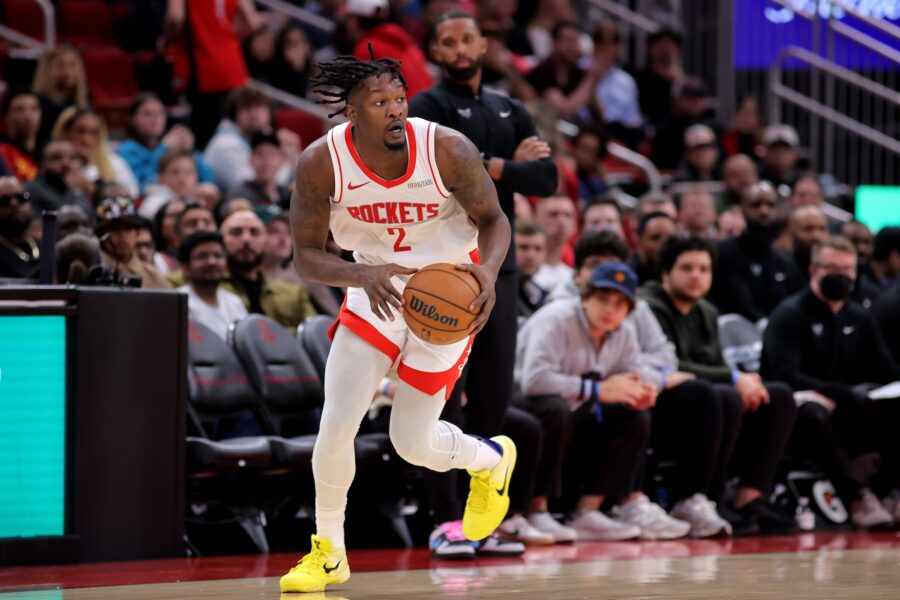
The Rockets and Hornets agreed to a deal that sends forward Dorian Finney-Smith and three future second-round picks (Memphis' 2027 selection and Houston's own 2028 and 2029 picks) to Charlotte. Per ESPN, the move generates immediate tax savings and apron relief for Houston, which signed Finney-Smith less than a year ago to a multi-year contract.
The mechanics here are straightforward: Finney-Smith, a 35-year-old wing on an aging contract, became expendable once the Rockets' payroll pressure mounted. Houston is operating in the second apron, a status that restricts roster moves and forces trade-offs between depth and star-power concentration. By moving his salary, the Rockets create breathing room—both for midseason acquisitions and to avoid repeater-tax penalties that compound over multiple seasons. The three second-rounders are a modest price for a non-contending team; none land in the lottery, and the 2027 Memphis pick carries the most future uncertainty.
From a roster-building standpoint, this represents a philosophical reset. The Rockets entered the offseason chasing an arms race with standard NBA contenders, inking Finney-Smith to provide three-and-D depth. That calculus has shifted. Unloading a veteran role player—even at a sunk cost—signals Houston is willing to sacrifice marginal on-court production for financial maneuverability. That flexibility might be deployed on buyout-market pickups, a mid-season trade, or simply avoiding the compounding cost penalties that make future free-agent signings prohibitively expensive.
For prop bettors, this is a secondary-order effect rather than an immediate lineup change. Finney-Smith was neither a high-volume scorer nor a lead playmaker; his fantasy and betting value was tied to three-point frequency (roughly 4-5 attempts per game over his career) and occasional defensive upside. His departure doesn't reshape Houston's offensive load or distribution. What matters more is what the Rockets do with the cap room. If they use it to acquire a wing scorer or ballhandler, Houston's starting rotation touches and assist distribution could shift materially. Until that happens, treat this as a structural move, not a performance-based one. Monitor the Rockets' next transaction; that's where the real prop angle emerges.