Memphis Calls on Quinten Post: Warriors Face Restricted Free Agency Test
By Ty Whitney ·
The Grizzlies' three-year, $30 million offer sheet forces Golden State into a 24-hour roster decision with playoff spacing implications.
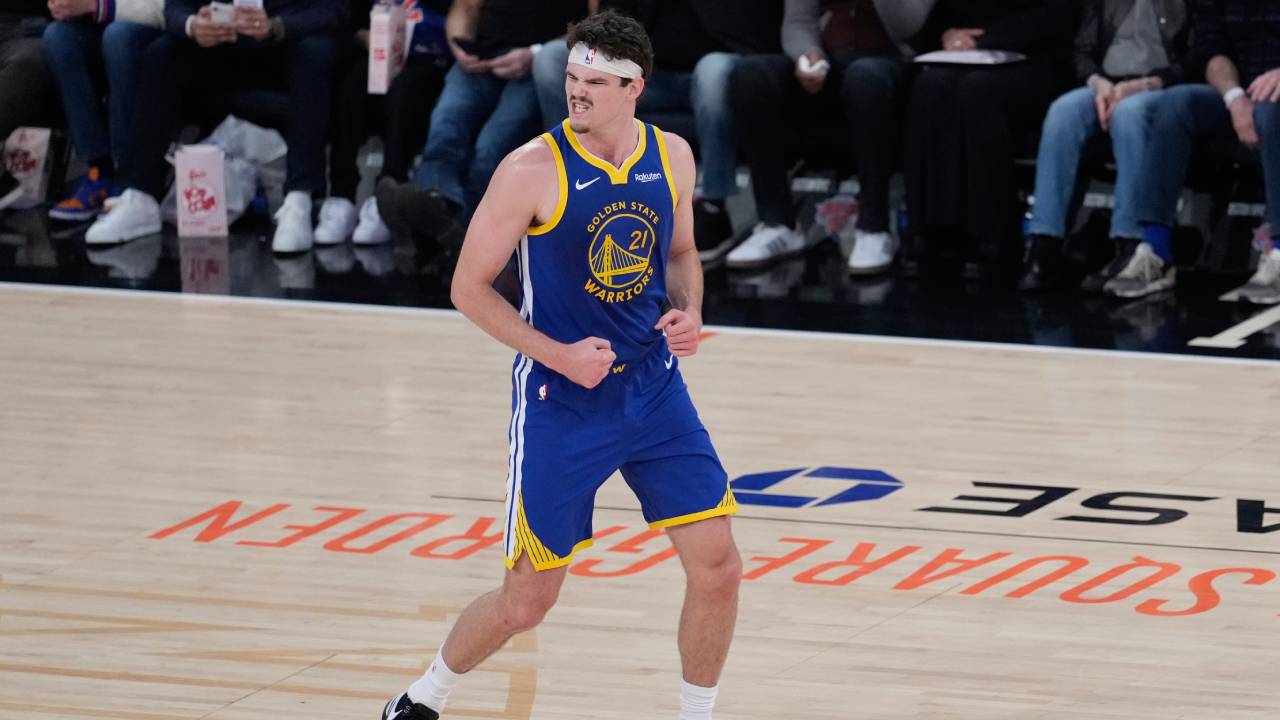
Memphis signed Quinten Post to a three-year, $30 million offer sheet Monday, forcing the Warriors into a binary choice by Tuesday night at 11:59 p.m. ET. Golden State has one day to match or let their 26-year-old restricted free agent walk. The move exposes a gap in how the market values a floor-spacing big in the modern game—and puts real pressure on a Warriors roster already managing aging cores and salary constraints.
Post entered the league as a 2024 second-round pick (52nd overall) with a clear skill set: seven-foot frame, solid mobility, and a three-point stroke that hit 36.4 percent over two seasons. He averaged 7.8 points per game across that span, which doesn't jump off the box score. But in the Warriors' play-style, where spacing at the five has become essential to the Curry–Thompson–Green rotation, Post represents the kind of low-cost developmental asset teams used to cycle through the draft. Memphis, building around Ja Morant and Desmond Murray, sees a different value: a big who can stretch defenses and doesn't demand closing minutes. At $10 million per year, the offer is reasonable for depth.
The timing matters. The Warriors' luxury-tax situation is notoriously tight. Adding $10 million annually to match Post's deal pushes payroll higher in a year when the CBA's hard cap rules give teams like Golden State fewer wiggle-room options. Matching signals confidence that Post's development trajectory justifies the tax hit. Passing signals reallocation—freeing that cap room for a different rotation piece or simply accepting that Post's role won't materialize into meaningful rotation minutes. The front office's decision will tell us something about whether they view Post as a long-term fixture or as a nice-to-have on their way out of the second apron.
For prop purposes, the immediate impact is negligible—Post is a bench rotational player, not a scoring lever in game totals or star-player props. But if Golden State matches and keeps Post, his minutes distribution becomes a proxy for team health and closing urgency. In blowout wins (Warriors favored 8-plus points), Post's usage will spike toward his league average of 18-20 percent, often in garbage time. In tight games, he gets benched for defense-first lineups. If Memphis acquires him instead, the Grizzlies' three-point volume rises slightly—Post's 36.4 percent stroke is real, though his volume is modest (2.1 attempts per game). Neither scenario moves the needle on major prop markets, but the decision itself is worth flagging as a test of whether Warriors management still operates with extension-window urgency or has shifted toward cost rationalization heading into the 2026-27 season.