Rockets Lock In Eason With $81.5M Extension, Betting Market Should Adjust Role Expectations
By Ty Whitney ·
Houston's commitment to Tari Eason signals long-term confidence in a two-way wing, but last season's efficiency collapse demands caution on his scoring volume props.
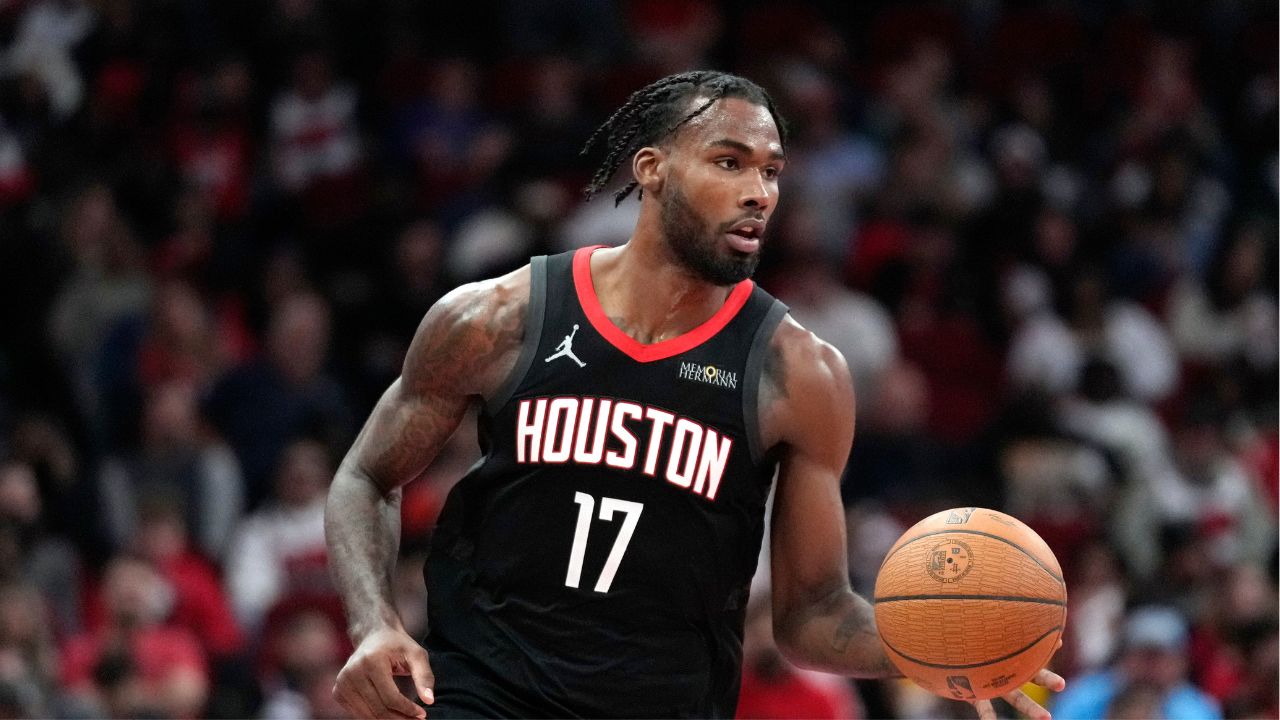
The Rockets have signed Tari Eason to a five-year, $81.5 million extension, locking in the 25-year-old forward as a core rotation piece through 2031. The deal—reported Thursday—represents a clear organizational bet that Eason's defensive instincts and three-point development outweigh the offensive regression he experienced over the 2025-26 season.
Context matters here. Eason entered free agency as a restricted free agent after four years on his rookie scale contract, and Houston's willingness to commit $16.3 million annually tells you the team views him as more than a lottery pick who didn't develop. Last season, Eason averaged 10.5 points, 6.3 rebounds, 1.5 assists, and 1.2 steals over 60 games—solid per-36 rates for a wing defender. His three-point shooting improved to 35.8% on 4.3 attempts per game, a genuine step forward in floor-spacing. The problem: his field-goal percentage tanked to 41.6%, down nearly 7 percentage points from his 48.7% mark in 2024-25. That's not noise. A player shooting under 42% from the field while taking 10+ attempts per game is working inefficiently, which is a timing and decision-making issue, not a luck issue.
What the contract signals to the market is that Houston is betting Eason's defensive versatility (1.2 steals, career 1.2 steals-plus-blocks per game over 221 games) and improved gravity from three will keep him in the rotation as the team contends. But it doesn't guarantee a significant role expansion. Over his four-year career average, Eason has posted 10.4 points, 6.3 rebounds, and 1.3 assists—extremely consistent, which is a double-edged prop signal. His volume has been stable, but his efficiency last season was an outlier downward. The market may front-run this contract by inflating his scoring props, assuming a long-term deal means more playing time and responsibility. That's a common overcorrection. The Rockets extended him because they value what he does defensively and on the boards, not because they're converting him into a 14+ PPG option.
For prop bettors, the angle is clear: fade season-long scoring overs on Eason in the 10.5-12.5 range if books price them as a reflection of his extension and assumed usage bump. His 41.6% FG rate and 10.5 PPG average last season set a low bar, but the efficiency problem is a persistent mechanism, not a one-game blip. The contract protects Houston's investment—it doesn't transform his role. His steals and rebounds remain reliable, and the three-point uptick is real. But scoring volume above last season's baseline requires an efficiency recovery that hasn't been proven, and one down year of shooting doesn't erase the mechanical questions about his shot selection or release consistency. The contract is a vote of confidence in his ceiling; the betting market should treat it as maintenance of his floor.