Raptors Lock in Bradley as Two-Way Depth; Guard's Shooting Profile Signals Long-Term Development Play
By Erik Schwartz ·
Toronto's commitment to second-round pick Jaden Bradley on a two-way deal reveals front-office confidence in his floor-spacing ceiling despite NBA competition that will demand defensive maturation.
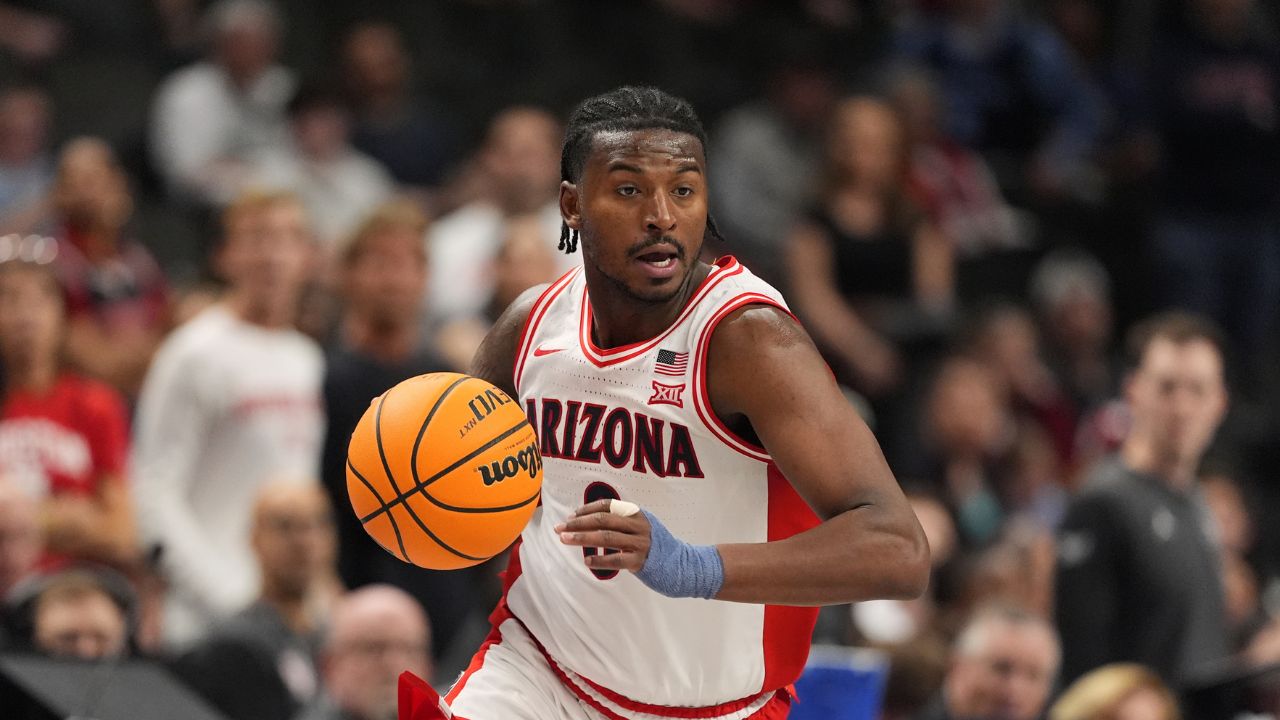
The Toronto Raptors have signed Arizona guard Jaden Bradley to a two-way contract following their selection of him with the 50th overall pick in June's draft. The move formalizes what was already expected—a developmental commitment to a prospect who arrived at the NBA with college production that merits serious roster consideration: 13.3 points, 4.4 assists, and 39.4% three-point shooting across 39 games in his final college season.
Bradley's two-way classification is the standard path for second-round guards, but the mechanics underneath matter for his near-term usage arc. Two-way players can spend up to 50 days with the NBA roster before counting against the luxury tax or roster limit, which gives the Raptors flexibility to cycle him in for preseason run and early-season situational minutes without immediate long-term financial friction. His 39.4% three-point conversion rate from college and 46.3% overall field-goal percentage position him as a potential catch-and-shoot option off the bench—a role that doesn't demand elite on-ball defense immediately and allows the organization to ease him into systems.
The real question for Toronto's front office is whether Bradley's college scoring (primarily spot-up threes and off-ball movement) translates against NBA perimeter defenders who are multiple steps faster. His 1.4 steals per game in college and modest size suggest he'll need to lean heavily on positioning and effort rather than athleticism to avoid becoming a liability on the wing. The Raptors have a stated culture of defensive intensity, which means Bradley's path to consistent rotation minutes depends on him proving he can navigate screens and closeouts without fouling or getting beaten off the bounce.
For prop purposes, Bradley is a zero-floor impact play for at least the first month of the season. Two-way contracts rarely produce fantasy-relevant minutes in October, and when they do, the target volume is highly unpredictable—anywhere from 8 to 28 minutes depending on injuries and matchups. The prop market won't price Bradley plays independently until he's been activated for at least five consecutive games, which means any early-season Bradley props (points, threes) will be vastly overpriced the moment he gets on the floor for a single high-volume outing. Conversely, fading any Bradley prop before late October is the correct stance, as the variance floor for a two-way player in year one is too wide to model reliably.
The long-term angle is simpler: if Bradley reaches 50+ regular-season games with the Raptors by year-end, it signals the organization believes his three-point stroke is translatable and his defensive learning curve is steeper than average. That's the inflection point to monitor his props. Until then, he's organizational depth insurance, not a betting asset.