Raptors Add Depth With Anderson's Veteran Minimum—But Don't Expect Heavy Usage
By PropBetEdge Editorial Team ·
Toronto's signing of Kyle Anderson on a $3.9M deal adds ballast to a crowded forward rotation, but his fantasy and prop value remains marginal given the pecking order ahead of him.
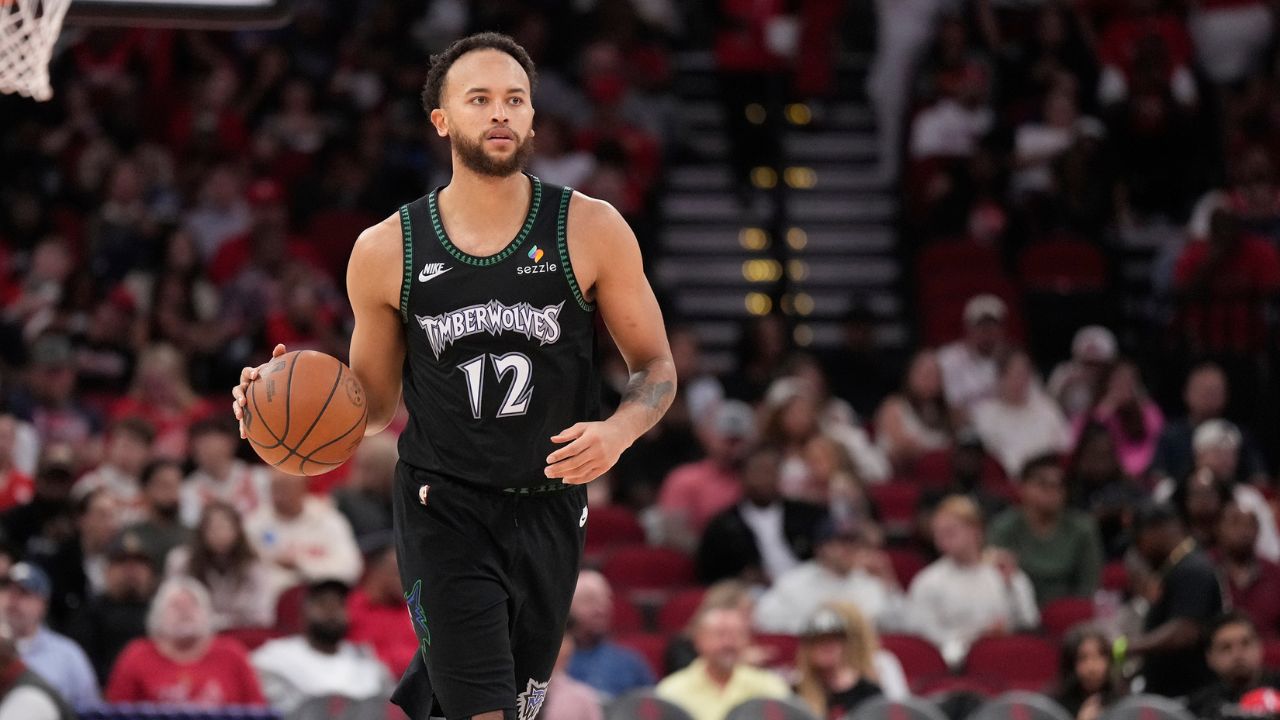
The Toronto Raptors have signed Kyle Anderson to a one-year, $3.9 million contract, adding the 32-year-old veteran to their forward mix. Per ESPN's Shams Charania, Anderson arrives after a journeyman 2025-26 season split between Utah, Memphis, and Minnesota, during which he averaged 6.2 points, 3.5 rebounds, and 2.9 assists across 43 games while maintaining a respectable 36.4% three-point rate.
This is a classic organizational depth move—Anderson brings 12 years of NBA experience and defensive versatility to a Toronto roster that needed ballast at the forward position. The contract size ($3.9M) reflects his function: a floor spacer and high-motor role player available near the league minimum. Anderson's career splits (6.8 PPG, 4.2 RPG, 2.8 APG in 757 games) underscore he's never been a high-volume scorer; he's a system fit, not a volume creator.
The Raptors' forward depth chart, however, is dense. Kawhi Leonard headlines the group, with Scottie Barnes, RJ Barrett, Collin Murray-Boyles, and newly drafted Allen Graves all occupying leverage ahead of Anderson in the rotation. This is where the contract becomes a ceiling on his value. Anderson will compete for bench minutes in a unit where the Raptors' stated priorities are Leonard's health management, Barnes' development, and Barrett's defensive integration. A 32-year-old addition doesn't move that needle.
For prop bettors, Anderson's arrival signals noise rather than signal. His per-game averages will decline from his fragmented 2025-26 season—fewer total games played, fewer starts, fewer closing opportunities. The market will price him as a deep-bench option, which is what he is. Any prop wagers on Anderson scoring, rebounding, or assisting should assume single-digit touches per game and intermittent availability. His three-point shooting (36.4% last year) is real, but volume matters. In a bench role behind Leonard, Barnes, and Barrett, he's unlikely to launch five or more three-pointers per contest. The line will reflect that scarcity.
Toronto's move is sound organizational management. It doesn't rewrite the Raptors' offense or defense, and it won't rewrite Anderson's prop slate either. Treat him as a fade until or unless injuries create sustained playing time.