Mitchell Robinson's Broken Pinky Imperils Knicks' Finals Run and Frontcourt Balance
By Erik Schwartz ·
The Knicks lose their most efficient interior scorer and leading rebounder at the worst possible moment, forcing a Finals rotation overhaul with no clear timeline for his return.
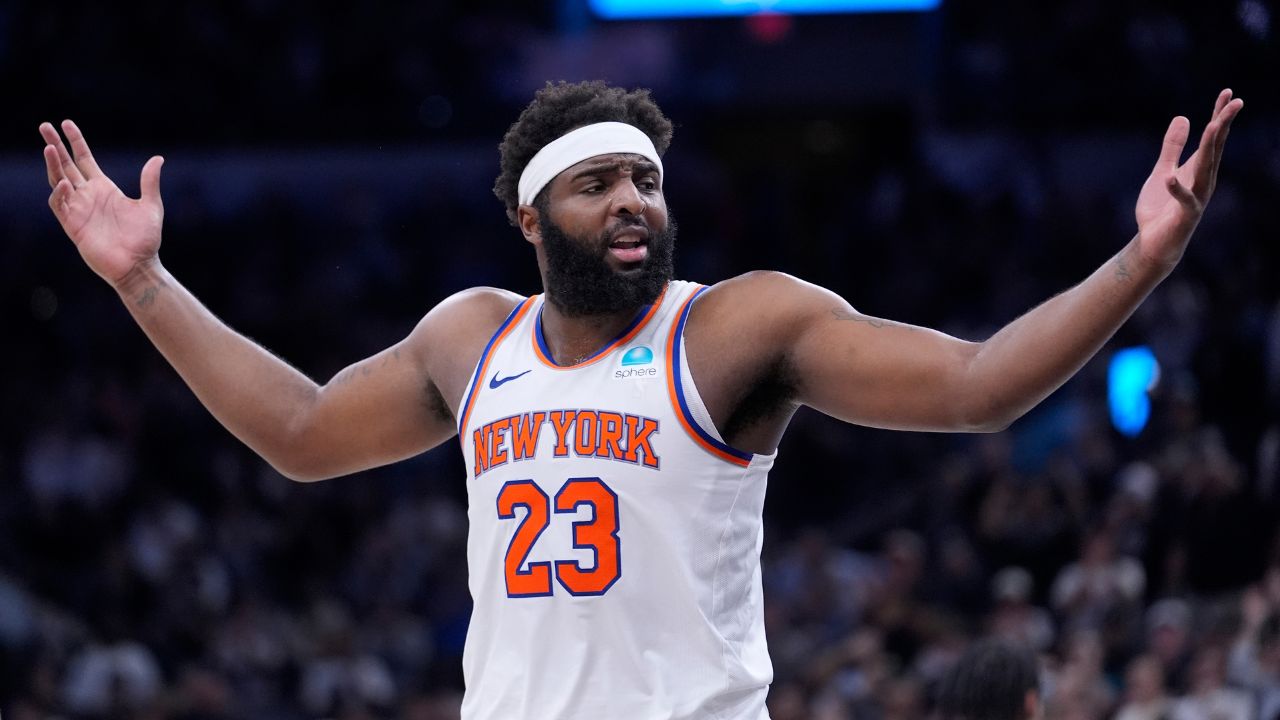
Mitchell Robinson's broken right pinky finger removes New York's most productive big man from the court as the Knicks prepare for the NBA Finals. Per ESPN, there is no timetable for the 28-year-old centre's return, which places his availability for the Finals matchup against either Oklahoma City or San Antonio in serious jeopardy. The injury timing is catastrophic for a team seeking its first championship since 1973.
Robinson's regular-season impact was substantial and difficult to replace. He logged 72.3% from the field (top-five league-wide), pulled down 4.2 offensive rebounds per game (also top-five), and averaged 8.8 boards across 60 games. Those elite conversion rates and offensive rebounding numbers translate to second-chance points and paint control—the kind of quieter but indispensable work that stabilizes playoff defenses. In the regular season, he contributed 5.7 points and 1.2 blocks in 19.6 minutes per game, a rate that would extrapolate to meaningful production if volume stayed constant. But the playoffs have already exposed a shrinkage: Robinson averaged just 5.3 points, 5.5 rebounds, and 0.6 blocks in 14.2 minutes across 14 postseason games. His role had already contracted in a deeper rotation.
The injury forces the Knicks into uncomfortable decisions. If Robinson cannot play, the team must lean more heavily on backup centres—likely Julius Randle in extended minutes at center or a smaller-ball lineup with perimeter players covering the five. Either approach sacrifices the paint protection and rebounding advantage Robinson provided. Randle's injury history and offensive-first skill set aren't natural replacements for rim-running efficiency. The Knicks' Finals opponent will have more freedom to attack the glass and operate in transition if that interior anchor is absent.
From a betting perspective, Knicks team totals and over/under lines may not immediately adjust for the Robinson loss because his playoff minutes and scoring had already declined. The market sees a player who was averaging under 15 minutes in the postseason, which carries less volatility than losing a 30-minute starter. However, the rebounding loss—both defensive and offensive—is the true mechanism at work. If the Knicks' opponent controls the glass, possessions extend, fouls accumulate, and pace either slows (reducing total possessions) or accelerates (favoring the team with superior depth). Finals totals are typically sharp, but they're priced on expected rotation. Robinson's absence shifts bench usage and fouls per game in ways that lineups don't immediately capture. Monitor early Finals lines; any total set before the Knicks confirm Robinson's status may underprice volatility.
The pinky injury also has a psychological and operational component worth tracking. A "no timetable" designation often signals uncertainty over pain tolerance and hand-intensive mechanics (catching lobs, anchoring in the post) rather than catastrophic damage. Pinky fractures can be managed with tape, but Finals intensity and contact will test that management. If Robinson plays through the injury, his catch-and-finish percentages may suffer; if he's held out, the Knicks' interior depth is exposed immediately.