Duren's Contract Standoff Masks Detroit's Real Problem: A Roster Built for Mediocrity
By Ty Whitney ·
The Pistons' restricted free agency drama with Jalen Duren obscures a deeper structural issue—their supporting cast isn't talented enough to maximize a star center's value, and the free agent market isn't solving it.
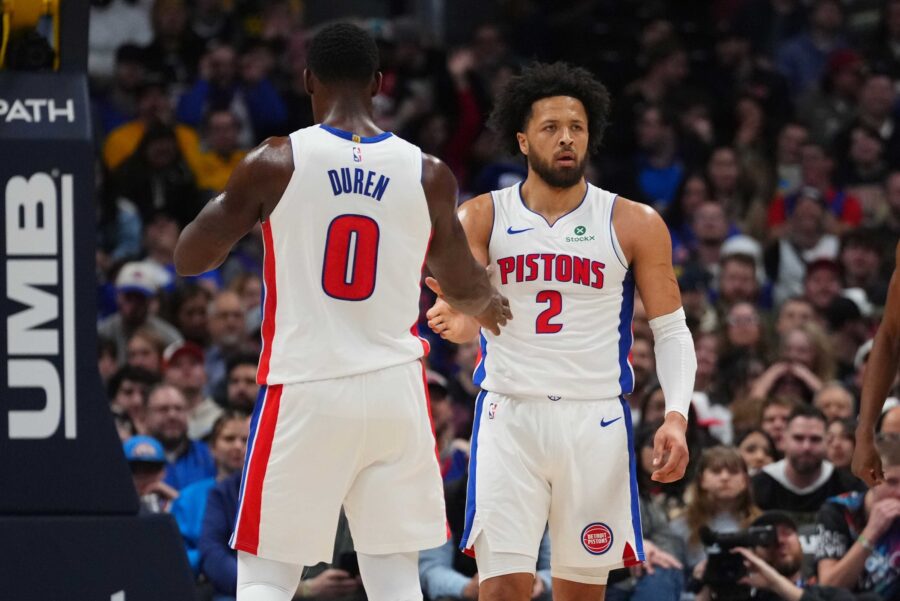
Jalen Duren wants more money than Detroit's initial offer, but the subtext matters more than the headline. The 22-year-old All-NBA Third Team selection was also runner-up for Most Improved Player, then watched his team lose in the playoffs in a way that exposed why elite individual seasons don't automatically translate to postseason depth. Rival teams monitoring his free agency agree Duren will ultimately re-sign with the Pistons—not because the offer will blow away the market, but because no contender has the salary cap flexibility to pair him with a second star who could actually complement his game.
The league's cap math has constricted at the top tier. Teams capable of creating $70 million in cap space (Clippers) or $60 million (Lakers) have done so by shedding marginal talent, not by positioning themselves to land transformative free agents. That supply-and-demand imbalance means Duren's leverage is real but limited. Detroit will match any offer sheet he receives; keeping him costs the Pistons less than losing him and rebuilding costs. The question isn't whether he stays—it's whether staying as a Piston actually improves his playoff odds.
Derek Cunningham's development trajectory, whether Sasser can fill a secondary ball-handling role, and what Powell's contract ultimately looks like all matter to Detroit's ceiling. But none of them change the fundamental constraint: the Pistons built a roster where Duren's elite interior dominance (21.8 PPG, 12.4 RPG last season) isn't surrounded by perimeter creation or wing defense at the level required to win a playoff series against contenders. That ceiling was evident in their first-round exit.
For betting purposes, Duren's individual scoring and rebounding lines face an interesting pressure. If he re-signs at terms that leave Detroit unable to acquire another star, his usage rate will likely increase—the team will lean harder on him to cover offensive shortcomings. That could inflate his point and rebound projections. However, the constraint cuts both ways: extended playoff runs come from bench scoring and perimeter three-point shooting, not from riding a star center harder in the regular season. Expect his per-game volume to tick up 5-8% from his prior season average if the Pistons' supporting cast doesn't materially improve, but also expect that increase to come with more empty possessions late in close games.