Denver's Tax Trap Makes the Qualifying Offer Watson's Best Play—and the Nuggets' Only Move
By Ty Whitney ·
The Nuggets matched a $12 million offer sheet for a reserve wing, pushing themselves past the second apron—a squeeze that makes Peyton Watson accepting his $6.5 million qualifying offer the rational choice for both sides.
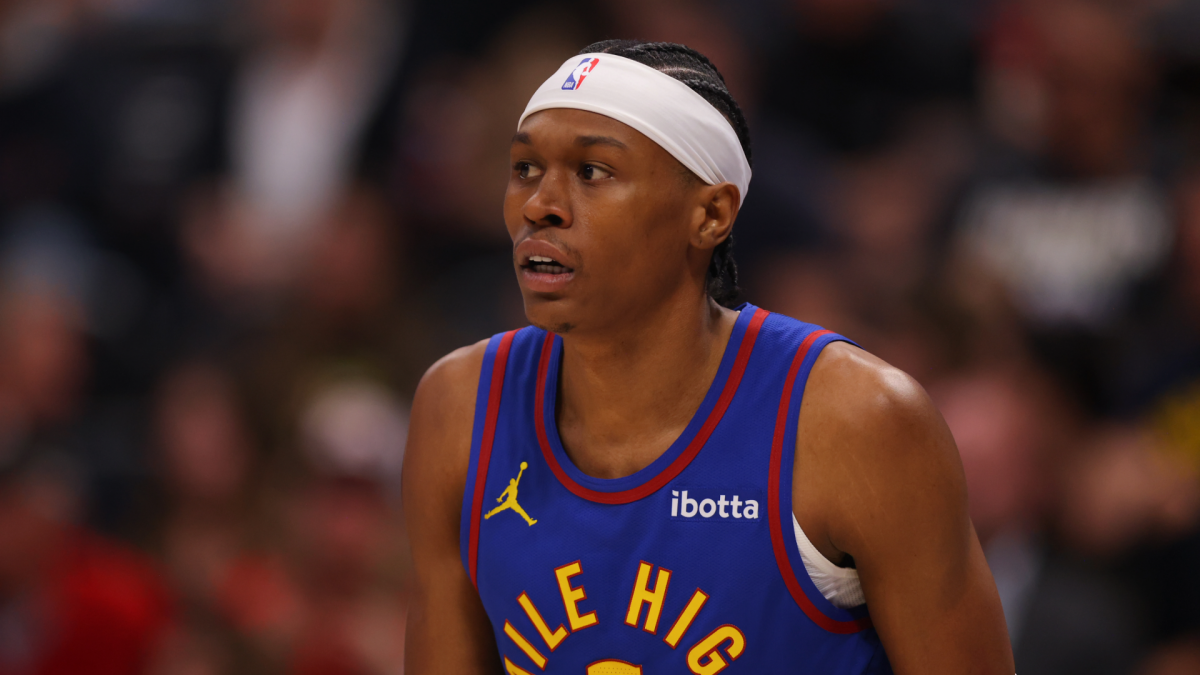
The Denver Nuggets' decision to match Oklahoma City's two-year, $12 million offer sheet for Spencer Jones on Sunday exposed the brutal math of repeat-taxpayer status. Jones will earn $6 million in salary next season. The matching commitment costs Denver $38 million in combined payroll and luxury tax—a 6.3x multiplier that vaporizes cap flexibility and locks the franchise above the second apron, where roster-building options vanish and mid-season trades become nearly impossible. The Nuggets had little choice; losing a promising young wing to a conference rival while the bench is depleted would compound an already fragile roster picture. But the collateral damage sets up a cleaner path forward for their actual restricted free agent priority: Peyton Watson.
Watson's production slice—18 points and six rebounds on elite 52-44-75 shooting across 30 games from November through January—positioned him as Denver's most valuable young asset and arguably their best wing defender. The Nuggets' opening offer of roughly $70 million over four years should have been attractive for a 22-year-old on an upward trajectory. Instead, Watson reportedly sought $25 million annually, a number that, if matched, would push Denver's combined payroll and tax bills past $400 million. That threshold is organizational suicide for a franchise already leveraged to the hilt, especially with Nikola Jokić's free agency status unresolved (he can technically opt out next summer). The Nuggets cannot absorb that commitment and maintain roster continuity.
Enter Watson's one-year, $6.5 million qualifying offer. Accepting it transforms his leverage. He becomes an unrestricted free agent in summer 2027, free to test the open market with a full season of production on his résumé. If he maintains or improves on his November-January pace, the gap between a $70 million, four-year extension and what he'll command on the open market could be substantial—potentially doubling the Nuggets' initial bid. For Watson, it's a calculated risk with concrete upside: prove himself, reset his market value, and pocket eight figures more than Denver's first offer. For Denver, it's not a loss—it's a reprieve. The qualifying offer keeps Watson's salary at $6.5 million, adding only roughly $44 million to their projected tax bill (reaching $112 million), versus the $400 million-plus scenario if they capitulate to his $25 million-per-year demand now. They'd retain roster flexibility, particularly if they can move Zeke Nnaji or let Cam Johnson's contract expire, and still have ammunition to re-sign Watson next summer if his play justifies it. If he plays well enough to warrant a massive deal elsewhere, that outcome signals Denver's offense remained lethal—a positive for championship odds even if the roster turns over.
The prop implications are subtle but material. Watson's minutes and scoring opportunities could spike next season if the Nuggets, facing reduced financial pressure, make roster tweaks that increase pace or perimeter volume. His November-January performance (30 games) is a small sample, but 18 PPG on that efficiency suggests he's operating in a specific context—likely high-leverage moments and favorable matchups. If the Nuggets intentionally build around Watson as a centerpiece during his walk year, asking him to carry more offensive load, his season-long points total could exceed the 14-16 range implied by a static projection of his 30-game pace. Monitor his usage rate in early-season games; if it swells above 20% while maintaining efficient shooting, there's a real case for leaning his scoring props over preseason lines. The market will likely anchor on his full-season availability from last year (if he played 50+ games), not the hot 30-game slice. That's where the edge lives—the Nuggets have institutional motivation to showcase Watson, and the one-year deal removes any incentive to load-manage him.