Paul George's Celtics Gambit: Injury Recovery and the Tatum Co-Star Bet
By Ty Whitney ·
Boston just traded away its 2024 Finals MVP to add a 36-year-old scorer with a fresh injury bill—and the prop market hasn't fully priced the physical question mark.
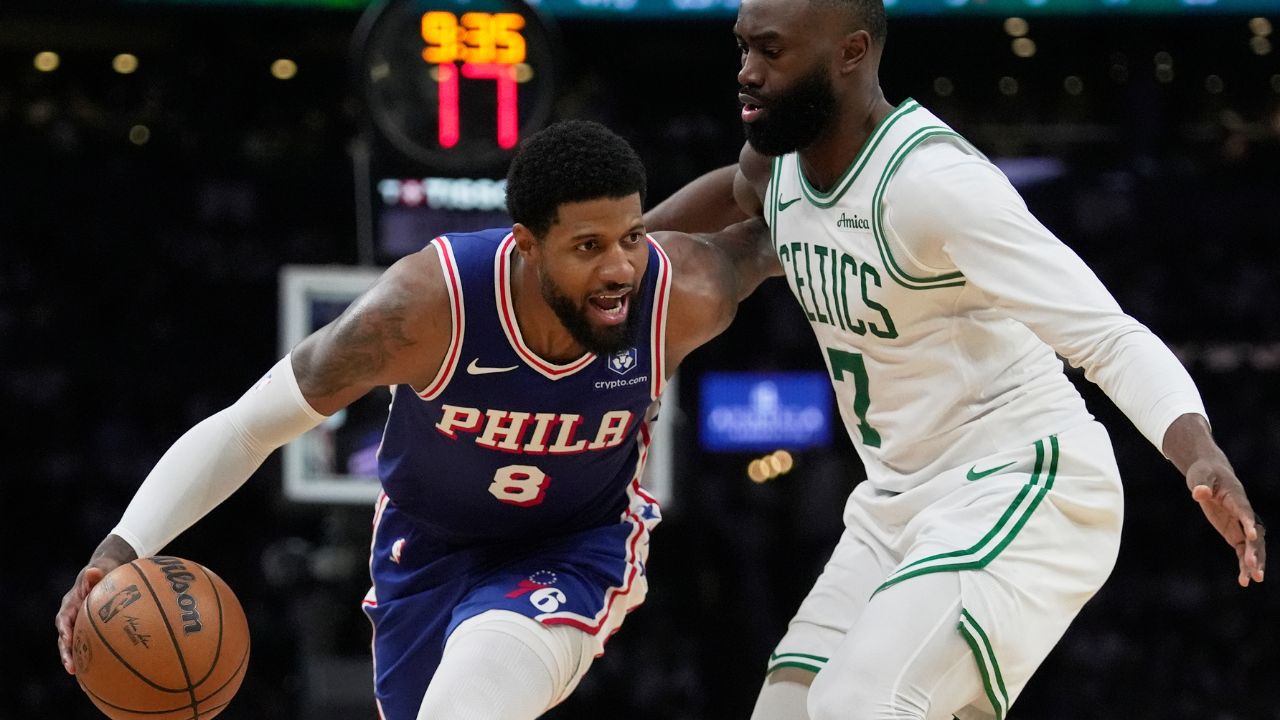
Paul George arrived in Boston on Tuesday for his introductory press conference with the Celtics, marking the third organization since 2023 to bet on his scoring gravity and championship pedigree. The trade that sent Jaylen Brown to Philadelphia in July was unpopular locally, but the front office's wager is straightforward: George's 9 All-Star selections and career 22.1 PPG average—paired with Jayson Tatum in a co-star arrangement—offer a more durable path to sustained contention than trying to maximize Brown's trajectory alone.
The catch is durability itself. George has spent the last two seasons managing a rotating inventory of injuries: knee surgery preceded his time with the 76ers last season, and he cites "rough" stretches with both the Clippers and Philly as tests of his resolve. He's now 36 years old. At Tuesday's presser, George repeatedly hammered the same message—that he's turned a corner physically, that he feels "great," that the injury chapter has closed. That's exactly what a player in his position would say. The market has to decide whether that confidence reflects a legitimate return to form or residual optimism from someone with limited leverage. Tatum, meanwhile, is playing his first full season after tearing his Achilles tendon in May 2025 and experiencing a late-season sideline stint during the Celtics' Game 7 first-round loss to George's 76ers. Both All-Stars carry recent injury histories that the opening-night odds haven't fully crystallized into their scoring and playmaking lines.
Brad Stevens added Mike Conley Jr. (38, 20th season) and Mitchell Robinson to round out the roster, signaling a "win now" posture that deprioritizes long-term asset accumulation. Robinson comes off a championship with the Knicks; Conley is chasing his first ring after nearly two decades in the league. The emotional investment is there. But the physical readiness of George and Tatum—both coming off procedures that typically compress offseason conditioning—becomes the load-bearing wall of Boston's season. Stevens indicated the trio has been working with returning roster members throughout the summer, but informal workouts and preseason ramps are different animals. A player cleared to practice isn't the same as one who's survived 82 games plus a deep playoff run.
For prop bettors, the opening-week lines on George's scoring (likely to land somewhere in the 18–22 PPG range given his age and new team context) and Tatum's assist total are the critical edges. George's scoring touches will flow through pick-and-roll and catch-and-shoot opportunities alongside Tatum; the system is designed to isolate both stars in low-volume, high-efficiency possessions. But minutes management, back-to-backs, and the physical toll of a 36-year-old's integration into a new team's pace could suppress his totals in October and November. If the market prices George's opening-month scoring line as though he's the player who averaged 22+ PPG at age 32, there's fade value on the over—not because George can't score, but because the mechanism (his durability over a full regular season, his minutes in games Boston leads comfortably) is likely to suppress volume. Tatum's assists, by contrast, may be underpriced if George's presence forces opposing defenses into tighter coverage, creating more secondary kick-outs. Watch for that asymmetry in the first set of lines.
The real test arrives in late October. If George and Tatum both stay healthy through the first 15 games, the adjustment will be sharp and persistent. If either hits a familiar wall—minute restrictions, load management, a re-injury—the market will reprrice them downward hard and fast. The edge, if it exists, is narrow and time-sensitive.