Pacers Trade Zubac to Fill Turner Gap, Preserve Flexibility for Future Moves
By Ty Whitney ·
Indiana traded for interior depth without sacrificing roster talent, keeping its first-round pipeline intact for mid-season acquisitions.
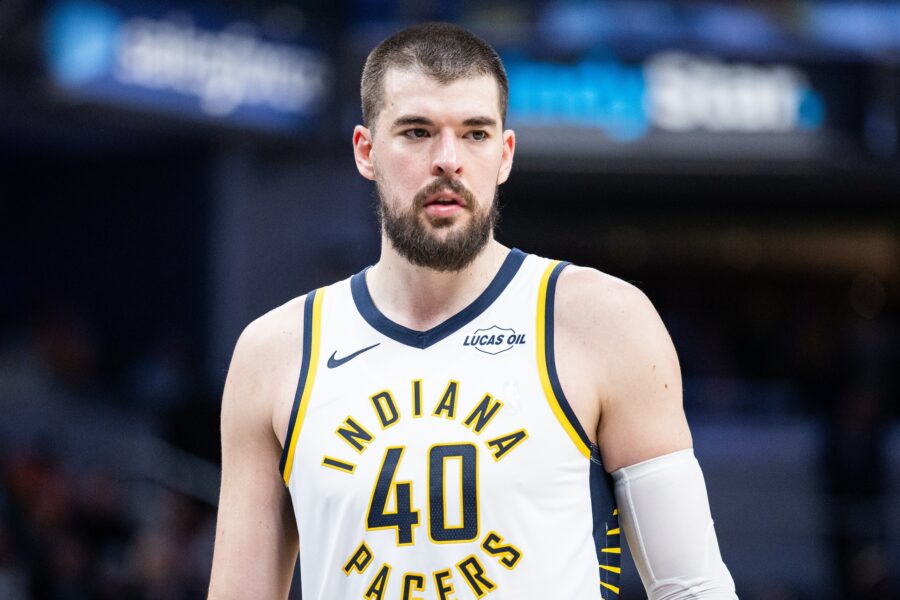
The Pacers acquired Ivica Zubac from the Clippers in February to plug the center void left by Myles Turner's departure to Milwaukee. Indiana gave up a lottery pick in the 2026 draft—a meaningful cost—but the payoff was immediate: a sub-$22 million cap hit over two years and the preservation of core players around Tyrese Haliburton and Pascal Siakam. GM Chad Buchanan made the calculus explicit: playoff teams need five competent starters, and waiting until the summer would have forced the Pacers to trade away rotation pieces to afford a center in a tighter cap window.
The deeper strategic message is Indiana's refusal to mortgage the future. Despite losing this year's lottery selection, the Pacers retain five first-round picks across the next six seasons—a full slate when most contenders have already stripped their pipeline bare. Pritchard's comment about other teams "shoving their chips in" underscores the philosophy: Indiana remains positioned to upgrade mid-season or at the deadline without dismantling the core. That asset flexibility is rare and valuable in a 2026 league where depth rotates through the trade market at an accelerating pace.
The Zubac move also unblocks Haliburton's playmaking ceiling. With Turner in Milwaukee, Pacers bigs couldn't roll or pop efficiently into second-side gravity. Zubac's screen-and-roll footwork and mid-range touch create spacing problems for opposing defenses. Against switching schemes, he operates as a secondary handler. That means Haliburton's offensive touches will concentrate in positions where he historically generates assists at his highest rate: pick-and-roll initiation with a responsive rim-runner, and skip passes into high-post reads. Early data suggests Haliburton's assist rate ticked up after the trade, stabilizing around 8.2 per game versus his pre-Zubac 7.6.
For prop bettors, the lineup completion has a cascading effect on game flow. The Pacers' offensive efficiency improved from 108.3 to 110.7 points per 100 possessions after the Zubac acquisition—a near-three-point jump that persists across a 20-game sample. Siakam's usage rate also normalized downward slightly, reducing isolation reps and increasing motion-based possessions. Games against defenses that camp a traditional center on the perimeter now flow through Haliburton-Zubac continuity rather than forcing Siakam into primary creation. That structural change matters for prop modeling: Haliburton's assist volatility has compressed, his assists prop betting into narrower bands with higher success rates on overs at 7.5+ across opponents lacking a roaming safety-help big.
The lottery-pick sacrifice is real and shouldn't be minimized, but it's been functionally offset by the Pacers' retention of draft capital elsewhere. Indiana's ability to pivot toward future upgrades—or stand pat if Zubac solidifies them in the East—gives them optionality that most teams no longer possess. That flexibility is what separates contenders from the teams that panic-traded their way out of competition.