Thunder's Playoff Invincibility Snaps Against Spurs; Series Odds Tell a Different Story
By PropBetEdge Editorial Team ·
Oklahoma City's 33-game streak as a playoff favorite ends in Game 3 of the Western Conference finals, but the market may be overreacting to a single-game line move.
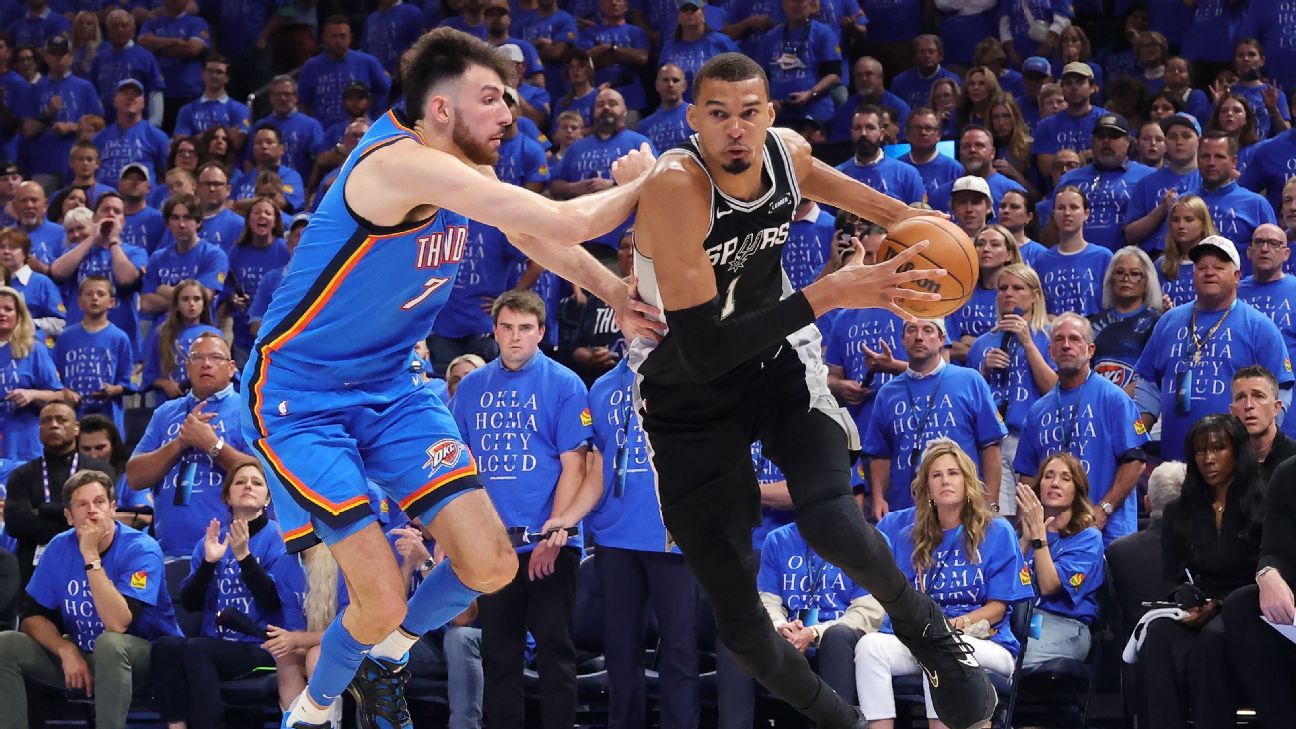
The Oklahoma City Thunder entered Friday's Game 3 of the Western Conference finals against San Antonio as a playoff underdog for the first time in 33 games—a two-year dominance that ranks third all-time since 1990, behind only the 2015-16 Warriors (36 games) and Michael Jordan's Bulls (34 games from 1995-97). The Spurs opened as 1.5-point favorites at DraftKings, snapping a streak that had defined OKC's identity as a perennial playoff juggernaut. The series stands tied 1-1, and the reversal of line direction signals a market recalibration after San Antonio's performance in the first two games.
But the single-game favorite line masks a more durable competitive assessment. OKC remains a -150 series favorite to win the Western Conference finals at DraftKings, with San Antonio at +138—a gap that reflects the Thunder's superior roster composition and depth. What Game 3's line actually reflects is volatility, not a fundamental shift in quality. The Spurs' +1.5 favorite status is situational: home court, momentum from a Game 2 victory, and the psychological weight of a 1-1 deadlock. In a best-of-seven format, single-game spreads are notoriously prone to overcorrection, especially when home teams are coming off a statement win. The Thunder were only underdogs in four regular-season games all year, and their 33-game streak included playoff runs where they faced championship-caliber competition and still held line favor. One game doesn't erase that performance tier.
The real prop consideration emerges from what the line volatility tells us about injury and lineup status. If OKC's Luguentz Dort (hamstring) remains day-to-day, the Thunder's perimeter defense tightens considerably in his absence—a fact that could suppress San Antonio's three-point volume and efficiency in Game 3. Conversely, if Dort plays, OKC's defensive rating improves, which historically correlates to lower team totals for the Spurs. The market has baked in the Spurs' home-court advantage and recent game outcome, but it may not have fully internalized the injury context that would shift both team and individual scoring props.
For bettors, the angle is not to blindly trust the Thunder because they've been favored for two years—that's recency bias dressed as analysis. Instead, the edge lies in recognizing that San Antonio's +1.5 is a single-game noise trade, not a reassessment of the seven-game series. OKC's -150 series odds offer superior value because they embed the full body of work. If Dort is active and clears his injury check before tipoff, the Thunder's defensive infrastructure returns to full strength, and the Spurs' offensive efficiency should regress toward their season averages. That's a mechanism that favors OKC in totals markets: expect under-betting on the Spurs' team total at 109-110 range, as casual money chases the favorable Game 3 spread without accounting for the defensive personnel question.
The Thunder's streak may end as a statistical matter, but the series odds reveal what the books already knew: OKC remains the superior team, and a single favorite line at home doesn't change the calculus for a seven-game war. The real bet is not whether OKC bounces back—they will—but whether the market is pricing that inevitability fairly when San Antonio gets an artificially inflated spread.