Denver's Roster Arithmetic Leaves Aaron Gordon Exposed in Trade Market
By Erik Schwartz ·
The Nuggets face a hard choice between keeping a two-way anchor and retooling around Jokic—and the market knows it.
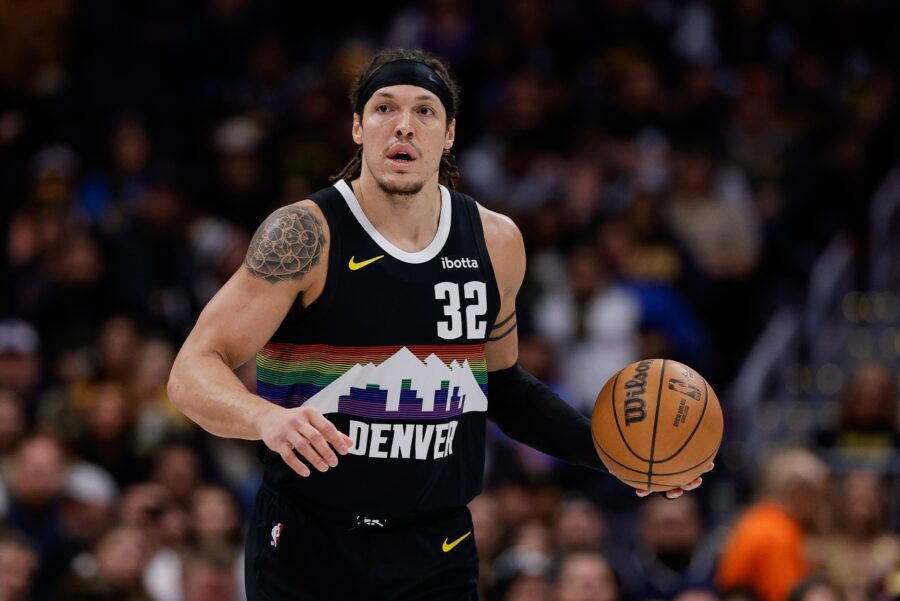
Aaron Gordon has become Denver's most tradeable asset as the Nuggets confront a salary-cap squeeze that forces them to shed mid-tier salary in order to compete. Marc Stein reported that multiple teams are circling the 30-year-old forward, whose two-way value—elite perimeter defense paired with reliable secondary playmaking—makes him attractive to contenders willing to absorb his $15.8M salary. The problem for Denver: Gordon is also irreplaceable in their current rotation, which leaves president Tim Connelly in an untenable position between keeping a core piece and opening financial space to upgrade elsewhere.
The Nuggets' championship window depends entirely on Nikola Jokic's prime, and his co-stars are aging. Jamal Murray has battled injury, and the rest of the roster lacks the offensive firepower to keep up in a West that has sharpened since Denver's 2023 title run. The team cannot add without subtracting, and Gordon's contract sits in the middle—large enough to move the needle in a trade, expendable enough that other rosters see an opportunity. Trading him would free roughly $16M in cap space, enough to absorb a mid-rotation upgrade or create flexibility for the draft and minimum deals.
But here's the catch: Gordon's defense against wings and guards is the primary reason Denver limits isolation offense in the playoffs. Remove him, and Jokic's burden on the perimeter increases dramatically. Connelly's real dilemma isn't whether Gordon is good—it's whether he can find a replacement who does the same work for less money. The chatter around Cam Thomas and other high-usage guards suggests Denver's front office is at least exploring a path where offensive firepower replaces two-way depth, a gamble that hinges on Jokic's playmaking ability to compensate.
For bettors, this matters most for playoff prop architecture. If Gordon moves, Denver's team defense rating likely rises 1-3 points per 100 possessions in the short term (less wing versatility), but their offensive efficiency could dip on nights when Jokic faces scrambled coverage without a secondary handler. That translates to lower team totals in the regular season and higher volatility in player props—Jokic's assist line becomes more feast-or-famine depending on whether Denver's bench defense can survive stretches without Gordon. His trade represents a swing away from stability and toward offensive experimentation, a move that typically compresses team totals while inflating star-player variance.
The market will price this in once a deal happens, but the betting edge exists now in anticipating which direction Denver's offense tilts. If Gordon stays, team totals lean up and Jokic's assist floor tightens. If he moves before the deadline, expect sharper contrasts between games where Denver's secondary scoring ignites and nights when they stall—a profile that favors unders in the short run until new role players settle in.