Nets Lock in Brown's Future as Franchise Anchor, But Rookie Scale Contracts Don't Move Markets
By PropBetEdge Editorial Team ·
Brooklyn's sixth overall pick signs a standard four-year deal worth $40M total—a necessary formality that tells us nothing about his actual NBA ceiling or when he'll be ready to carry a team.
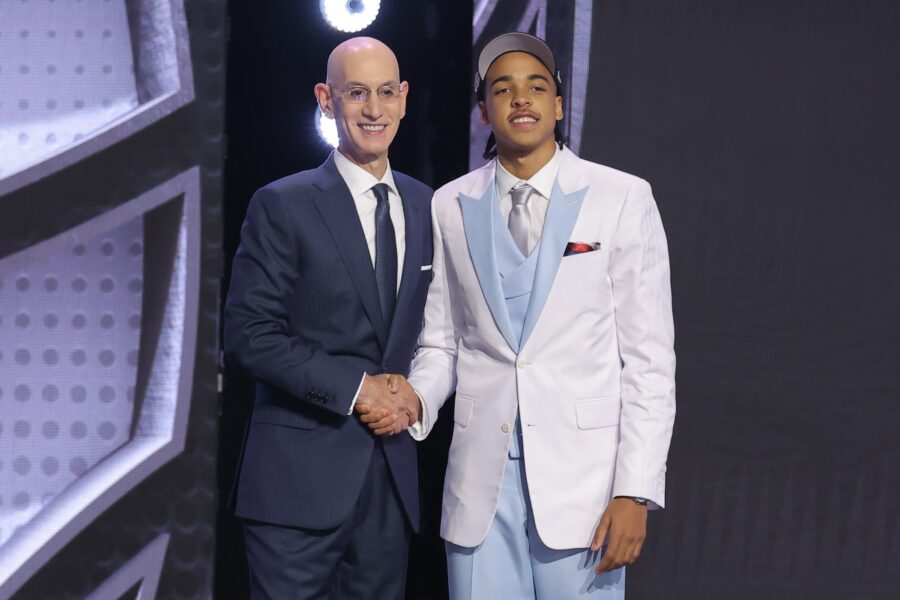
Mikel Brown Jr. and the Nets have formalized what the draft already telegraphed: the sixth overall selection gets a rookie scale contract, baseline compensation tied to slot, not upside. Brown will earn roughly $8.8 million in 2026/27 and approximately $40 million across four seasons assuming he doesn't trigger team options or hit performance escalators. Tyler Bilodeau, selected 43rd overall, received a two-way deal—the standard play for mid-second-round depth. These signings are administrative, not revelatory.
What matters for basketball evaluation is what happens next. Brown carries the offensive weight of being a lottery guard in a league where playmaking and shot creation at that tier typically take 18 to 24 months to stabilize at NBA pace. The Nets' front office is betting he becomes a foundational piece; the contract structure—four years with team control—reflects that confidence. But "great duo for a long time" requires Brown to develop into a primary playmaker or score-first threat, not just a prospect with draft pedigree.
From a prop perspective, the signing itself doesn't move any lines. Brown's rookie season assist and scoring props will be set based on role and minutes allocation once the preseason begins. The real tell will come from how many fourth-quarter minutes he earns and whether he's in the Nets' closing unit by December. Early-season over/unders on his assist total will be built conservatively—book makers have no film on his transition to NBA spacing and defensive pressure—and will likely shift upward if he touches the ball 5+ times per possession in the first month. The two-way deal for Bilodeau signals he's depth, not rotation, so ignore him for prop purposes until and unless he's promoted to a standard contract.
Brooklyn's bet is on long-term value extraction from a player locked in at scale rates. That's sound front-office math. For prop bettors, it's a reminder: draft capital and contract size are not predictive of breakout timing. Brown's assist and point props in October will be set low because the market prices in variance and adjustment time. If he stabilizes faster than expected, early overs carry an edge—but that edge is single-event (dependent on preseason tape) and will evaporate once sharp money prices in actual role data. Wait for opening week numbers before committing.