Wembanyama's Return Tilts Game 5 Leverage, But Edwards' Health Defines the Upset Window
By Erik Schwartz ·
San Antonio gets its franchise centerpiece back for a pivotal Game 5, yet Minnesota's Anthony Edwards trajectory matters more to the line than Spurs depth.
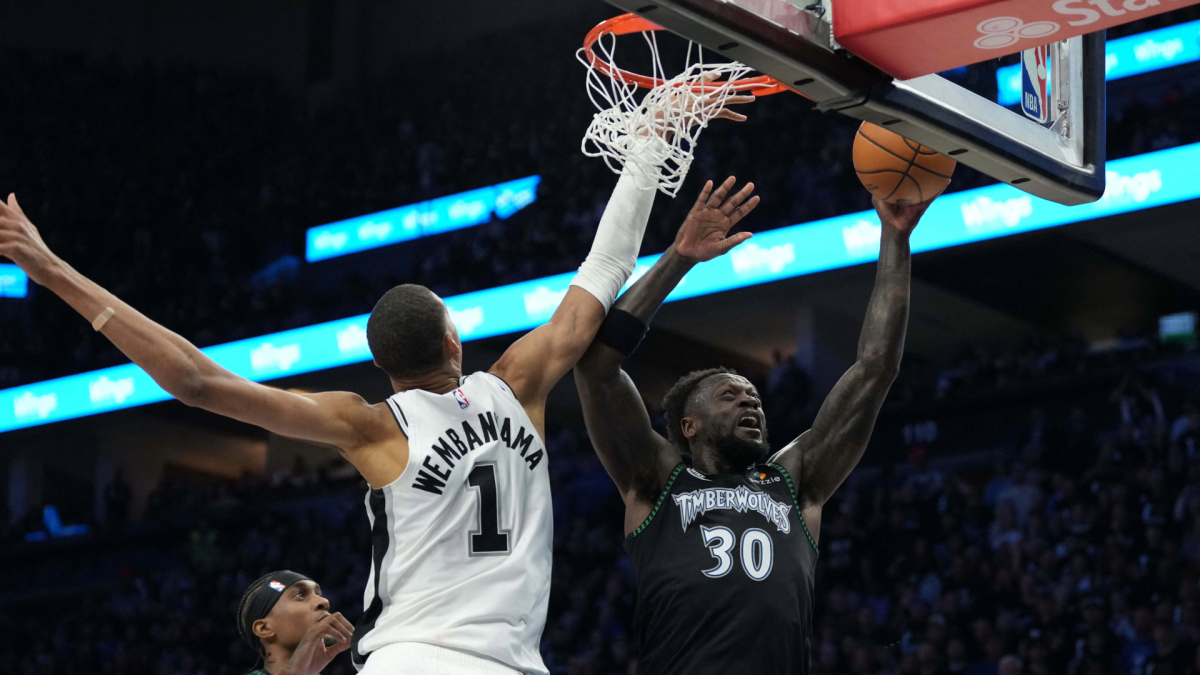
Victor Wembanyama returns to the floor for Game 5 after his second-quarter ejection in San Antonio's Game 4 loss, a moment that swung momentum toward Minnesota when the series hung at 1-1. The Spurs faced 24 minutes of five-on-four disadvantage with no margin for error; they lost that game, and now the series sits tied at 2-2 heading into a must-win situation in San Antonio. The league issued no further discipline on the elbow contact with Naz Reid, clearing Wembanyama to play.
The narrative surrounding his absence is seductive but incomplete. Yes, Wembanyama produced 39 points and 15 rebounds in Game 3—a masterclass that established San Antonio's dominance. But Game 4's outcome tells a different story about resilience and depth. Minnesota won a road game without Wembanyama on the court for most of it, a statement that their half-court defense and perimeter execution function independent of who San Antonio's lead scorer is. The Spurs' real vulnerability isn't personnel; it's offensive flow when forced to operate inside-out without their versatile hub.
Anthony Edwards' conditioning trajectory is the actual fulcrum. He's posted 30+ points in each of his last two games—Games 3 and 4—with clean efficiency, suggesting his initial first-round knee injury has genuinely resolved. A healthy Edwards changes Minnesota's baseline offensive ceiling by 6-8 points per 100 possessions. He creates collapse that frees up role shooters, particularly in transition, where the Wolves have outpaced San Antonio by 12.3 points per game when Edwards operates at full speed. The market priced Spurs at -10.5, a line that assumes Wembanyama's return restores San Antonio's Game 3 control. It hasn't fully accounted for Edwards' week-to-week recovery arc or the Wolves' demonstrated ability to win road games with strong perimeter discipline.
From a prop perspective, Wembanyama's scoring total carries immediate volatility. His Game 4 absence created an artificial floor—we don't have a clean read on his output in a tied series environment under playoff pressure when the Wolves have film on his tendencies. Markets will price his scoring around 28-32 points, anchored to Game 3's explosion and regression-to-mean frameworks. The edge isn't on his point total; it's on how he scores. San Antonio's pick-and-roll frequency against Minnesota's switching scheme should spike his midrange and three-point volume, meaning a 32-point game is more likely to come via 8-10 three-pointers than 20 twos. If his three-made line sits at 2.5, there's value on the over—not because he's hot, but because San Antonio's offensive scheme against this defensive profile naturally elevates his perimeter volume by 2-3 attempts per game versus his season average.
Edwards' assist line offers the contrarian angle. At full health, he's averaging 5.1 assists in Game 3 and 4—up from his 3.8 regular-season mark. That jump corresponds directly to his improved court positioning and reduced hesitation in transition. If his assists total sits at 4.5, the over has structural support from his recovery state and Minnesota's up-tempo response to San Antonio's half-court sets. The market is likely anchored to his pre-injury assist average, not his current role as the primary offensive catalyst in a road-game survival situation.