Wembanyama's Scoring Drought Extends to Game 5; Randle's Composite Line Offers Value in Spurs-Wolves Playoff Tilt
By PropBetEdge Editorial Team ·
Minnesota's elite perimeter defense has dismantled San Antonio's franchise centerpiece in this series, and Game 5 pricing hasn't fully adjusted for the mismatch.
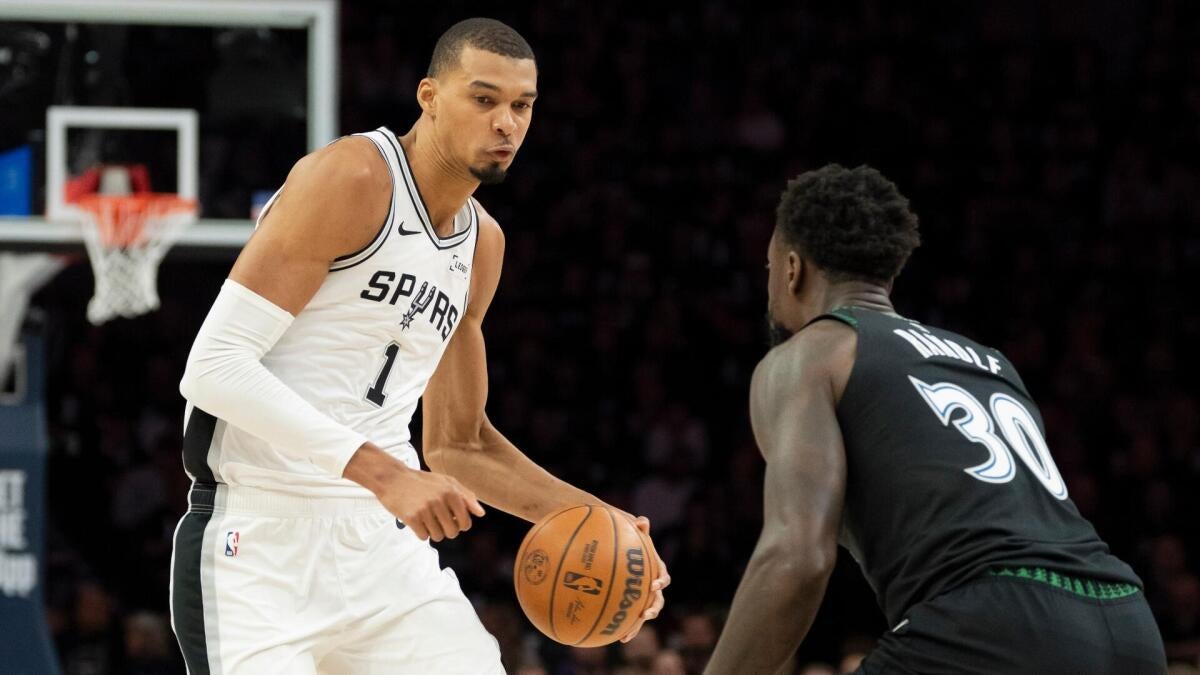
Victor Wembanyama took an elbow to the face in Game 4 and drew an ejection for it—a bitter coda to a performance that already felt incomplete. Four points on the road, and now the Spurs face Game 5 at home with their 7'4" generational talent carrying a scoring line of 26.5 points. The market is still pricing him as if Minnesota's defense hasn't systematically neutralized him throughout this series.
The data tells a clearer story than the preseason hype. Wembanyama is averaging 18.3 points per game against Minnesota in this matchup—a 32% haircut from his regular-season rate. More damning: in his first two home games against the Timberwolves, he failed to reach 20 points both times. Minnesota doesn't have a single defender with Wembanyama's size, yet their switching scheme and paint crowding have turned his most lethal weapon—his scoring gravity—into a liability. They're daring him to beat them from mid-range and three, and he's declined the invitation. His shooting splits have cratered.
The ejection narrative might temporarily inflate his Game 5 line, as if the Spurs will suddenly unleash him in desperation. They won't. San Antonio's system and Minnesota's defensive profile remain unchanged. The Timberwolves' ability to avoid foul trouble while defending the post, combined with their help-side coordination, creates a structural problem that emotion and rest don't solve. Wembanyama will likely see increased touches—the Spurs have no choice—but not increased efficiency. SportsLine's projection of 25 points aligns with the empirical pattern, not the posted total.
Julius Randle's 26.5 points-plus-assists-plus-rebounds line sits at a different valuation cliff. He's averaged 23 PRA across the series despite shooting 37% from the field and 27% from three—a floor sustained largely through rebounding volume and assist creation in the pick-and-roll. Minnesota's need for a third offensive weapon in Game 5 is acute; Anthony Edwards and Karl-Anthony Towns can't carry the entire offensive load against a motivated Spurs team at home. Randle's composite line is underpriced because it conflates his inefficiency with low volume, when in fact the Timberwolves' game plan will demand increased touches from him. His rebounding alone (he's grabbed 7.3 boards per game in the series) gives him a cushion toward 26.5.
Dylan Harper's over on 11.5 points carries execution risk tied to De'Aaron Fox's ankle status, but Harper's 39% three-point rate at home in the regular season and his 13.8-point playoff average suggest the line undervalues his offensive role in a home game. The Spurs' desperation to avoid facing elimination will keep pace high; Harper benefits from an up-tempo script. All three props operate on different mechanisms—Wembanyama's structural defensive mismatch, Randle's upcoming role elevation due to team necessity, Harper's home-court efficiency uplift—but they converge on a single theme: the market has priced Game 5 as if it's a continuation of the road games, when the venue and desperation angle shift the incentive structure.