Williams Returns to Spark Thunder Offense; Holmgren's Mismatch Problem vs. Spurs Resurfaces
By PropBetEdge Editorial Team ·
Jalen Williams' hamstring clearance tilts Game 1 of the Western Conference Finals in Oklahoma City's favor, but San Antonio's length will continue to squeeze Chet Holmgren's production.
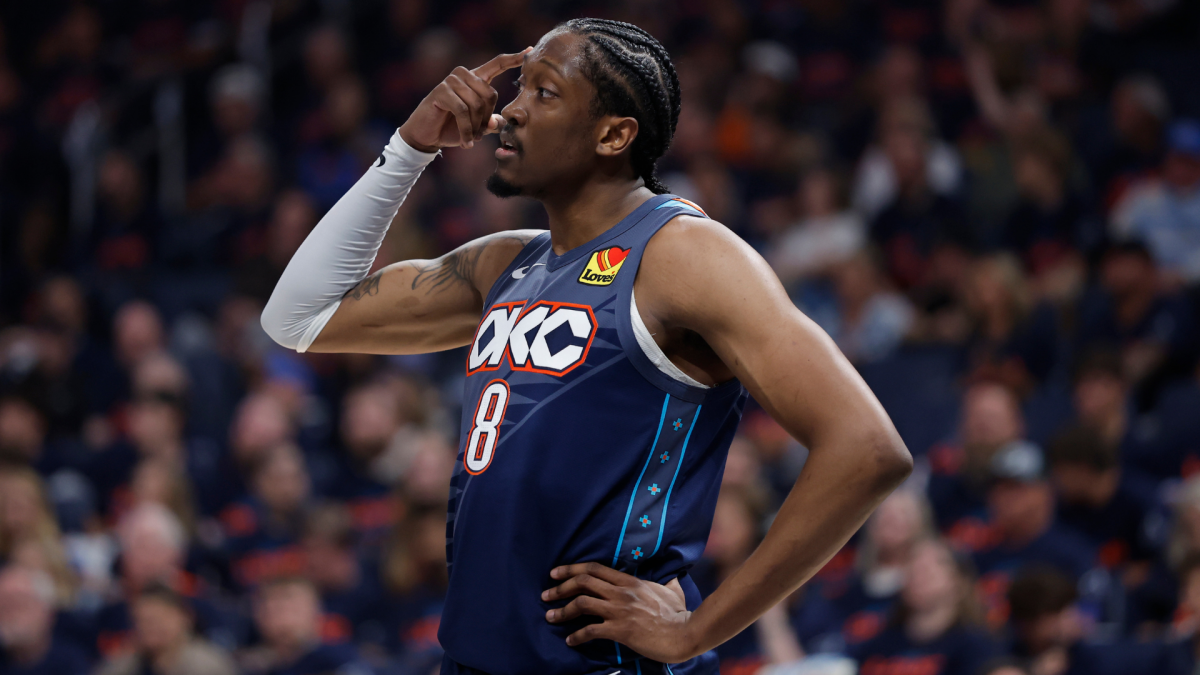
Jalen Williams is off the injury report for Monday's Game 1 of the Western Conference Finals between the Thunder and Spurs, returning after six games away with a left hamstring strain. The timing matters: Williams averaged 20.5 points across two playoff appearances this season and posted 21.4 points per game in last year's postseason run. His over/under sits at 15.5, a number that undervalues his baseline production and the context of his return against a Spurs team that has won four of five regular-season meetings with Oklahoma City—but largely without Williams available.
The Spurs' edge in those head-to-heads came partly from their ability to disrupt Thunder rhythm without their third scoring option active. Bring Williams back into the rotation, especially at 35-plus minutes in a playoff game, and that dynamic inverts. His two-game playoff sample this season (20.5 PPG) tracks above his regular-season clip (17.1 PPG), suggesting he elevates in high-leverage moments. SportsLine's model projects him for 18.0 points—a modest cushion above the line but a floor rather than a ceiling given his usage rate and the Spurs' defensive load. Williams will see minutes against both perimeter defenders and backup bigs; in a seven-game series, his role will expand as the Thunder lean into matchups that favor their ball-handling and pace.
Chet Holmgren's combo line of 26.5 (points + rebounds + assists) points the opposite direction. The Thunder's center has not performed well against San Antonio's length in regular-season play, finishing under that threshold in all four matchups where Williams was available. The Spurs can match Holmgren's wingspan in ways few playoff teams can; Victor Wembanyama and Jakob Poeltl give them the ability to contest without fouling. Holmgren is at his most effective against teams that lack versatile bigs, which is not a Spurs problem. In the four regular-season games against San Antonio where data is cleanest, he was consistently below this combo projection, a pattern that reflects scheme fit rather than slump.
Dylan Harper's 10.5-point line deserves scrutiny from a different angle. He averaged 14.7 points across the Timberwolves series and shot 56.9% from the field, significantly above his regular-season 50.5%. That efficiency bump is real but fragile; it reflects hot shooting in a specific series against a specific defense. The Spurs guard is due around 25 minutes of playing time, enough to reach double figures if his field-goal percentage remains elevated. However, baking in that hot-shooting rate (56.9%) as a persistent assumption is the cardinal sin of prop analysis. A reversion to his 50-52% season baseline—still solid, but not elite—would make this line tighter than the current minus-110 implies. The edge here is minimal and dependent on shooting variance carrying forward.
The Thunder's injury clearance and Spurs defensive architecture create two distinct angles: Williams benefits from his return and his team's offensive rhythm, while Holmgren faces continued length-based friction that regular-season tape confirms. Harper's over relies on sustained shooting heat that has no precedent in his career. The prop landscape in Game 1 favors the Williams narrative as the most durable signal.