Harper's Perimeter Dominance and Gobert's Offensive Inconsistency Shape Game 6 Edge
By PropBetEdge Editorial Team ·
A rookie's proven ability to exploit defensive gaps and a star center's volatility against the same opponent create separable prop edges in a playoff clincher.
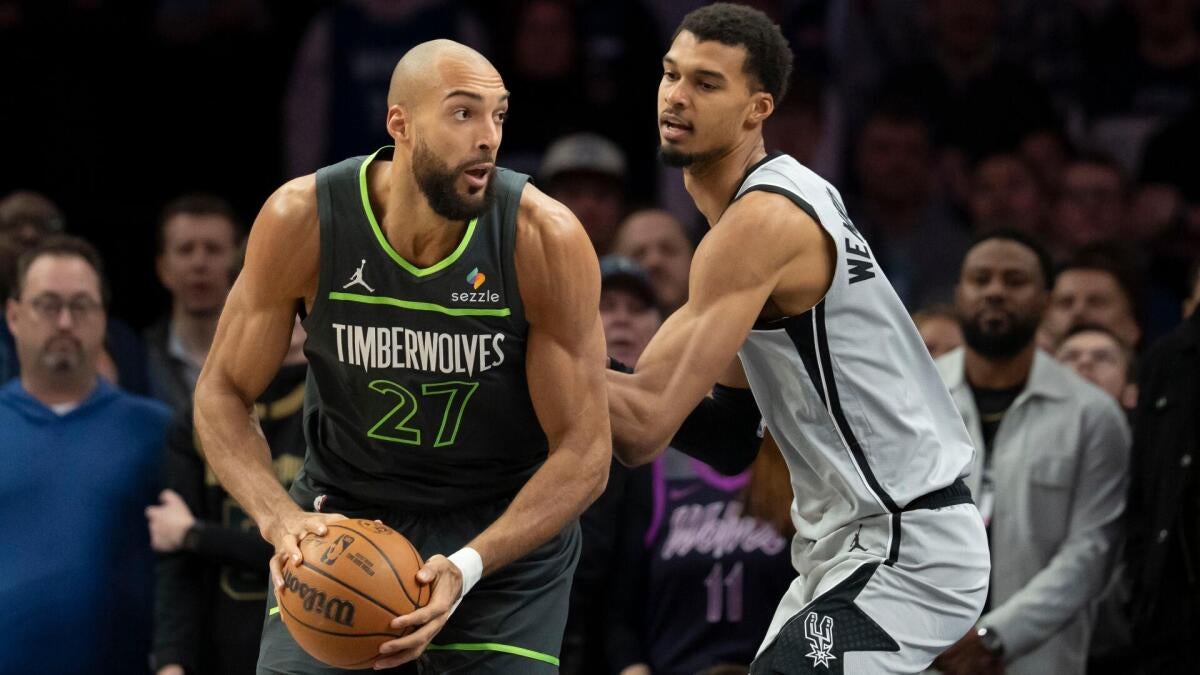
Game 6 of the Spurs-Timberwolves series presents a stark contrast in offensive reliability: Dylan Harper's emergence as a perimeter mismatch creator versus Rudy Gobert's erratic scoring in this matchup. The rookie guard has cleared his 15.5 points-plus-rebounds line in four of five games this series, posting 31 and 22 combined totals in Games 4 and 5 respectively. That consistency isn't noise—it maps directly to how Minnesota defends him. The Timberwolves play drop coverage on ball-handlers and rarely send help, a scheme that invites exploitation when a 6-10 perimeter player can operate freely. Spurs coach Mitch Johnson has responded by threading Harper into high-leverage minutes, rewarding his willingness to attack closeouts and crash glass. Over his last 33 games with a fully intact roster, Harper has cleared this exact line 23 times—a 70% conversion rate that transcends single-series variance.
Gobert presents the inverse puzzle. The three-time All-Star averaged 10.9 points per game in the regular season and was projected at 9.1 points for Game 6, yet his posted line sits at 6.5—a conservative number that fails to account for his split against San Antonio specifically. In three prior meetings with the Spurs, he's scored 11 or more points twice. Tuesday's four-point performance in Game 5 was the outlier, not the pattern. His 8.0 points per game average during this series masks a floor problem: when San Antonio's defense doesn't collapse on him, he becomes an outlet option rather than a featured scorer. The 6.5 line prices him as a rim-runner in foul trouble, not as a center averaging nearly 11 PPG.
The mechanism distinguishing these two edges hinges on defensive personnel and deployment. Minnesota's reluctance to send help on Harper forces single coverage, which a shot-making perimeter player with rebounding instincts exploits at a 70% clip—a multi-game sample that indicates a structural mismatch. Gobert's edge is simpler: the market has overcorrected on a single poor performance, compressing his line below his season baseline and his historical production against this specific opponent. Both edges survive line movement because they're rooted in either persistent defensive design or series-specific data that contradicts a single-game recency spike.
Julius Randle's 22.5 points-plus-rebounds line represents a middle ground. He's averaging 14.8 points and 7.8 rebounds through five games—a 22.6 combined rate that sits almost exactly at his projection of 24.3. Randle functions as Minnesota's primary offensive engine in elimination pressure, and the Spurs have no answer for his size and offensive rebounding activity. This line has less upside than Harper or Gobert because the market has already priced his role correctly; Randle is a reliable over at 22.5, but he doesn't carry the same edge value as a prop playing against defensive or recency bias.
For Game 6 specifically, the sharpest exposure comes from targeting Harper's perimeter dominance and Gobert's underpriced scoring floor. Harper's 15.5 line should move higher if action comes early; the 70% conversion rate across 33 games is durable and will attract sharp money. Gobert's 6.5 is the true outlier bet—a single Game 5 stinker has artificially compressed the line below his season average, his historical production against San Antonio, and what his playoff role demands. Both trades benefit from a team fighting for survival in an elimination game, where isolation scoring and garbage-time rebounding opportunities inflate the relevant totals.