Knicks' Championship Blueprint Reshapes 2026-27 Market; Spurs' Core Aging in Real Time
By PropBetEdge Editorial Team ·
New York's first title in 53 years validates a roster-construction strategy that has already reset expectations for next season's betting landscape.
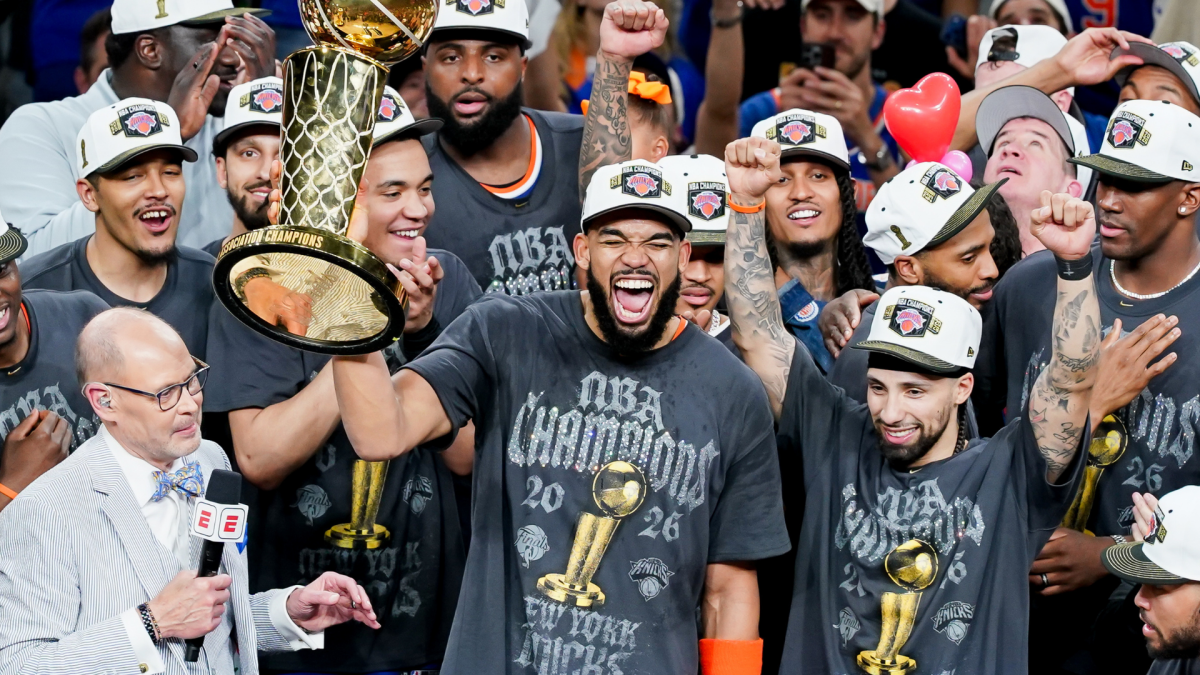
The Knicks won the 2026 NBA Finals. That sentence carries weight most franchises never experience—a championship that erases five decades of futility and reshapes organizational momentum heading into the offseason. But the Finals results matter less to the 2026-27 betting market than what that run exposed about the teams still standing and the ones left behind.
New York's path to the title illuminates a crucial roster-building principle: complementary stars aligned with switchable, intelligent defense matter more than singular superstars. The Knicks constructed a roster where every rotation player understood role, could defend multiple positions, and didn't require the ball to impact winning. That coherence showed in the Finals. More importantly for bettors, it validates the front office's trade decisions from the previous offseason as genius rather than gambles. Teams that replicate that structure—elite wing defense, reliable role players, a centerpiece who raises teammates—will likely outperform preseason odds. Teams built around isolation scoring and defensive limitations will underperform them.
The Spurs, by contrast, took a different Finals appearance and walked away with a different lesson entirely. San Antonio's roster is aging faster than the market acknowledges. Wembanyama's Finals performance, while solid, lacked the dominance you'd expect from a generational talent in year three—not because of effort or ability, but because the supporting cast couldn't create clean looks or easy switches. The Spurs paid to build around Victor, but the complementary pieces aged without replacement. That mismatch will compress his scoring and efficiency numbers next season. Bettors should already be fading Wembanyama's 2026-27 point and three-point volume props; the Finals proved the Spurs can't generate enough clean looks to sustain his previous usage rates.
For the Knicks specifically, the championship core is expensive and locked in place. That means their 2026-27 team total, spread, and star-player prop lines will open with insufficient juice. The market will price them as favorites without fully accounting for the salary-cap constraints that prevent them from adding meaningful depth. Meanwhile, the Spurs' preseason win total will carry value on the UNDER. A team in transition—young star, aging veterans, mid-tier draft capital—typically regresses by 4-6 wins in the season following a Finals run. Victor's individual scoring props will look attractive on the surface (he'll hunt volume), but they'll be volume traps; shot quality and creation will suffer.
The championship also reshapes how to evaluate acquisition value across the league. Knicks players and coaches will command premium salaries and interest in free agency and trades—an invisible tax on other contenders' offseason budgets. That creates opportunity in less-fashionable rosters that quietly add efficient complementary wings or floor-spacing bigs. Watch for role players on the Knicks' losing Finals opponents to get overpaid in free agency (overvaluing Finals exposure), while underrated wings and defenders on playoff teams that lost earlier will be mispriced on opening lines.