Summer League Separates Rookie of the Year Contenders: Peterson and Wilson Flash Early Edge
By Erik Schwartz ·
Darryn Peterson's lead-guard role in Utah and Caleb Wilson's defensive versatility with floor-spacing range emerged as the clearest paths to opening-night relevance after summer league action.
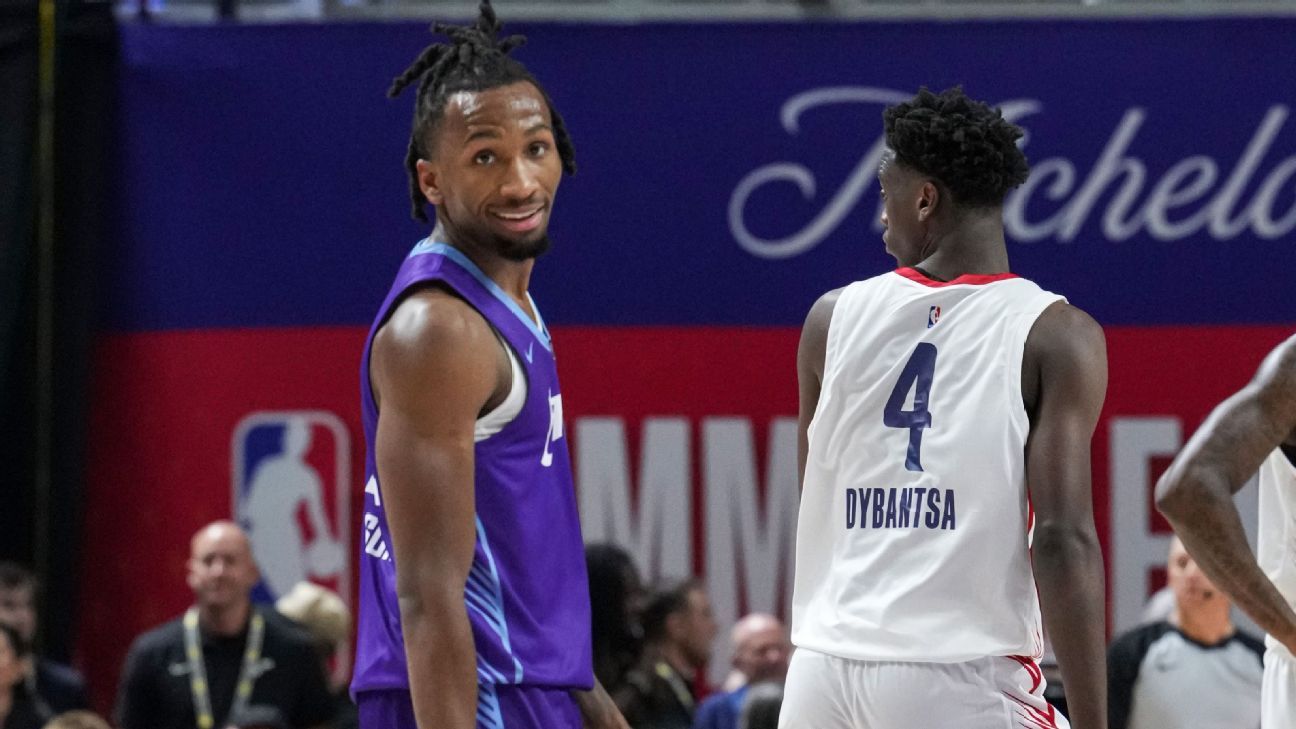
Summer league performances rarely predict regular-season reality, but they do expose one critical variable that prop markets often misprice: opportunity. After watching the 2026 rookie class operate in Las Vegas, two names stand apart not because of highlight moments alone, but because their team construction and role definition signal immediate offensive volume and efficiency.
Darryn Peterson, the Jazz's new lead guard, demonstrated the pick-and-roll orchestration and shooting consistency that Utah's front office clearly targeted when they drafted him. Unlike AJ Dybantsa—who will operate in the offensive shadows of Trae Young and Anthony Davis in Washington—Peterson has a clear mandate to create for himself and others. His summer league work showed functional spacing and decision-making in the ball-handler's pocket, the exact skill set that translates to 20+ minutes and 4+ assists in a young, up-tempo system. Dybantsa possesses iso scoring talent and impressive foul-drawing instincts, but his mid-range game will compete with Davis for real estate, and his three-point stroke still needs work. The Wizards' depth chart is crowded; Utah's is built around Peterson's development. That's the edge.
Caleb Wilson's case is more visually convincing but mechanically sound. The Bulls forward showed transformation in floor spacing—35 points with seven three-pointers made in summer league, many self-created off the dribble—that meaningfully expands his utility in Tom Thibodeau's system. His size, athleticism, and newly credible outside shot create a versatility profile (small-ball stretch forward) that modern NBA rotations prize heavily. He's still getting slight betting value relative to his daily role probability, suggesting the market hasn't fully absorbed how much his summer shooting stroke changes his offensive ceiling.
Cameron Boozer, the No. 3 pick by Memphis, is the current favorite despite less clarified offensive role definition. The favorite's edge here rests on draft capital and potential rather than team situation—a risky bet this early in the season. Boozer has elite upside, but upside doesn't drive Rookie of the Year voting; reliable scoring and playmaking volume do. Peterson's lead-guard mandate and Wilson's expanded range are more certain paths to the 15+ points and 4+ assists that historically define the winner's profile.
For bettors, Peterson's mid-tier odds represent underpriced probability given his starting role assumption and Utah's pace. Wilson's slight overvaluation as a general pick doesn't mean fade entirely—his defensive ceiling and offensive evolution are real—but Peterson offers cleaner value. The betting market tends to discount opportunity until it's too late; summer league made Peterson's path visible nine months before April voting.