Morey's Exit Leaves Sixers Front Office in Flux; Nurse Survives the Purge
By Erik Schwartz ·
The Sixers fired their president of basketball operations after six seasons, but kept their coach—a split decision that signals ownership's uncertainty about direction.
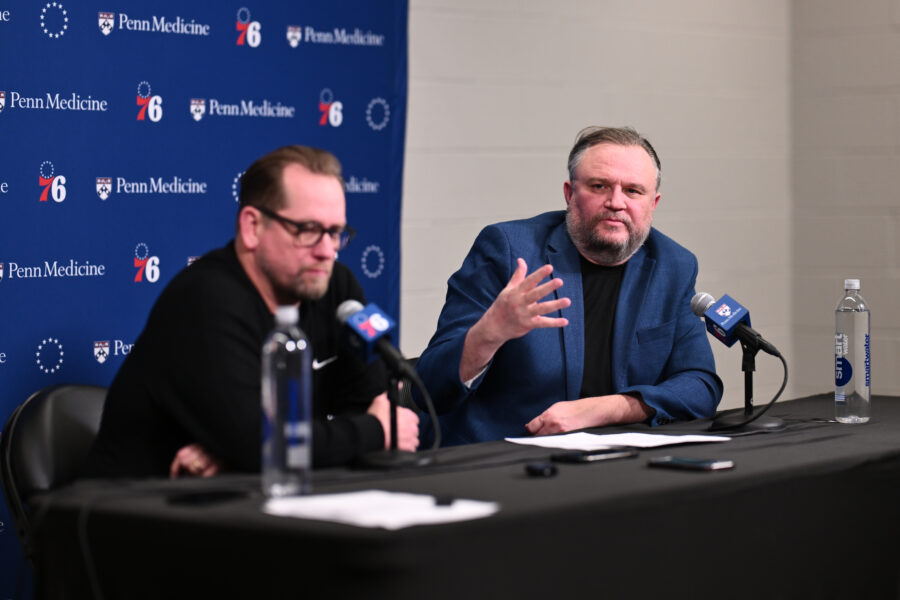
Daryl Morey is out as Philadelphia's president of basketball operations. The decision came Tuesday evening after a meeting between Morey and owners Josh Harris and David Blitzer, per ESPN's Shams Charania. Head coach Nick Nurse will remain for a fourth season, but the departure of the architect who assembled the current roster leaves the front office without a clear power structure heading into the offseason.
Morey's tenure was built on a high-spend, high-volatility model. He traded for James Harden, signed P.J. Tucker to a four-year deal, and consistently pushed the salary cap into luxury tax territory in pursuit of championship contention. The Sixers made the second round once (2022) and the first round three times under his watch, never advancing past the East semifinals. The financial commitment never translated to the playoff success ownership demanded. The disconnect between payroll and postseason performance created pressure that ultimately became unsustainable.
The fact that Nurse survives the reorganization is instructive. It suggests ownership views the coaching as a secondary issue—or sees Nurse as expendable enough to replace later if needed. A new president of basketball operations will inherit full authority over roster construction and may choose to move in a different direction altogether. For now, continuity at the coaching level masks deeper dysfunction: the Sixers still have Joel Embiid, Tyrese Maxey, and Scottie Barnes, but no one steering the ship.
From a betting perspective, this kind of front-office instability has real implications for roster usage and player availability. The uncertainty around how the new front office will deploy assets creates friction in player-prop markets. Embiid's minutes and usage could shift depending on whether the new regime prioritizes load management or maximizes win-now equity. Similarly, Maxey's role in the offense—whether he functions as a facilitator or scorer—may change under new leadership. The team total and spread for Sixers games in the coming weeks should trade wider than typical as the market prices in this uncertainty. A new voice running basketball operations often brings early tactical adjustments that catch late movers off-guard.
The edge here is structural: the Sixers will undergo a strategic reset that hasn't happened in six years. Early games under the new regime are information-gathering periods, and prop lines won't immediately reflect the operational shift. Early-week Sixers props—particularly team totals and star player usage lines—carry elevated variance because the market hasn't yet priced in the new front office's decision-making patterns. Wait for the first two weeks of the new regime to stabilize before committing to long-term player projections.