McCollum's Hawks Extension Signals Atlanta's All-In Bet on Playoff Momentum
By Ty Whitney ·
A $21M one-year deal locks in the veteran who tilted Game 3 against the Knicks, reshaping Atlanta's offensive architecture and scoring distribution for next season.
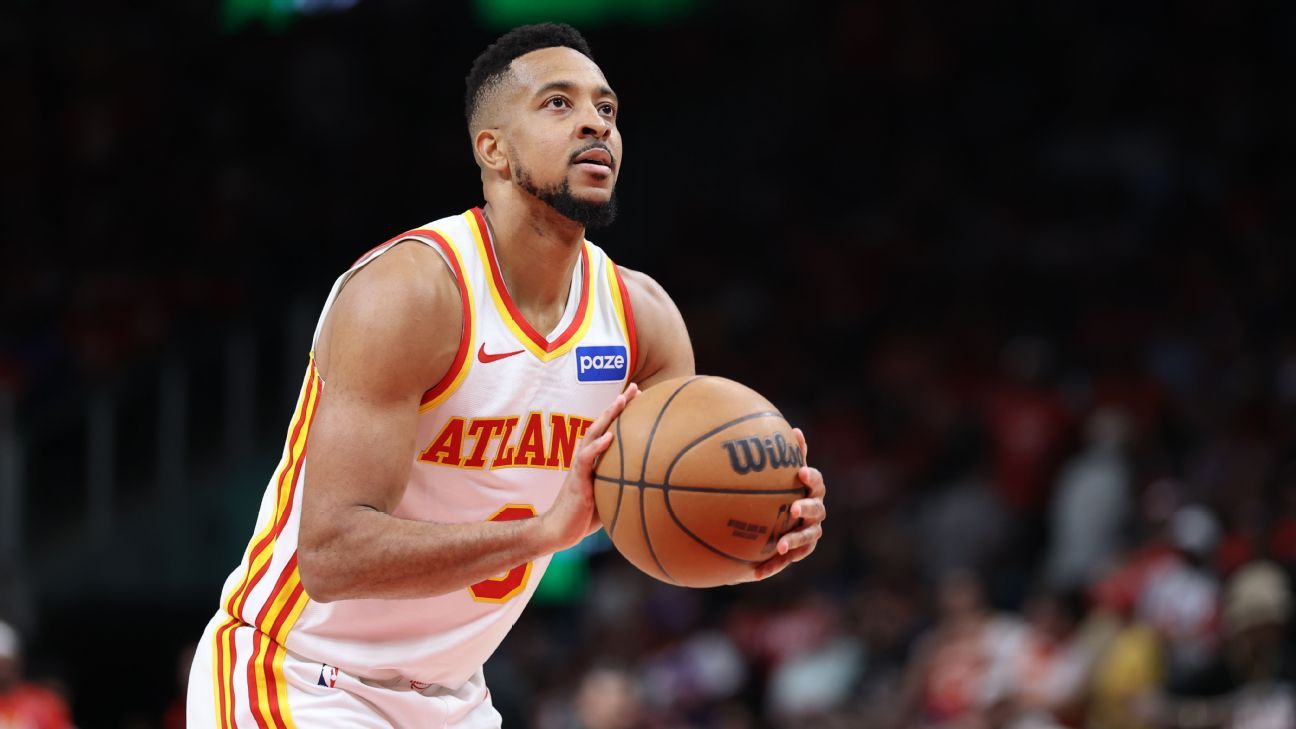
CJ McCollum agreed to a one-year, $21 million extension with the Hawks on Sunday, two days before the June 30 free-agent eligibility deadline expired. The deal includes a trade kicker, according to agent Sam Goldfeder. The move consolidates Atlanta's offseason strategy around the 34-year-old guard whose late-season and playoff performance made him essential to the franchise's first-round run against the defending champion Knicks.
McCollum's impact on the Hawks' trajectory was concrete and measurable. During a 18-of-20 win streak in late season, he was the offensive stabilizer that pushed Atlanta into playoff contention. In the first-round series against New York, he posted 32 points in Game 2 and delivered the go-ahead 15-footer with 12.7 seconds remaining in Game 3—two possession-deciding moments that kept the Hawks competitive despite eventually losing the series. Over 41 games in a Hawks uniform, he averaged 18.7 points on 35.7% three-point shooting, extending a 13-year streak of making at least 150 threes annually. He remains the only player to sustain that volume since the 2015-16 season, a distinction that underscores both durability and structural role clarity.
The extension's one-year structure and sub-$22M AAV signal Atlanta's confidence in keeping the roster intact while preserving salary-cap flexibility heading into an offseason where the team will retool around Trae Young and this newly validated perimeter scoring identity. By locking McCollum in early, the Hawks avoid the volatility of a July free-agent market and ensure continuity in the offensive ball-movement patterns that emerged during the late-season run. The trade kicker provides McCollum additional downside protection, a negotiated sweetener that reflects his market value and the team's commitment to retention over a restart cycle.
For prop-betting purposes, McCollum's offensive role becomes more predictable and stable entering Year 2 of his Hawks tenure. The 18.7 PPG average he posted last season was earned in a condensed 41-game window with limited ramp-up time post-trade; his three-point volume (35.7%) benefited from Atlanta's perimeter-heavy offensive design and spacing created by Young's playmaking. Early market projections for his scoring line will likely anchor near 17.5–18.5 PPG, with books underestimating the elasticity of his usage in a full 82-game season where the Hawks have no offensive pivot besides Young. If McCollum remains healthy and holds a consistent 32–34% of offensive possessions (his recent clip), his threes-made line should exceed pre-season consensus. Watch his first 10–15 games for confirmation of usage; if his three-point attempts settle above 6 per game (up from 5.2 last season), his 3PM line will be underpriced at season open.
The deeper angle: McCollum's willingness to sign a one-year deal suggests he believes the Hawks roster can compete in the 2026-27 cycle, which moderates injury-regression risk and keeps him engaged in winning scenarios. One-year deals from veteran guards typically correlate with elevated playing time and late-game usage, a leverage position that translates directly to assists and scoring props. His 4.1 APG last season will likely climb if Atlanta increases spacing around Young; target McCollum assists at 4.5 or higher once market odds settle. The extension removes uncertainty and solidifies his role—a rare commodity entering the offseason that should be exploited in player-prop markets within the first two weeks of the season, before the Hawks' actual pace and offensive efficiency reveal the true volume available.