Kyrie's ACL Recovery Won't Solve Dallas's Deeper Problem
By Erik Schwartz ·
Irving claims near-full health 14 months post-surgery, but the Mavericks' roster questions won't wait for his ramp-up.
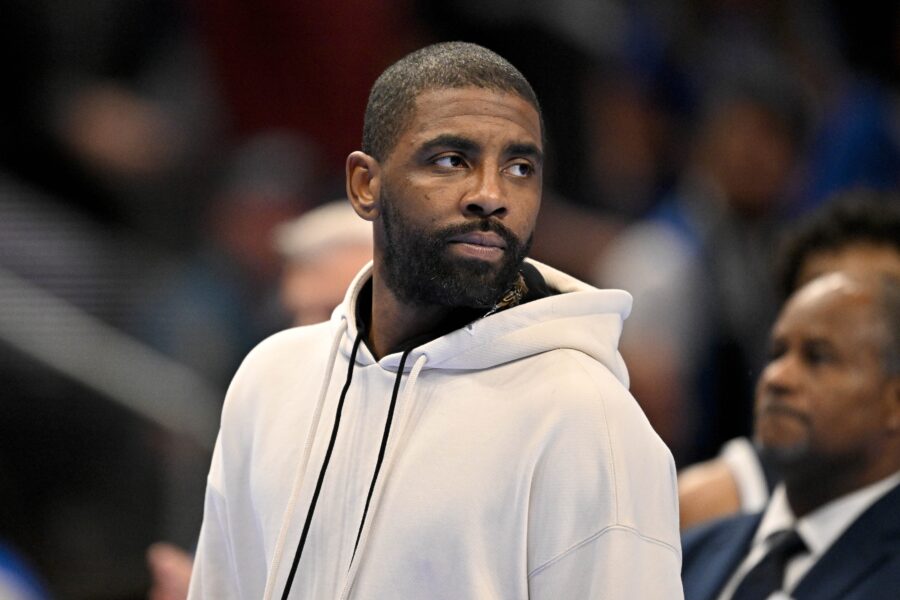
Kyrie Irving declared himself 95-plus percent recovered from his ACL tear during a Twitch stream this week, messaging that he'll be ready for full workload by next season. The statement carries weight—Irving's ball-handling and shot-making rarely depend on lateral explosiveness or plant-and-cut athleticism, the skills most vulnerable to ACL setback. By October, he should be capable of his pre-injury offensive skill set. But the Mavericks aren't sitting on a roster problem that rehab can solve.
Dallas finished outside the West's top eight, a roster that looked less like a championship core mid-season and more like a franchise needing internal reckoning. Luka Doncic's burden grew heavier; the roster construction around him tightened. Irving's return adds perimeter shotmaking and creation, yes, but it also raises a question the front office must answer independently: is this core fixable with incremental addition, or does it need structural change? A healthy Irving in October doesn't change that fundamental architecture question today.
The market has already begun pricing in Irving's recovery. Oddsmakers and sharps understand his skill translates through limited athleticism. His player props for next season (assists, threes made, overall scoring) will likely be set near his pre-injury baselines, with modest discounts for age (he'll be 34) and early-season conditioning. What the market hasn't fully repriced is opportunity cost—what Dallas could acquire by moving him at the draft versus what incremental games he'd win in years four and five of his current contract. A team with lottery capital and cap flexibility might value a young asset more than two seasons of Irving catch-and-shoot contribution.
For bettors, this creates a near-term inefficiency: Irving's individual prop lines will anchor to health recovery narratives rather than Dallas's actual win-now constraints. If the Mavericks trade him (a scenario with growing internal merit), his numbers evaporate mid-season. If they keep him, his volume might lag season-long projections because he'll share creation duty with Doncic rather than operate as a primary playmaker. The safest lean is fading Irving's assists over projections for the first half of next season—not because he's limited physically, but because team context will suppress usage before Dallas reaches a roster clarity deadline.