Dusty May's Dallas Bet: Can Lightning-in-a-Bottle Translate to NBA Depth?
By Ty Whitney ·
The Mavericks bet on May's college success, but his track record relies on roster construction dynamics that don't exist in the NBA.
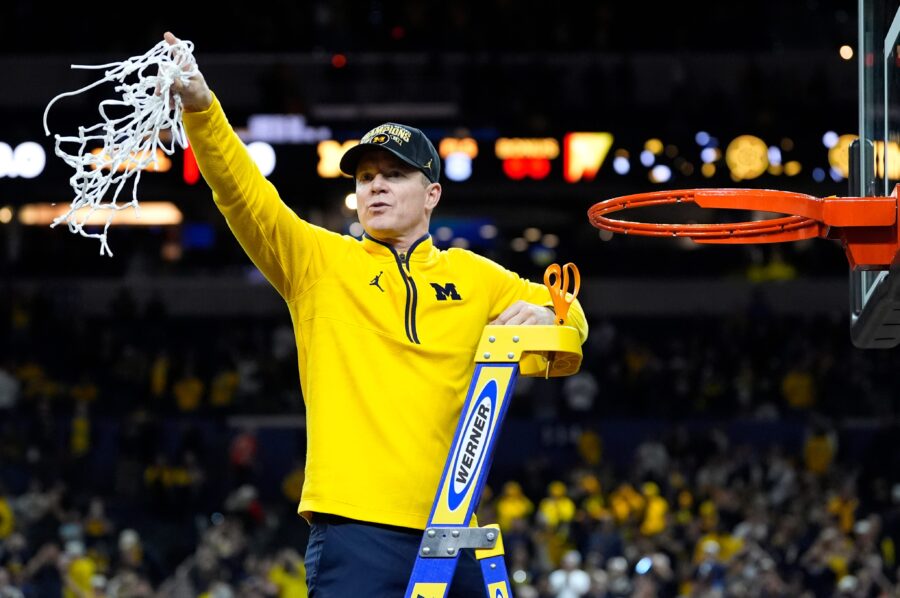
The Mavericks have hired Dusty May as their next head coach, per ESPN. May departs Michigan after building one of the nation's most efficient offenses, following earlier success at Florida Atlantic. On the surface, it's a defensive hire—the college game rewards schematic creativity and player development, both areas May demonstrated at the highest amateur level. Dallas, searching for coherence after a turbulent season, is banking on those same principles translating to an NBA roster already built around Luka Doncic and Kyrie Irving.
But the leap from college to the NBA exposes a critical structural difference: roster volatility and talent fungibility. At Michigan and FAU, May operated with roster control. He recruited to a system, developed players over years, and built depth through continuity. His offenses worked because he could install concepts and trust execution from role players who stayed. The NBA doesn't grant that luxury. Rosters turn over. Role players are tradeable assets. Schemes that depend on four-year cohesion collapse when a backup wing gets moved at the deadline or a young center walks in free agency.
Dallas's core—Doncic and Irving—are established shot-creators who operate in isolation and pick-and-roll. May's college systems were built around ball movement, spacing, and role-player execution. The framework doesn't cleanly overlay. The Mavericks will need May to adapt his identity rather than impose it, which contradicts the reason they hired him in the first place. That tension—between the philosophy that made him valuable and the constraints of NBA construction—will define his tenure.
For bettors, this hire creates near-term uncertainty and long-term reversion risk. In Year One, the Mavericks' pace, spacing, and assist distribution will likely shift as May installs new offensive frameworks. Doncic's assist totals could increase (more ball movement, more kick-outs) or decrease (fewer isolation reps) depending on how much May compromises with his stars. Irving's three-point volume may spike if May emphasizes spacing, but his turnover rate could also rise if the offense becomes more complex. These are single-season adjustments that will create mismatch opportunities—the market will price the Mavericks based on last year's personnel and output, while May's system introduces variance that Vegas hasn't yet baked into preseason lines.
The longer-angle bet is fade-the-enthusiasm. College coaches with untested NBA track records often see their schemes neutered by reality: playing time scarcity, roster volatility, star power that demands touches. May's success depended on a foundation he won't have. Dallas will likely regress toward Doncic-and-Irving isolation basketball within 18 months, with May's schematic imprints fading as injuries and trades force roster reconstruction. The Mavericks are betting on adaptability; the smarter move is to assume he'll be fighting against the structure of his own roster.