Hezonja Heads to Cleveland on Minimum Deal—A Low-Risk Depth Gamble for Cavs Wing Rotation
By Erik Schwartz ·
Mario Hezonja's return to the NBA on a $2.8M contract with Cleveland signals the Cavaliers are hunting for perimeter shot-creation without luxury-tax commitment.
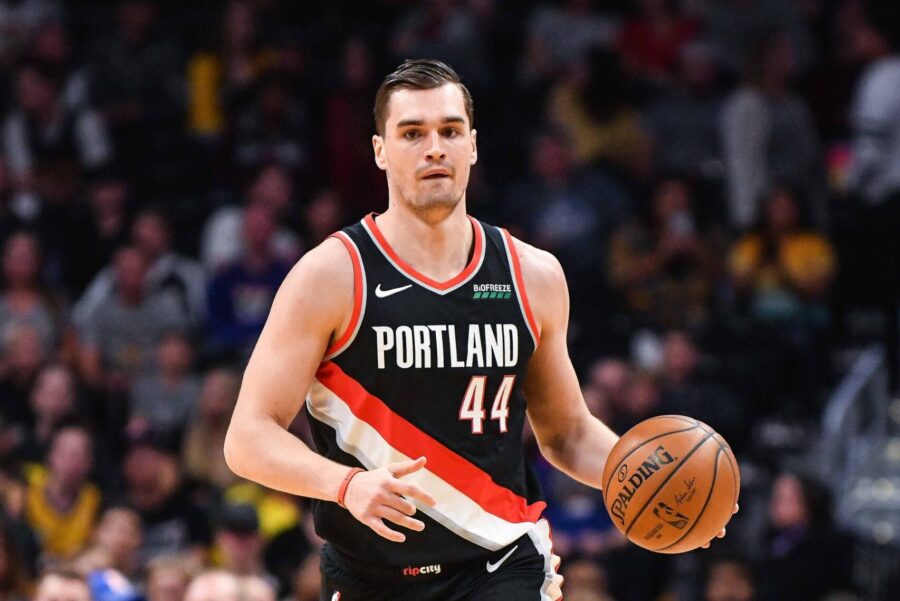
Mario Hezonji signed a one-year deal with the Cleveland Cavaliers worth $2.8 million, per ESPN. The move marks Hezonja's re-entry into the league after time abroad, landing him in a Cavs rotation that already carries championship ambitions in the Eastern Conference.
The contract structure—a sub-$3M one-year pact—tells you how Cleveland values the fit. This isn't a veteran minimum; the Cavaliers paid slightly above that floor, suggesting they saw enough tape to believe Hezonja offers more than a camp body. At 28 years old with European and NBA experience, he slots into a wing role without blocking cap flexibility or eating into the team's core salary structure. For a franchise juggling max contracts, this is efficient roster construction: incremental perimeter depth on terms that don't mortgage the future.
Hezonja's 3-point shot—historically 35–38% from distance in EuroLeague stints—carries material value in a league where corner and catch-and-shoot volume has become a proxy for bench floor spacing. The Cavaliers' offense runs through their ball-handling core, but backup and role-player 3-point gravity still moves the needle on OffRtg. If Hezonja settles into 8–12 minutes per game as a floor-spacing wing, his touch from deep becomes a lineup leverage point, especially in playoff rotations where switching and short-rotation shortages force teams to maximize efficiency on fewer possessions.
For prop purposes, the impact is modest but measurable. Hezonja's ceiling in this role is a secondary finisher—he won't cannibalize volume from the Cavs' primary scorers, but his insertion into the rotation does affect bench lineups and five-man spacing. Any Cavaliers team total or spread that was priced before this signing doesn't account for improved bench floor spacing. If Cleveland was trading at an 115.5 team total for non-playoff games, the addition of reliable 3-point gravity in reserve units could push that number higher by 0.5–1 point. Conversely, his defense—a career liability—doesn't materially blunt that edge; bench units already absorb defensive imperfections, and the Cavs' starting five remains the unit that matters for playoff seeding markets.
The durable angle here is team-total overs in the regular season when Hezonja logs minutes in blowout or loose-rotation scenarios. Single-game props tied to Hezonja's personal production (points, threes made) carry limited value—his role is complementary—but Cavs bench lineups that include him will have improved spacing efficiency, and that efficiency advantage persists across multiple games, not just opening night. The edge isn't single-game volatility; it's a low-variance shift in bench-unit offensive construction that the market may not have fully digested yet.