Lakers Dump Salary, Wizards Add Depth: How the Ayton Trade Reshapes Bench Roles and Rotation Minutes
By Ty Whitney ·
Los Angeles clears cap space by sending DeAndre Ayton to Washington for Jaden Hardy and future picks, triggering ripple effects across both rosters' scoring and rebounding distribution.
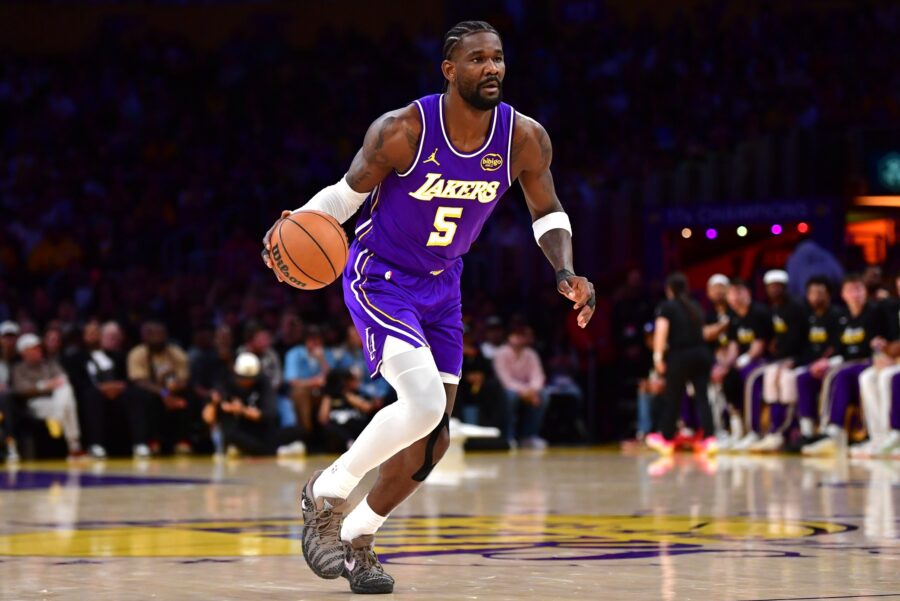
The Lakers are shipping DeAndre Ayton to the Wizards in a salary-flexibility play that moves more cap room than talent on the Los Angeles side. Washington sends back Jaden Hardy, a 2031 second-rounder, and a 2032 second-rounder—a modest haul for a 2018 first-overall pick now in the back half of his prime. The move is straightforward as a roster construction decision: the Lakers get younger flexibility to pursue retention of Rui Hachimura or an external target like Jonathan Kuminga; the Wizards absorb Ayton's contract to address an aging frontcourt and give Hardy a reunion partner in Luka Doncic.
Ayton's role in Los Angeles was already compressed. He'd slipped to a reserve center spot behind a more versatile, switchable option, and his rebounding remained solid but no longer elite. In Washington, he becomes a floor spacer off the bench in a squad that's chasing depth more than All-Star caliber. Hardy, a guard the Wizards drafted in 2022, gets a clearer path to minutes in a backcourt that's thinner than the Lakers' guard rotation. The deal fundamentally reshuffles who eats possessions in both places.
For prop tracking, the ripple hits bench scoring and rebounding splits hardest. Hardy's move to the Lakers—a deeper, more buttoned-up offensive system than Washington's—should broaden his offensive ceiling. In the Wizards' chaos, he averaged 8.2 points per 36 minutes last season on 41% True Shooting; the Lakers' ball movement and spacing should lift both volume and efficiency if he locks in a consistent fourth-guard role. Conversely, Ayton's departure opens more minutes for LA's reserve five-men, spreading rebounding and interior scoring across two or three new names instead of concentrating it in one post anchor. The Wizards gain a bench rebounder and pick-and-roll finisher, but lose offensive dynamism compared to whatever depth piece they replace him with.
The market hasn't fully priced in Hardy's boost from a Lakers context. He'll share backcourt time with a guard hierarchy that respects spacing and off-ball movement—a stark upgrade from Washington's perimeter shot-creation burden. His assistant-to-turnover ratio should tighten, and his effective field-goal percentage has room to climb from 53% if he gets catch-and-shoot opportunities instead of isolation creation. Hardy's player props in Lakers colors (points, threes, assists) should trade at a discount relative to his actual ceiling over the next 3-5 games, before the market reprices him upward. For the Wizards' bench scoring and team rebounding totals, the Ayton addition is net-neutral to slightly positive—he's a floor spacer in pick-and-roll, not a volume scorer—but the composition change matters for game-flow variance and matchup switching on defense.
The Lakers' internal cap flexibility is the real arbitrage. If they successfully retain or add a wing scorer with the breathing room Ayton's departure creates, their bench scoring stability actually improves despite losing a consistent interior scorer. That's the wager embedded here: bet that Los Angeles uses this cap relief wisely and locks in wing depth, which should compress unders on bench scoring props and tighten their overall team total variance. Bet that Hardy's role definition in a structured offense compounds his output. Fade Ayton's individual prop ceilings short-term while Washington figures out how to integrate him; his backups in the Wizards' rotation are likely to see more minutes than he does.