Lakers' Two-Way Gamble on Kaluma: Summer League Success Doesn't Guarantee Rotation Minutes
By Ty Whitney ·
Arthur Kaluma's Summer League performance earned him a two-way deal with the Lakers, but depth-chart realities and contract limitations will determine whether the 24-year-old sees meaningful playoff-window action.
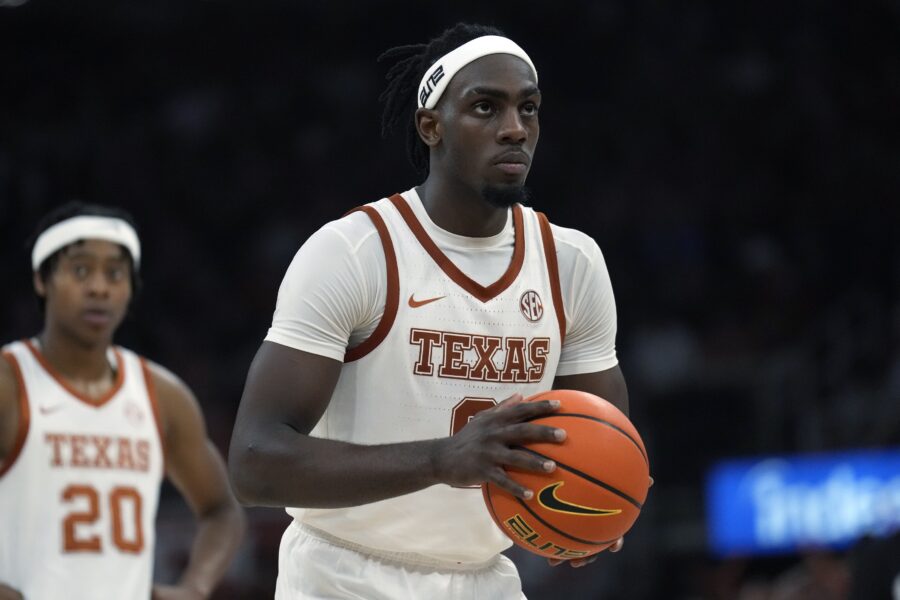
The Lakers signed undrafted forward Arthur Kaluma to a two-way contract following a strong Summer League showing, per ESPN. Kaluma, 24, went undrafted in 2025 after a four-year college journey through Creighton, Kansas State, and Texas. The 6'7" forward posted 12.3 points and 7.5 rebounds per game in Las Vegas, a performance that caught the Lakers' front office attention as they continue building secondary depth around their core.
Two-way deals carry real structural limits. Kaluma can appear in only 50 NBA games per season, with the remainder of his year split between the G League and inactive status. That constraint matters for betting purposes: his opportunity is capped by contract design, not just competitive merit. The Lakers' frontcourt already features Anthony Davis, Jarred Vanderbilt, and depth signings acquired through the offseason. Kaluma will occupy a roster spot and earning opportunity, but he enters a crowded position group where Summer League tape—played against non-NBA competition at game-speed below half-court intensity—rarely translates one-to-one to regular-season production. The gap between 12.3 PPG in Vegas and 8-12 MPG in October is not a betting trap; it's a structural reality.
For bettors, the operative question is whether Kaluma appears in enough games to generate consistent prop volume. If he stays on the two-way roster without NBA injury pressure forcing him into heavy rotation, his point and rebound lines will either not be offered or will carry such thin liquidity that market-making costs outweigh edge. His actual prop value is conditional on: (1) injuries to Davis or Vanderbilt forcing rotation expansion, or (2) the Lakers' need for perimeter size in specific playoff matchups later in the season. Neither scenario is baked into July oddsmaking because neither is a foregone conclusion.
The signing itself signals that the Lakers view Kaluma as a low-cost depth piece with upside—a rational organizational move for a team managing luxury-tax thresholds and roster flexibility. From a wagering angle, that restraint matters. The Lakers didn't overpay or create a path to substantial role expansion, which means Summer League momentum will not inflate his projected minutes or scoring. Watch for his name on injury reports and matchup-specific rotations in November and December; until then, his prop lines (if offered) carry the overhead of a player whose contract guarantees limited exposure. The edge, if any, lies in fading overconfidence from Summer League watchers; his floor is real, but his ceiling is constrained by design.